
Stained Concrete Patio Ideas: Before & After Photos From Real DIY Projects
Stained concrete patios are one of the most cost-effective ways to transform an outdoor space. Unlike paint, which lays down a thick film that eventually peels, concrete stain colors the surface itself and is locked in with a sealer — and a DIY stain-and-seal project typically runs under $1 per square foot in materials, compared with $3–$15 per square foot to hire a contractor.
Below you’ll find 25+ real before-and-after patio projects from Direct Colors customers, each with the exact colors, products, and timelines behind it — plus what staining costs, which stain to choose for your surface, and how long the finish lasts.
Before & After Patio Projects
Faux Wood Plank Patios
Wood-plank stamped concrete gives you the warm look of a timber deck — without the warping, splintering, or yearly refinishing. Stain is what makes it convincing: the right color settles into the grain and plank lines so the pattern reads like real weathered boards instead of gray concrete. These projects show the range, from a single warm tone to a hand-blended multi-color floor where no two planks match.
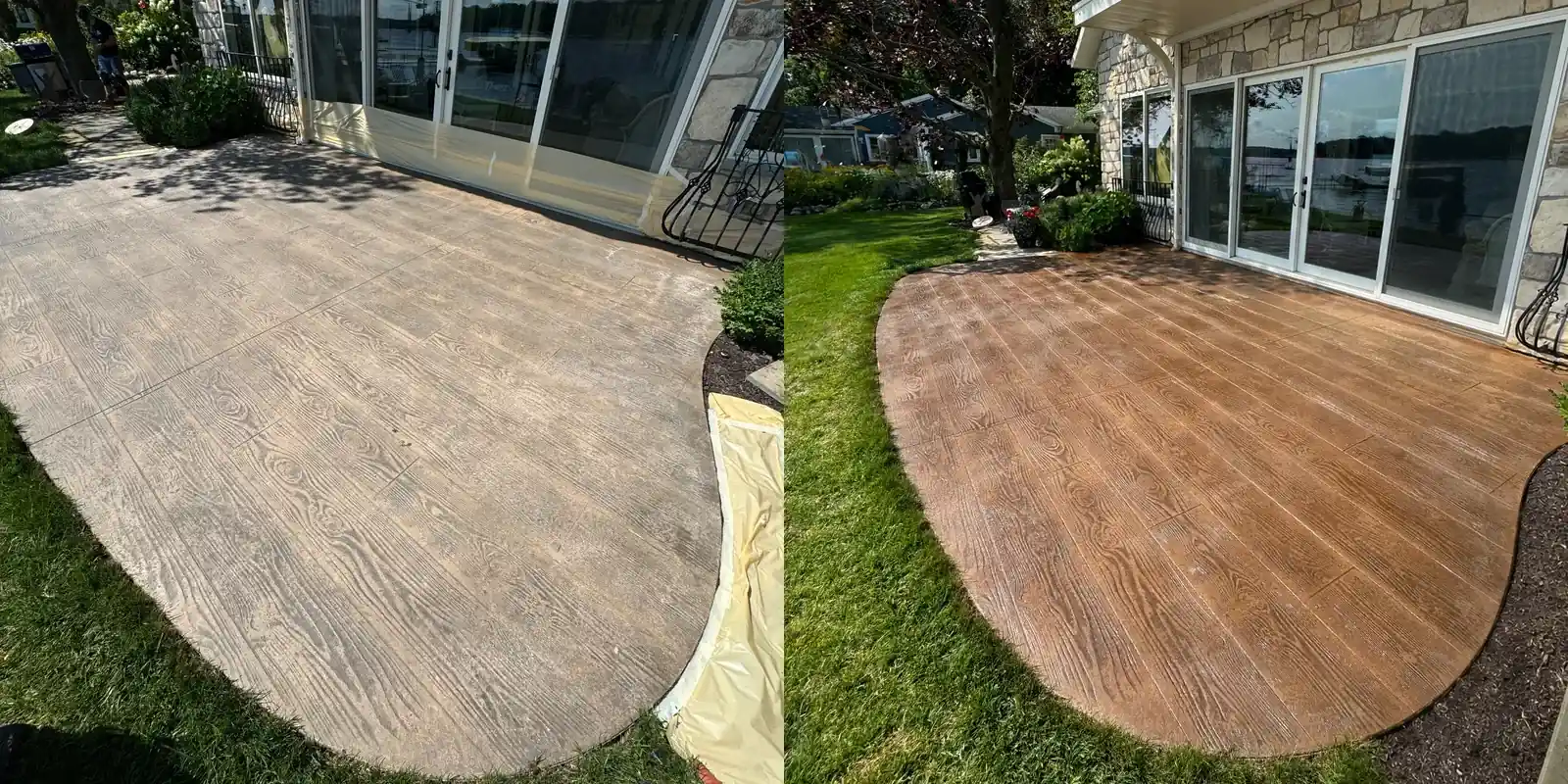
Faux Wood Plank: Restoring a Stamped Concrete Patio to Rich Brown
Wood-plank stamped concrete gives you the look of a timber deck without the warping, splintering, or annual refinishing — but like any stamped surface, it fades. Six years of sun had drained this lakefront patio to a flat gray-tan, flattening the grain detail the stamp was there to create.
Driftwood Antiquing™ brought the warmth back. Because the color settles into the low points of the grain and leaves the raised areas lighter, it restores the plank definition rather than just recoloring the slab — which is exactly what makes wood stamping read as convincing in the first place. At 3,250 sq. ft. this is the largest project in this gallery.
Size 3,250 sq. ft.
Surface Wood plank stamped concrete
Color Driftwood Antiquing™
Sealer Satin EasySeal™
Time 6 days
Level Intermediate
Just Like New: Maple Antiquing on a Wood-Plank Stamped Patio
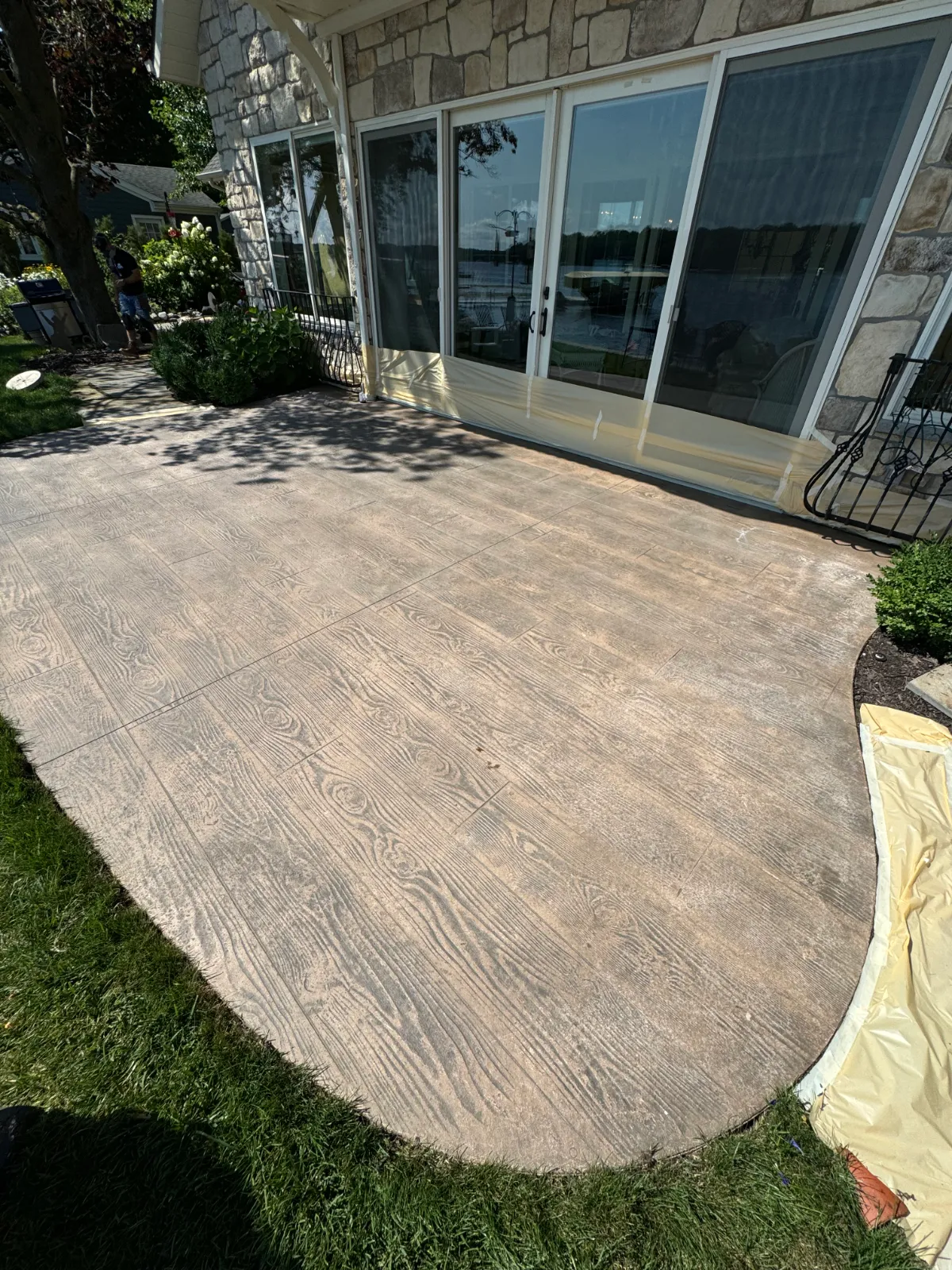
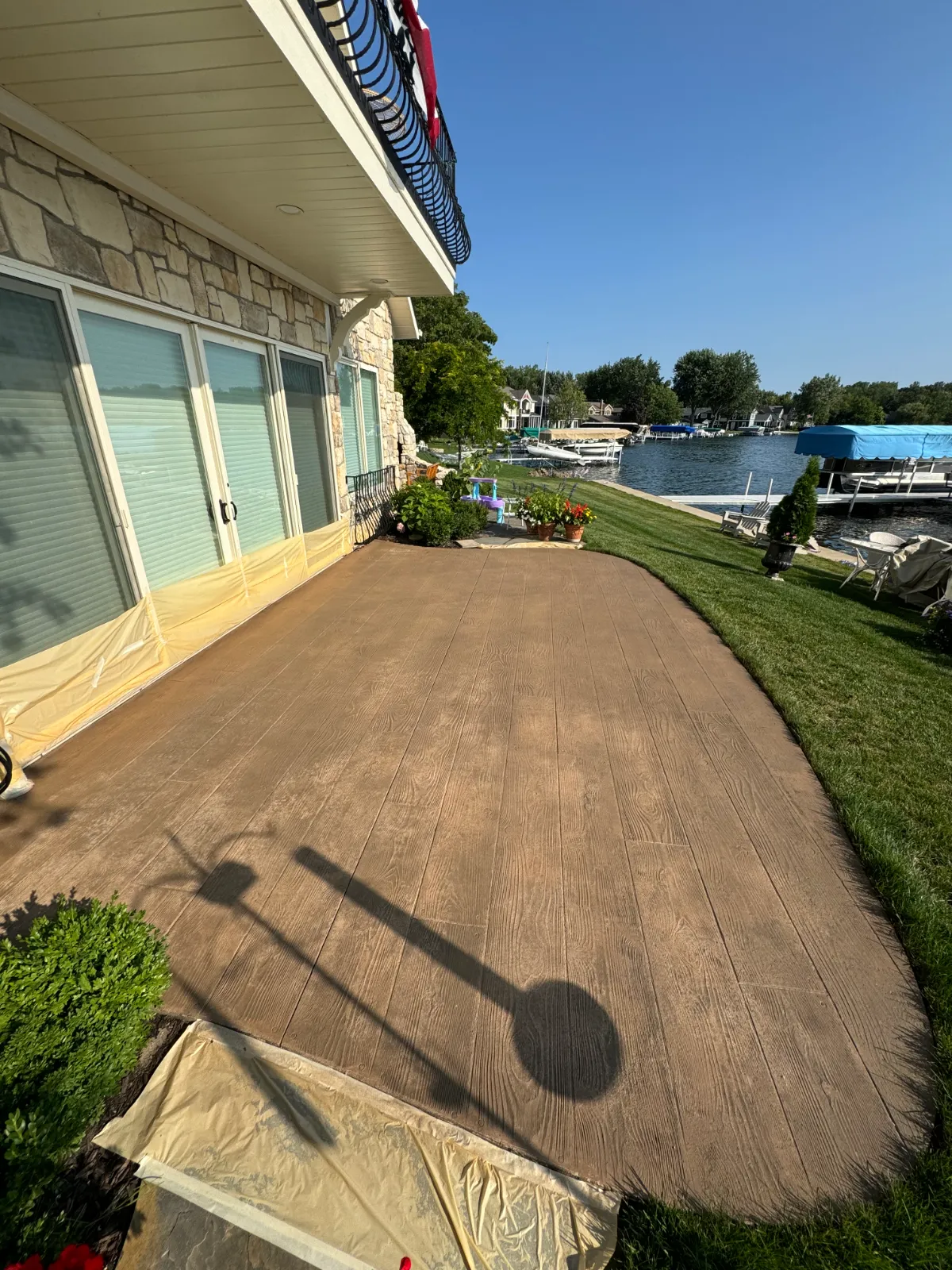
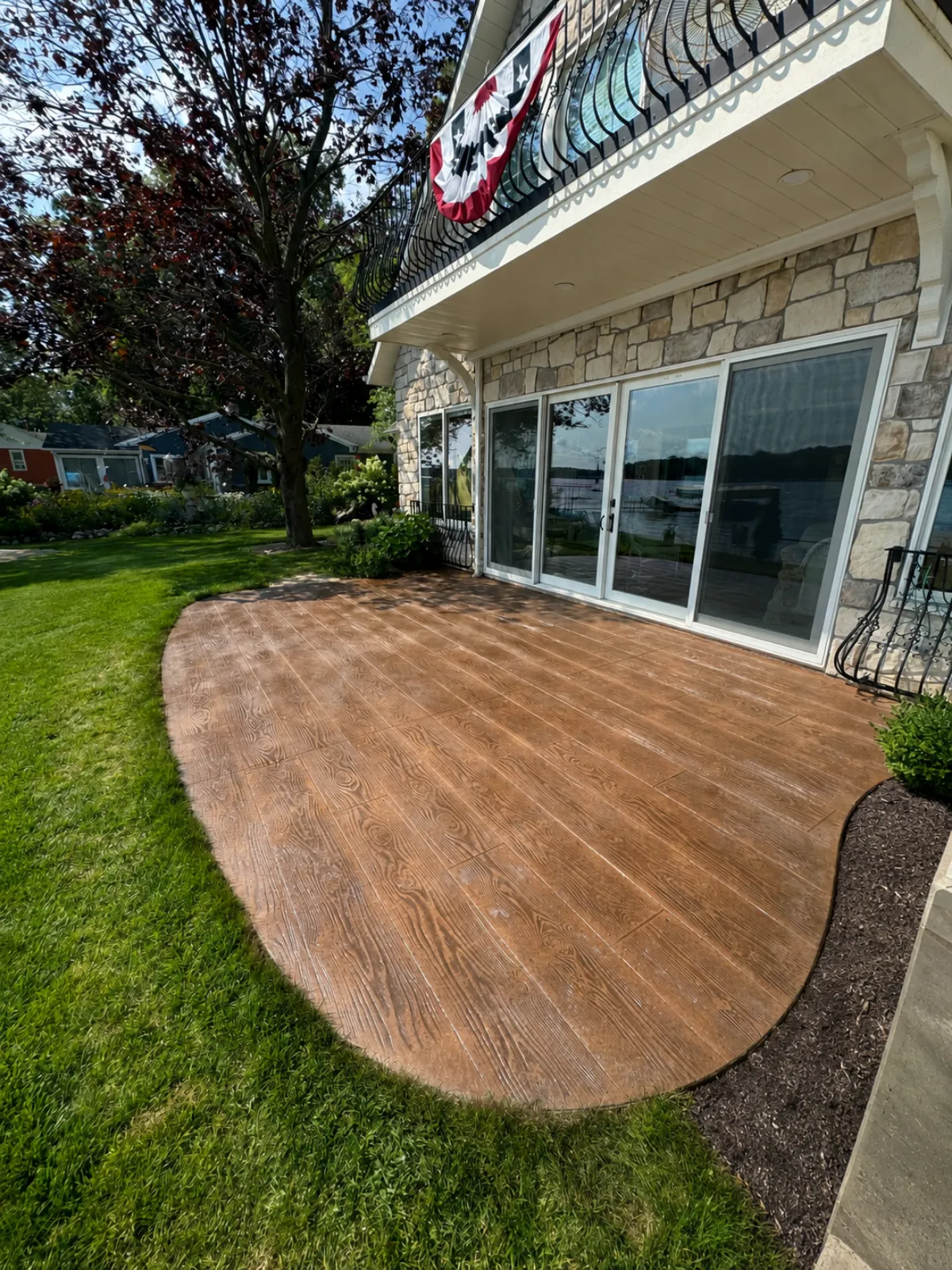
This 1,200 sq. ft. wood-plank stamped patio was poured with integral color back in 2017 — and by now the color had faded and the finish was completely gone. A pressure wash, one coat of Maple Antiquing™ Stain, and a coat of EasySeal™ Gloss brought the warm wood tone and grain detail roaring back. The whole thing was done in a single day, start to finish.
Size 1,200 sq. ft.
Surface Wood-plank stamped concrete (2017, integrally colored)
Color Maple Antiquing™
Sealer EasySeal™ Gloss
Time 1 day
Level Beginner
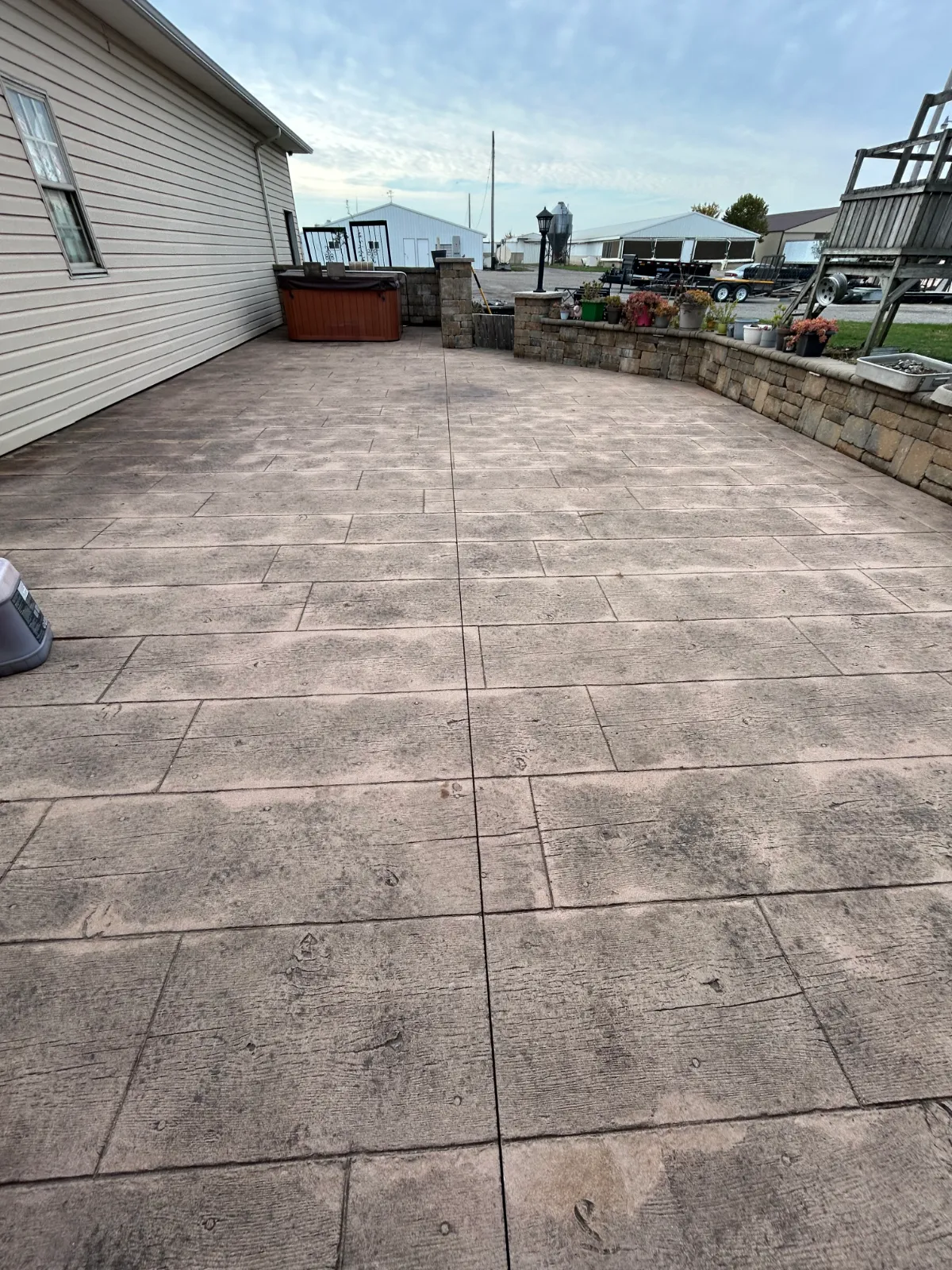
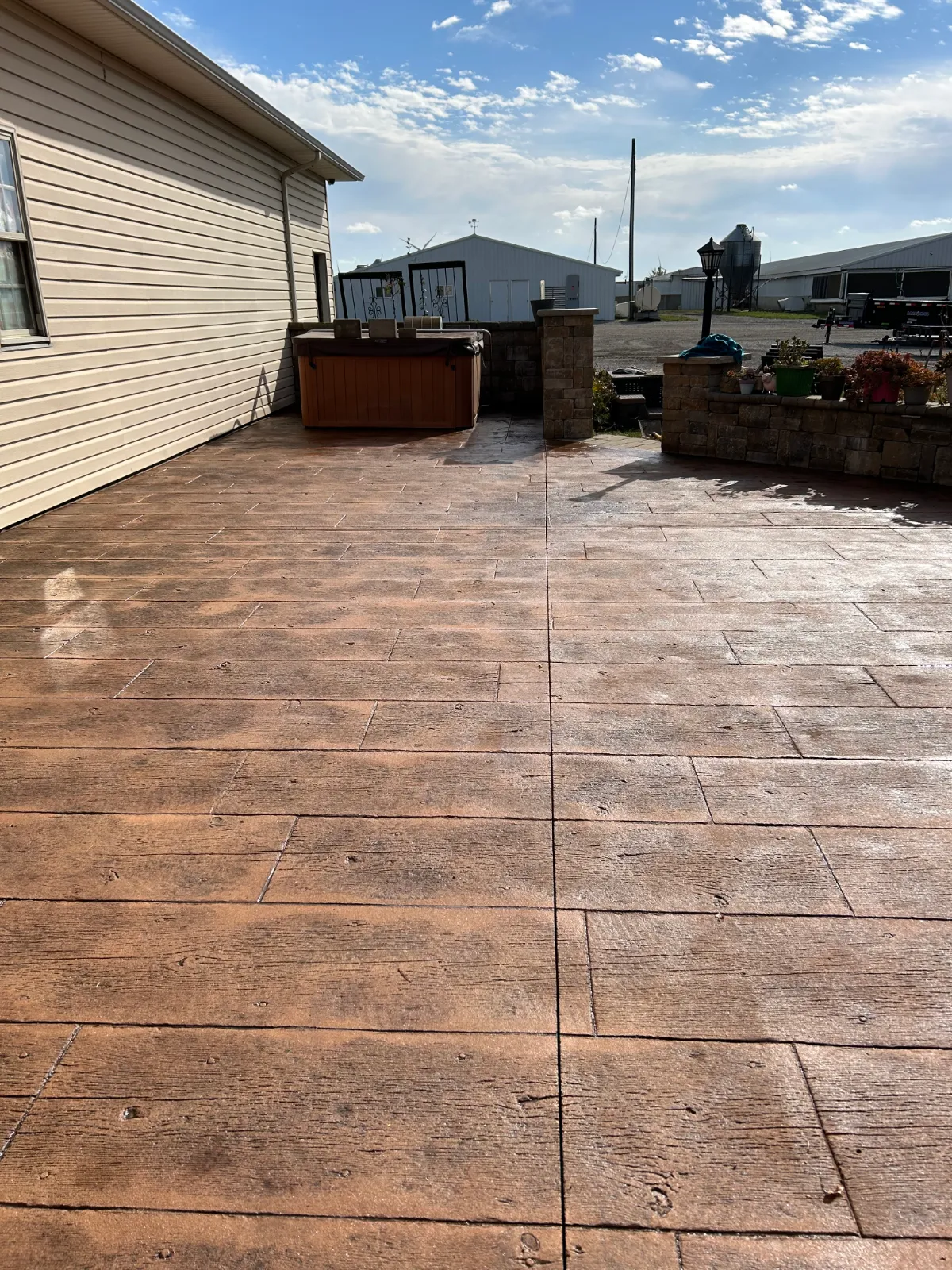
“It looks so much better, just like new! I started staining about 9 in the morning and by 4 in the afternoon I was done. Not too bad for a 56-year-old lady to accomplish in a day!”
Lisa’s tip: “I poured the stain and sealer directly on the concrete and used a disposable roller to work it into all the wood-plank indentations. Rolling let me control exactly where the color went along the edges, so I didn’t get any on the garage siding or the retaining wall.”
— Troy & Lisa Furrer, DIY Contest Entry
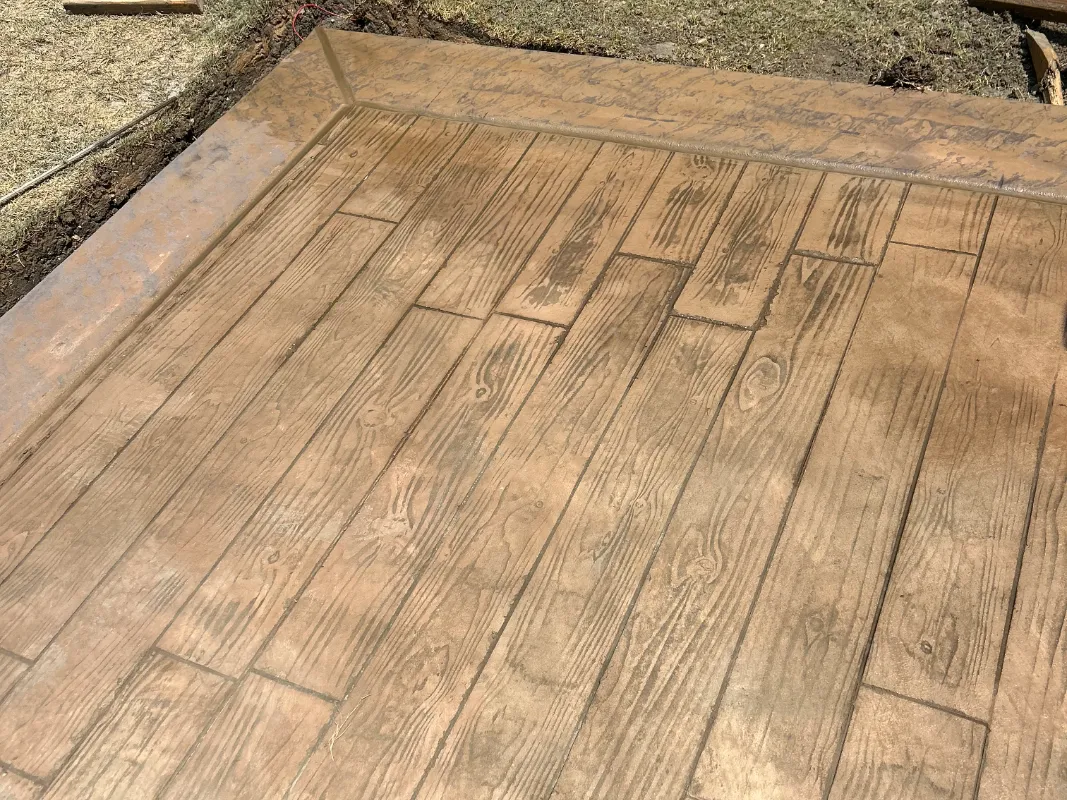
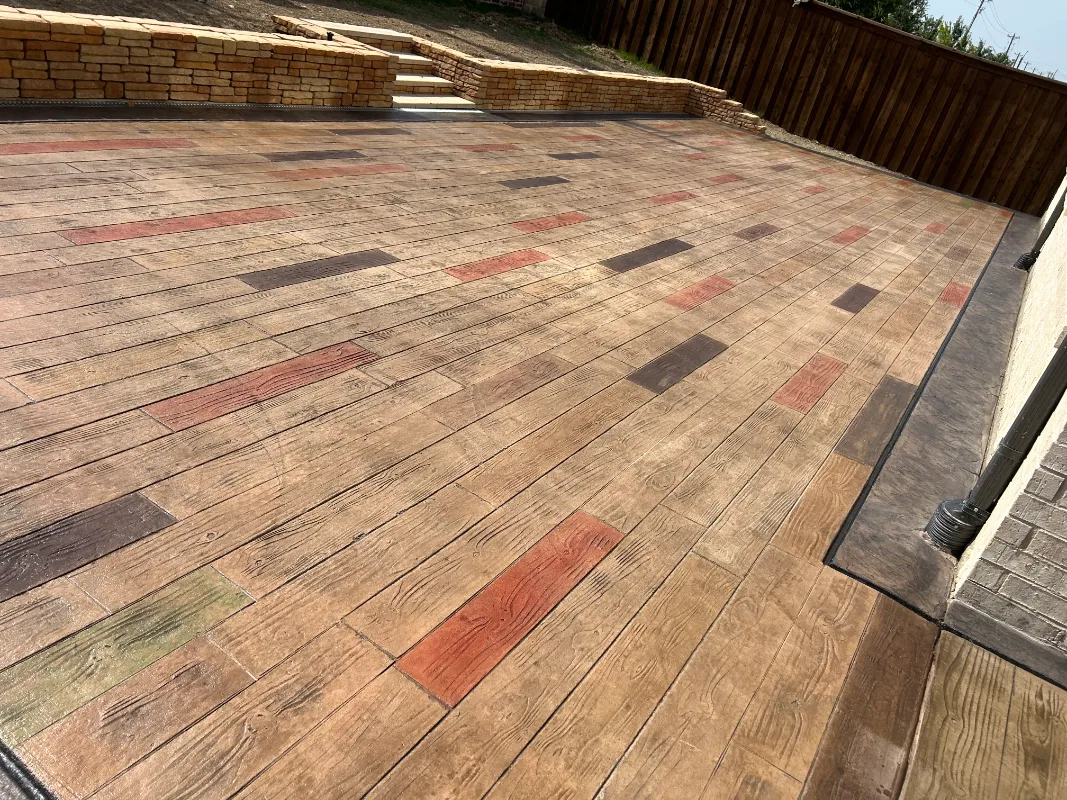
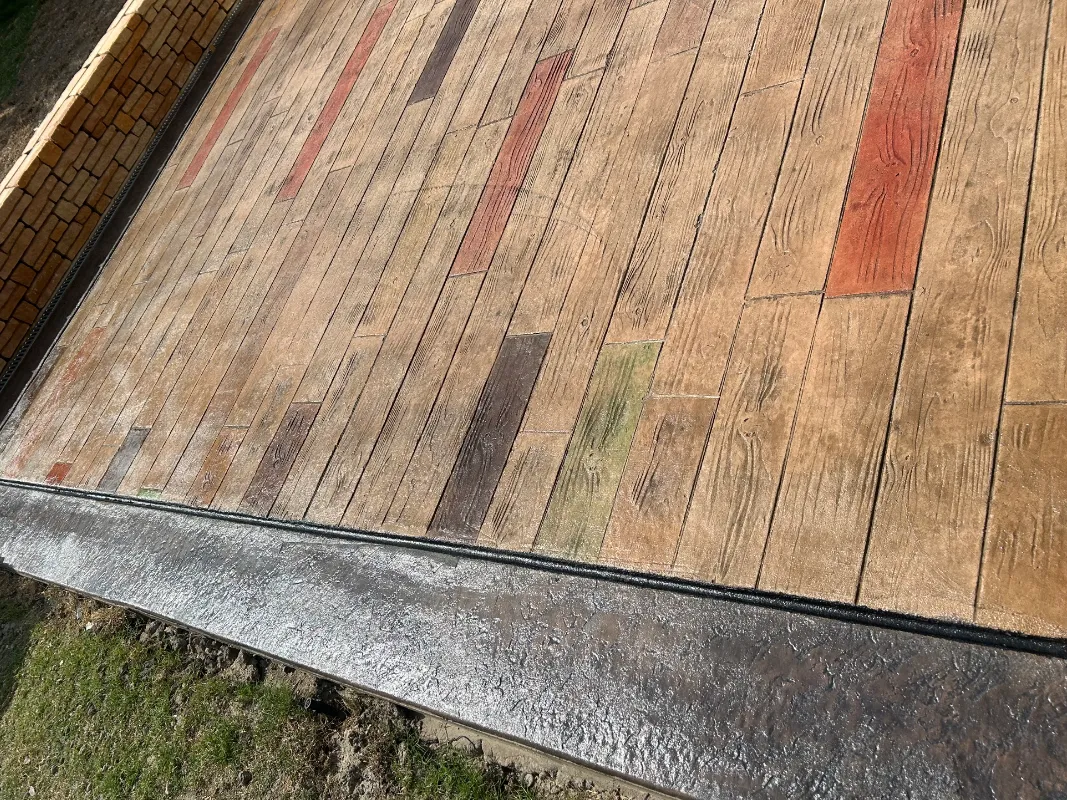
Boardwalk Blend: Multi-Color Antiquing on a Wood-Plank Stamped Patio
This 650 sq. ft. patio was stamped with a 6-inch boardwalk plank pattern over a “wheat medium” integral base, then hand-colored plank by plank with four Antiquing™ stains — Crimson, Cumin, Aztec Brown, and Tweed — to mimic the natural color variation of real weathered wood, with a Charcoal slate border framing it. A new section was poured and overlaid in the same pattern to extend the existing patio seamlessly. Sealed in high-gloss for a rich, wet-look sheen.
Size 650 sq. ft.
Surface Wood-plank stamped concrete (6″ boardwalk stamp)
Color Crimson, Cumin, Aztec Brown & Tweed Antiquing™ · Charcoal border
Sealer EasySeal™ Gloss
Time 7 days
Level Advanced
Black & Charcoal Stained Patios
Black and charcoal are the boldest, most requested colors for a patio — and the most forgiving when you’re covering existing color, since dark tones absorb variation instead of revealing it. Every project here used Antiquing™ stain.
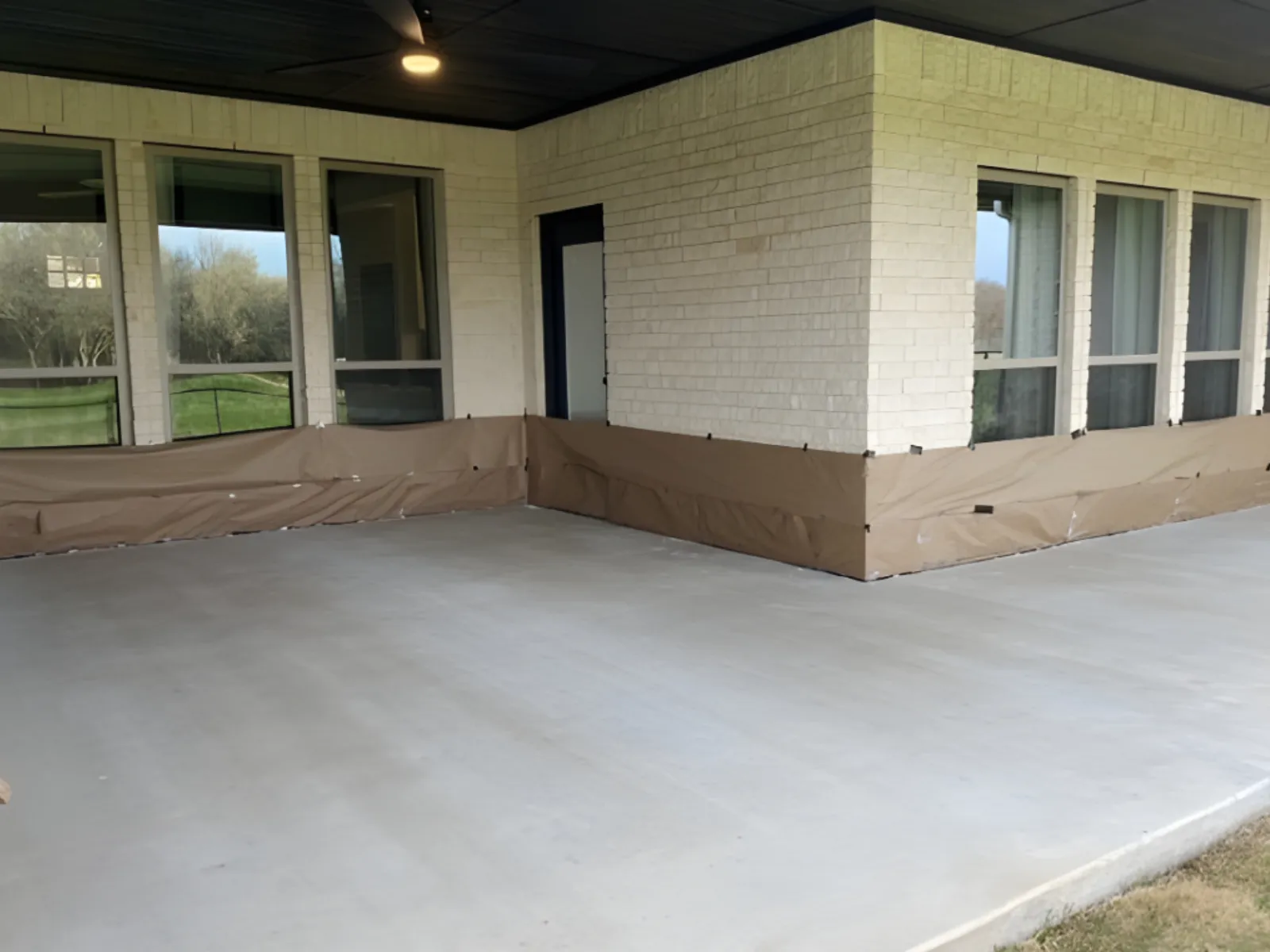
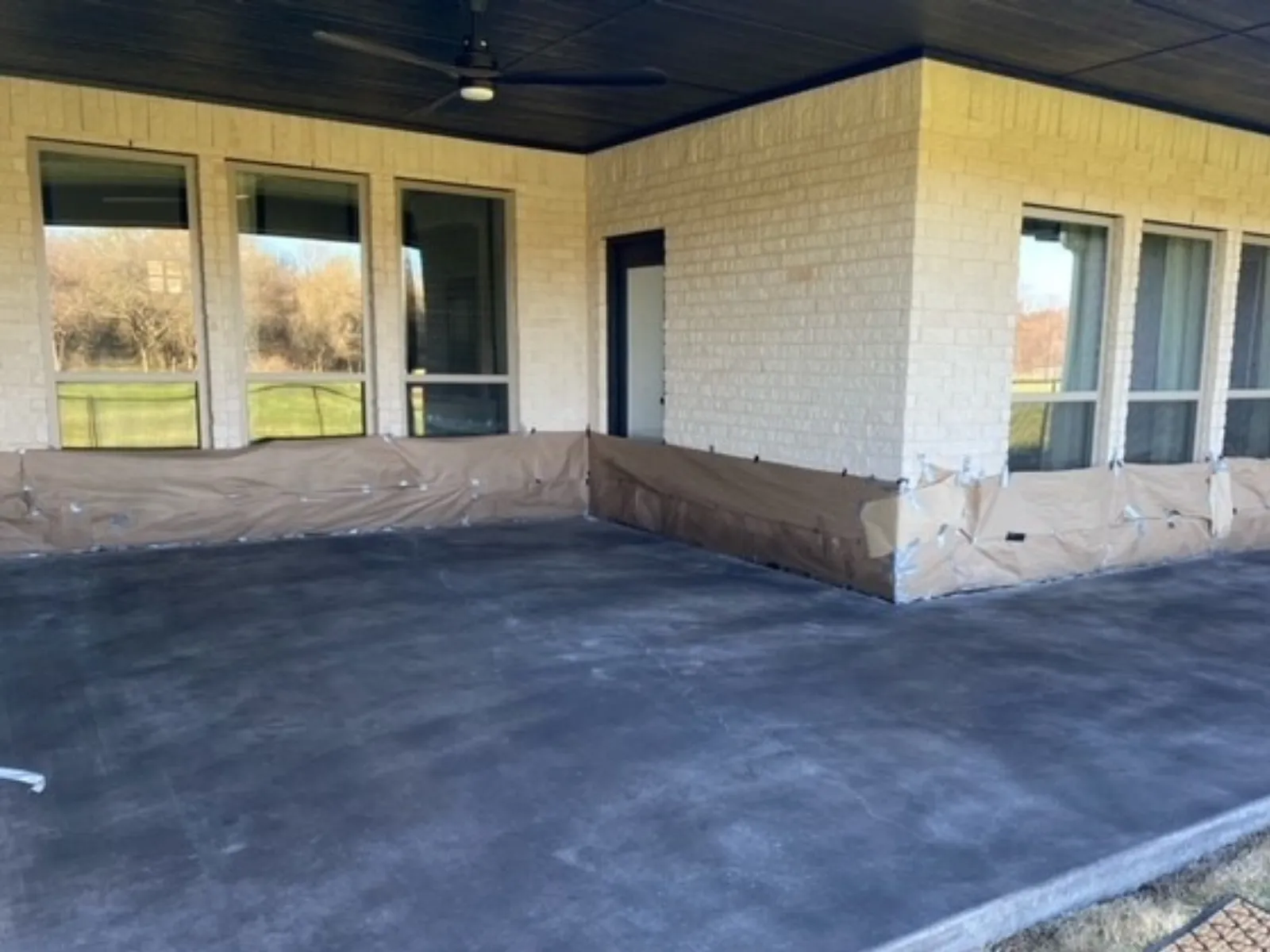
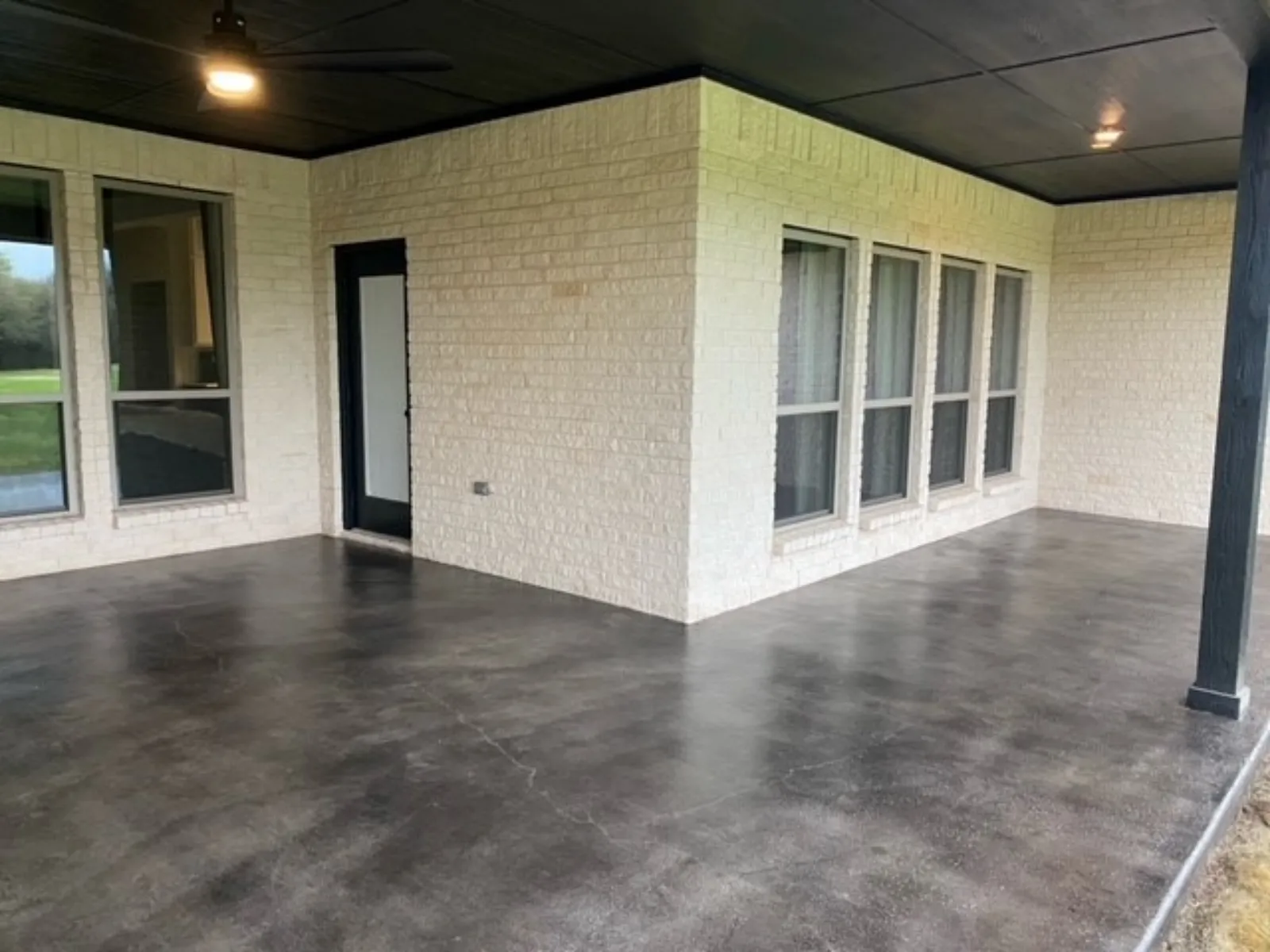
Modern Black: Concrete Patio Built for Entertaining
A plain poured slab becomes a sleek outdoor room with Black Antiquing™ stain. The photos follow the full sequence — bare concrete, freshly stained, and finally sealed — and the last two are worth comparing closely: sealing is what takes the black from flat to deep.
Size 433 sq. ft.
Surface Smooth concrete
Color Black Antiquing™
Sealer Satin EasySeal™
Time 5 days
Level Beginner
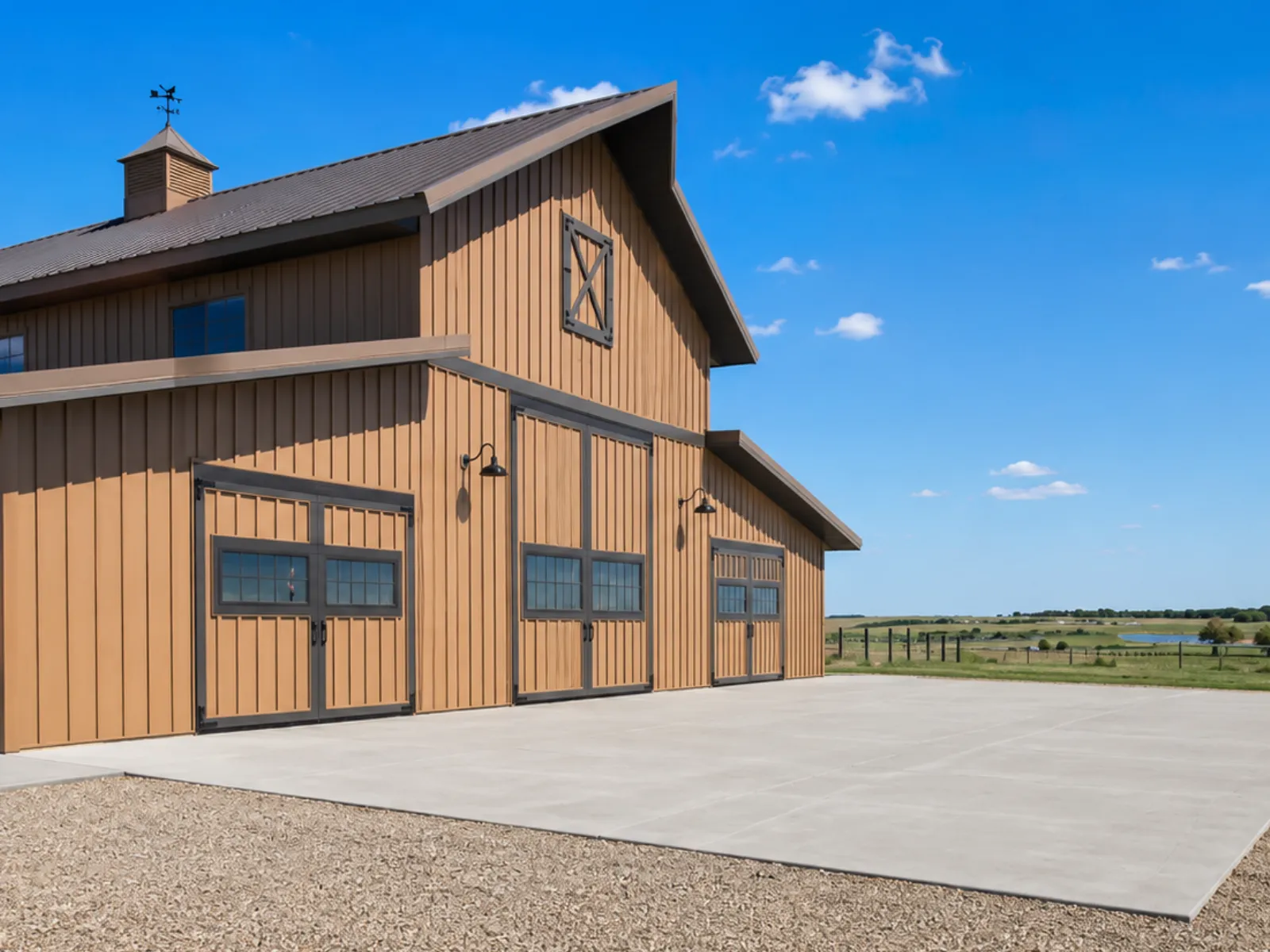
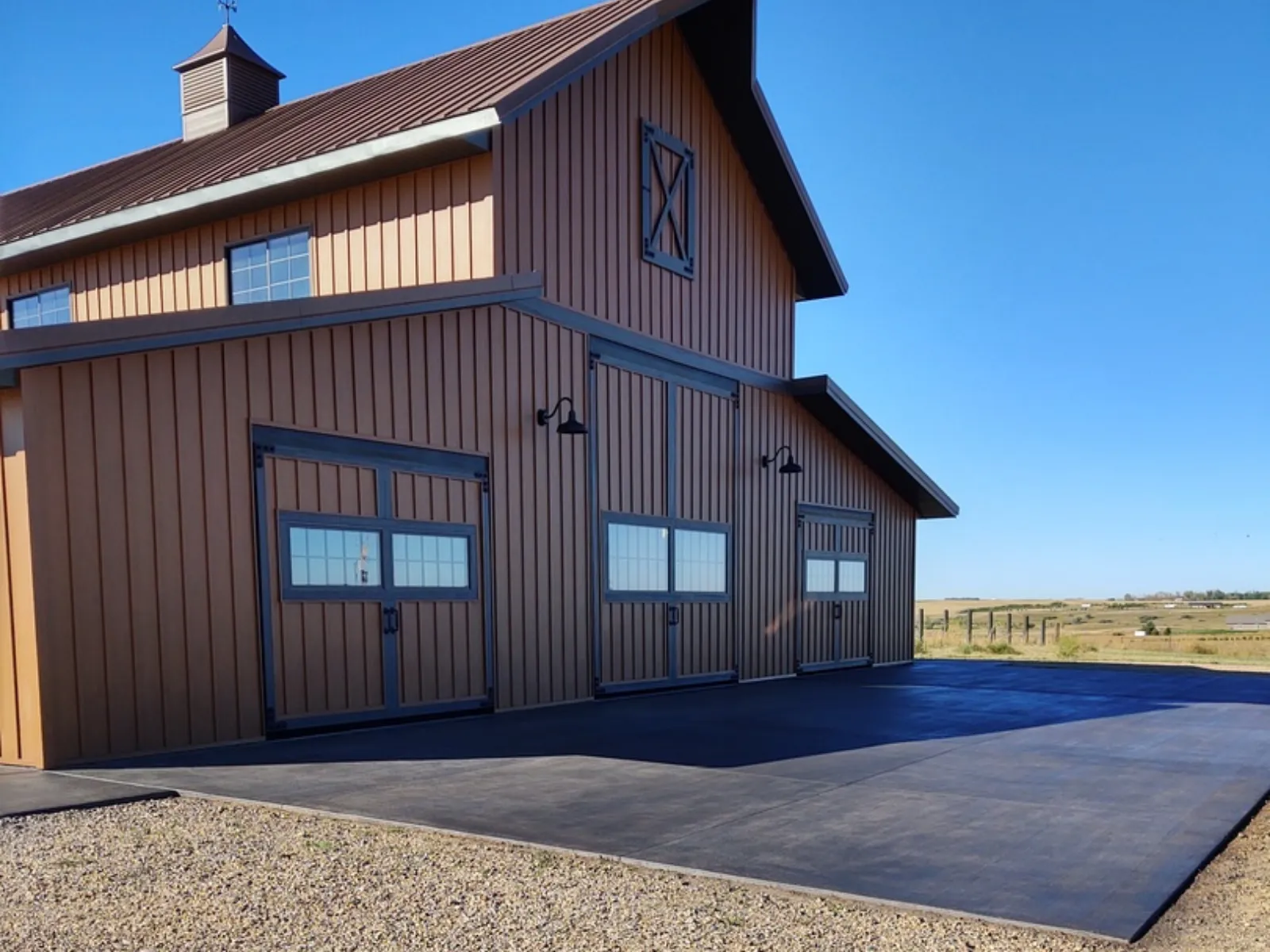
Barnyard Bold: Charcoal on Broom-Finished Concrete
Charcoal Antiquing™ Stain transformed this plain broom-finished concrete barn apron with a bold, variegated finish. The dark color minimized the unfinished appearance and gave the rural exterior a more polished, modern look.
Size 3000 sq. ft.
Surface Broom finish concrete
Color Charcoal Antiquing™
Sealer Satin EasySeal™
Time 2 days
Level Beginner
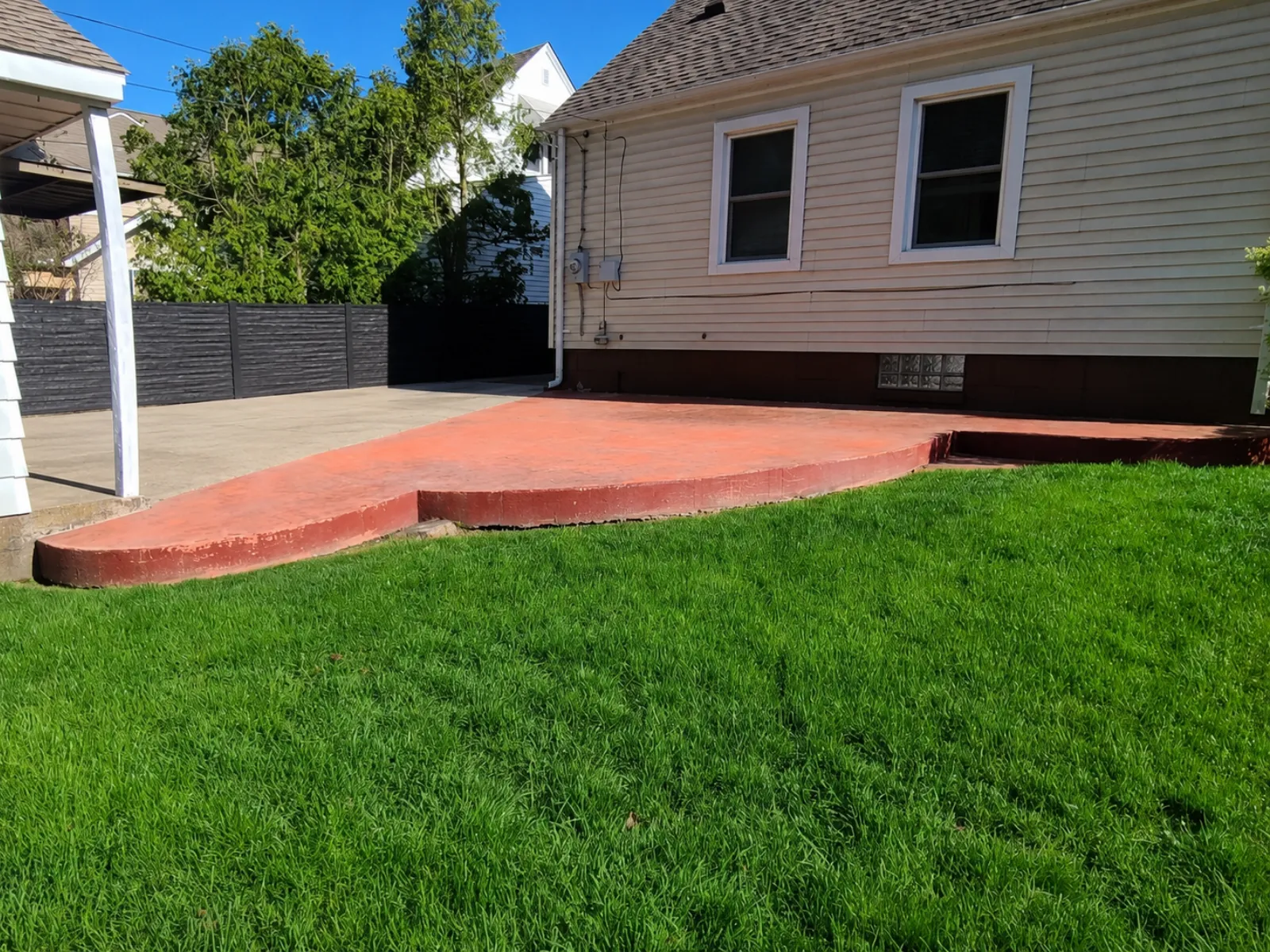
From Orange to Elegant: A Charcoal and Black Color Change
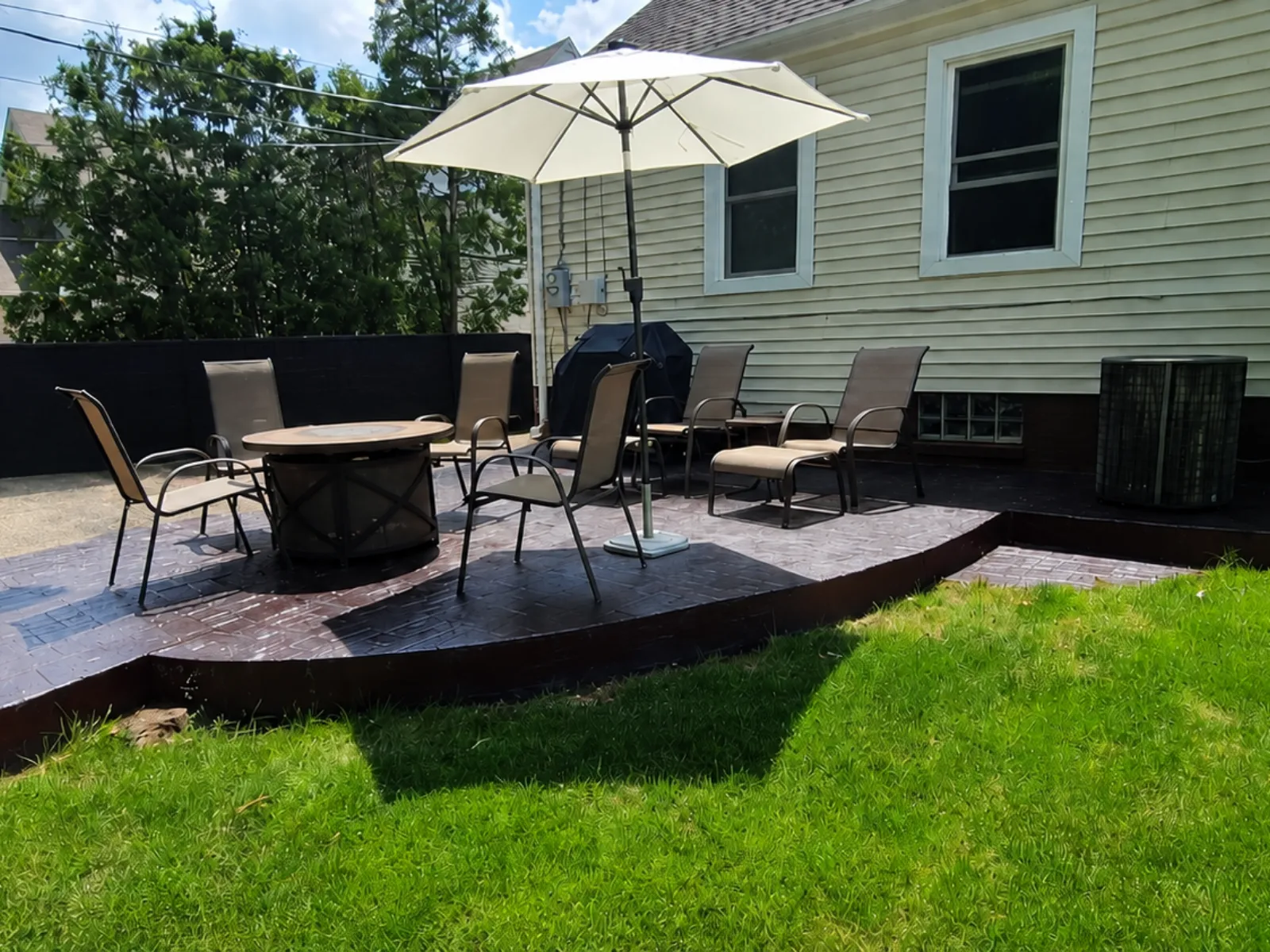
This homeowner inherited a stamped patio in an unfortunate orange, and used a mix of Charcoal and Black Antiquing™ to take it somewhere else entirely. The dark tones highlight the stamp pattern while letting a hint of the original color show through — proof that you don’t need to strip existing color to change it.
Size 350 sq. ft.
Surface Smooth concrete
Color Black & Charcoal Antiquing™
Sealer Gloss EasySeal™
Time 4 days
Level Intermediate
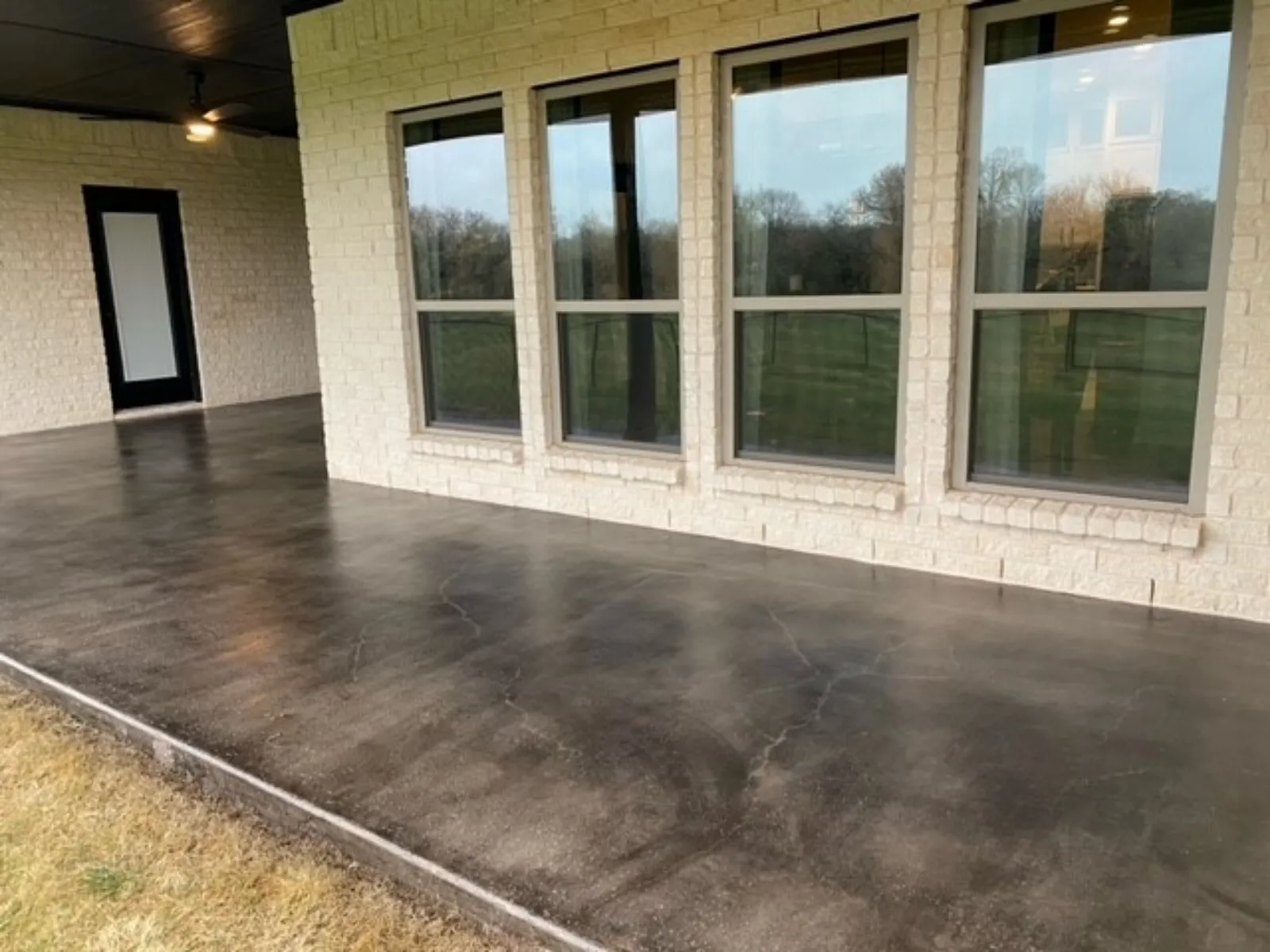
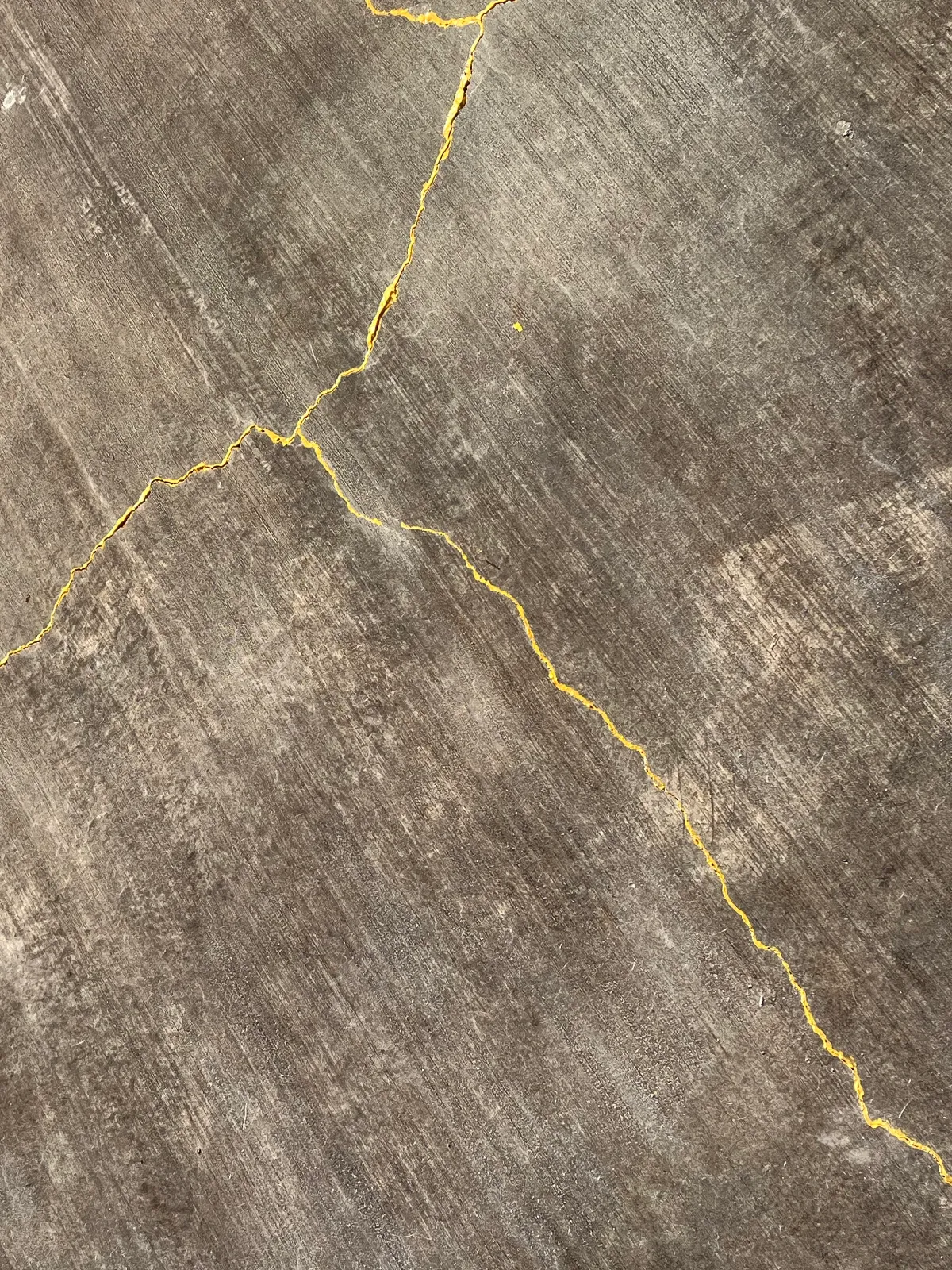
Black and Gold: Turning Patio Cracks Into a Feature
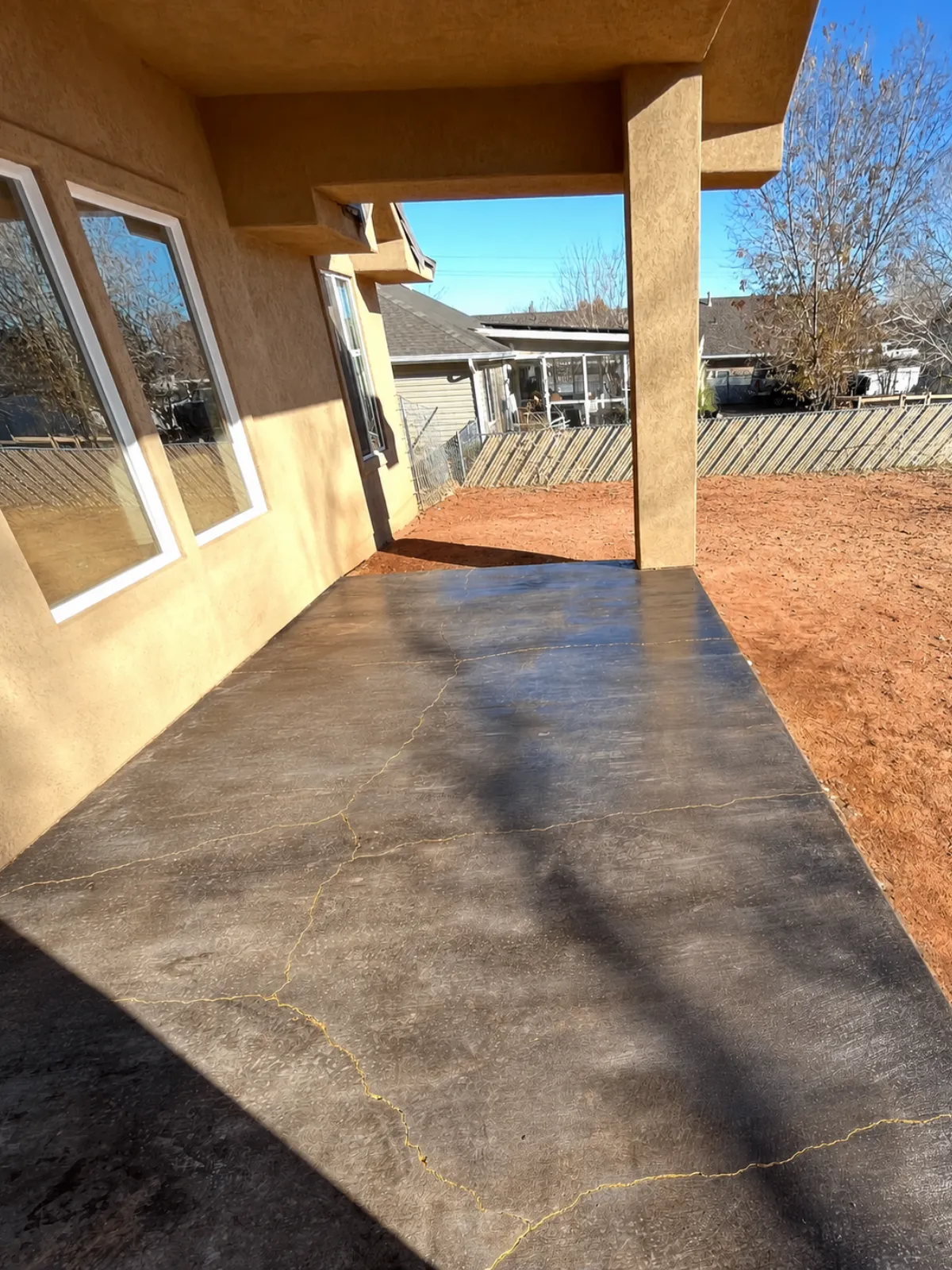
Rather than fight the cracks in this broom finish slab, the homeowner leaned into them — Black Antiquing™ stain across the surface, then gold acrylic craft paint worked into the crack lines. A reminder that a cracked patio isn’t disqualified from staining; it just needs a design that accounts for it.
Size 200 sq. ft.
Surface Broom finish concrete
Color Black Antiquing™
Sealer Satin EasySeal™
Time 4 days
Level Beginner
Brown, Driftwood & Chocolate
Warm browns are the most popular patio colors in the Direct Colors range — neutral enough to work with nearly any home exterior, and rich enough to read like natural stone or wood on stamped concrete. This group runs from the best-selling Driftwood Antiquing™ to one-step Chocolate EasyTint™.
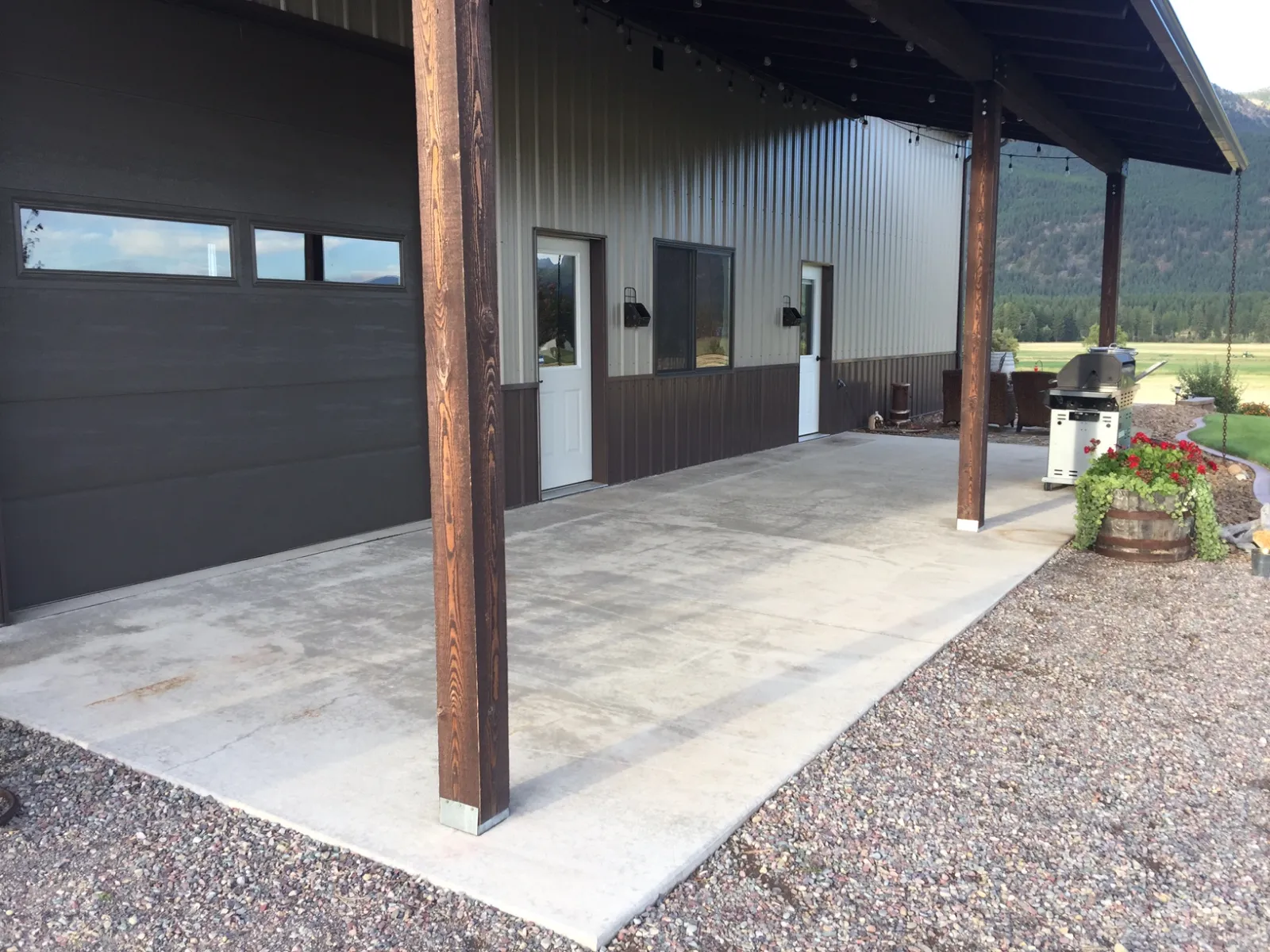
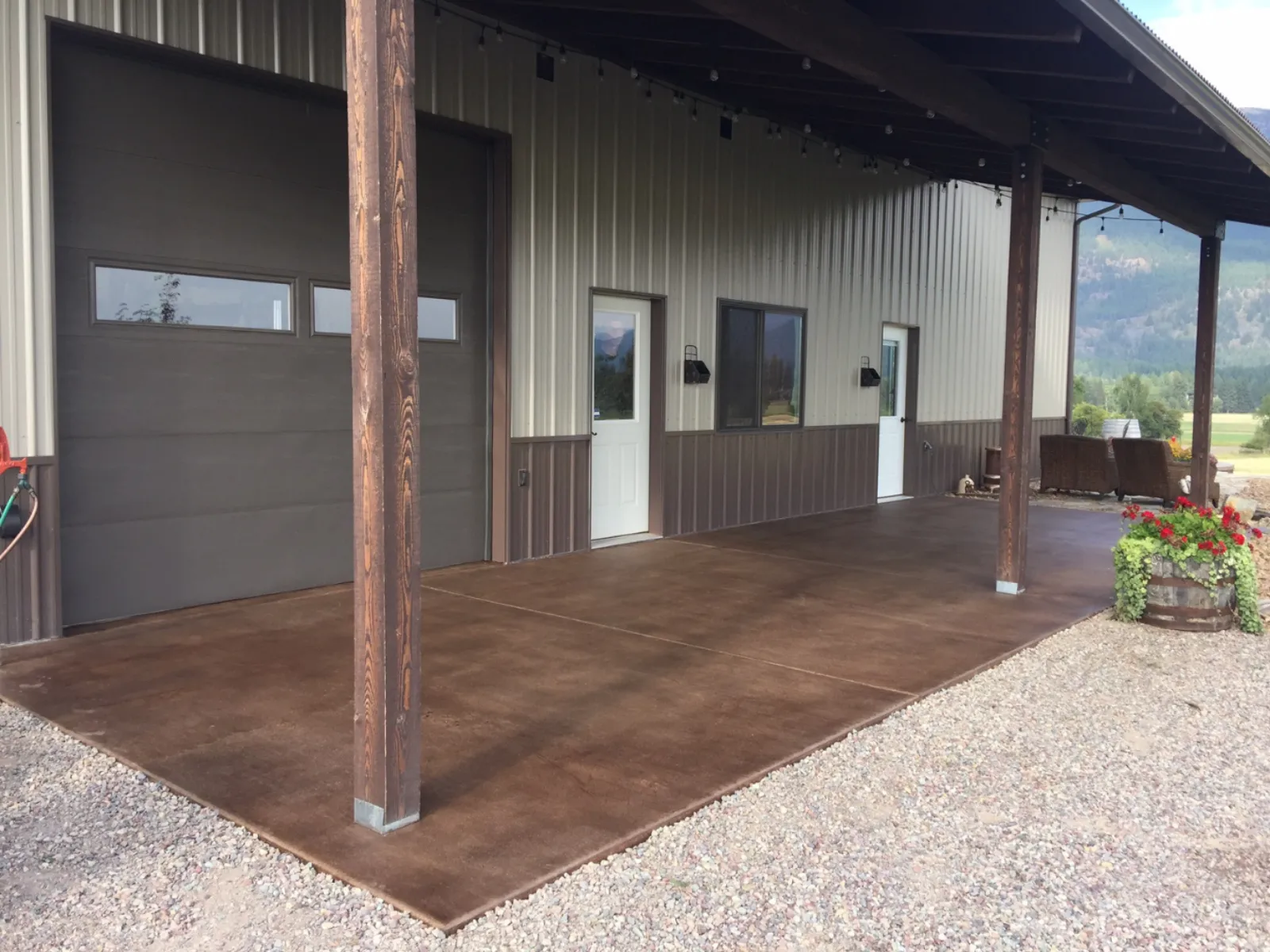
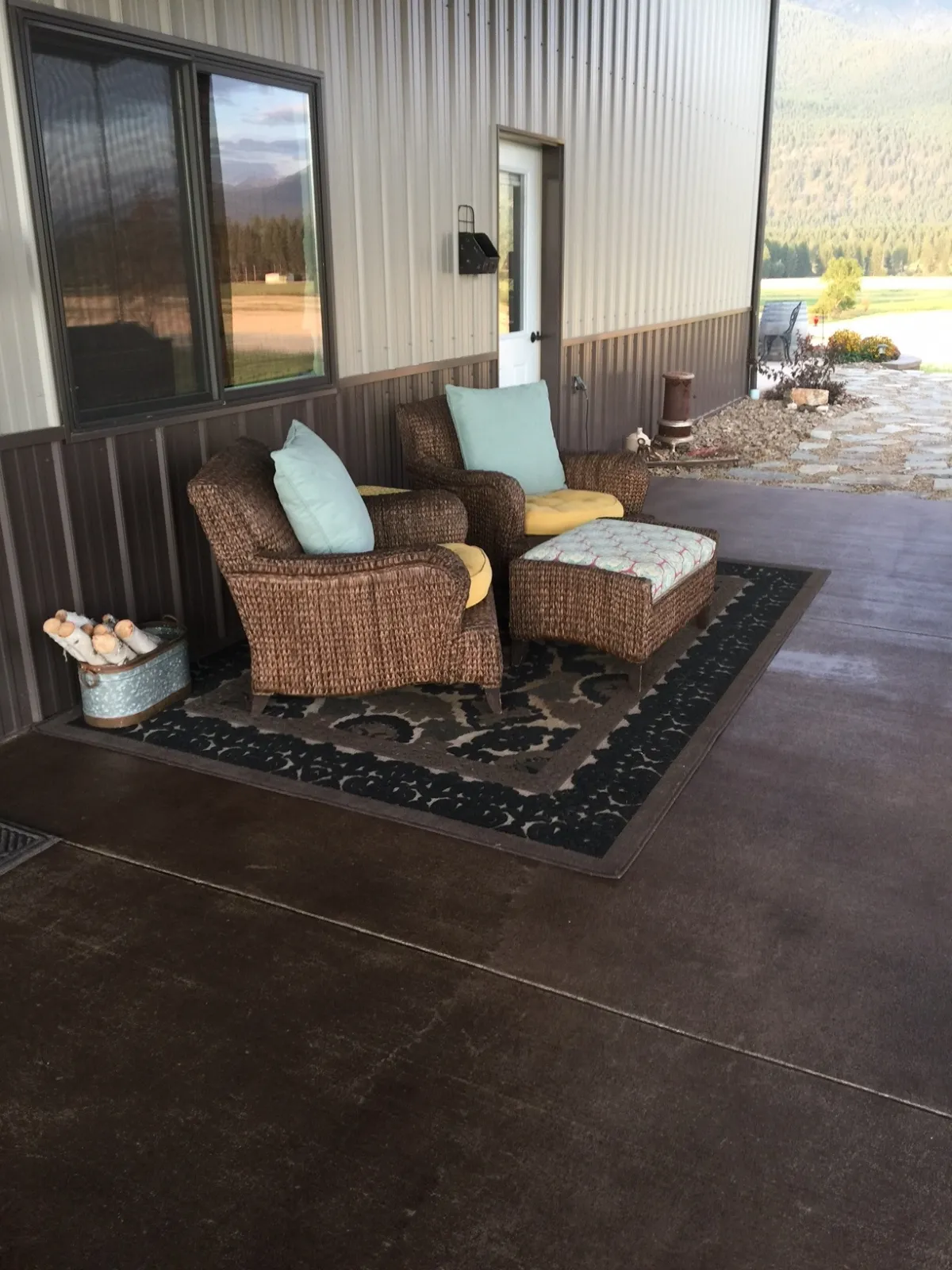
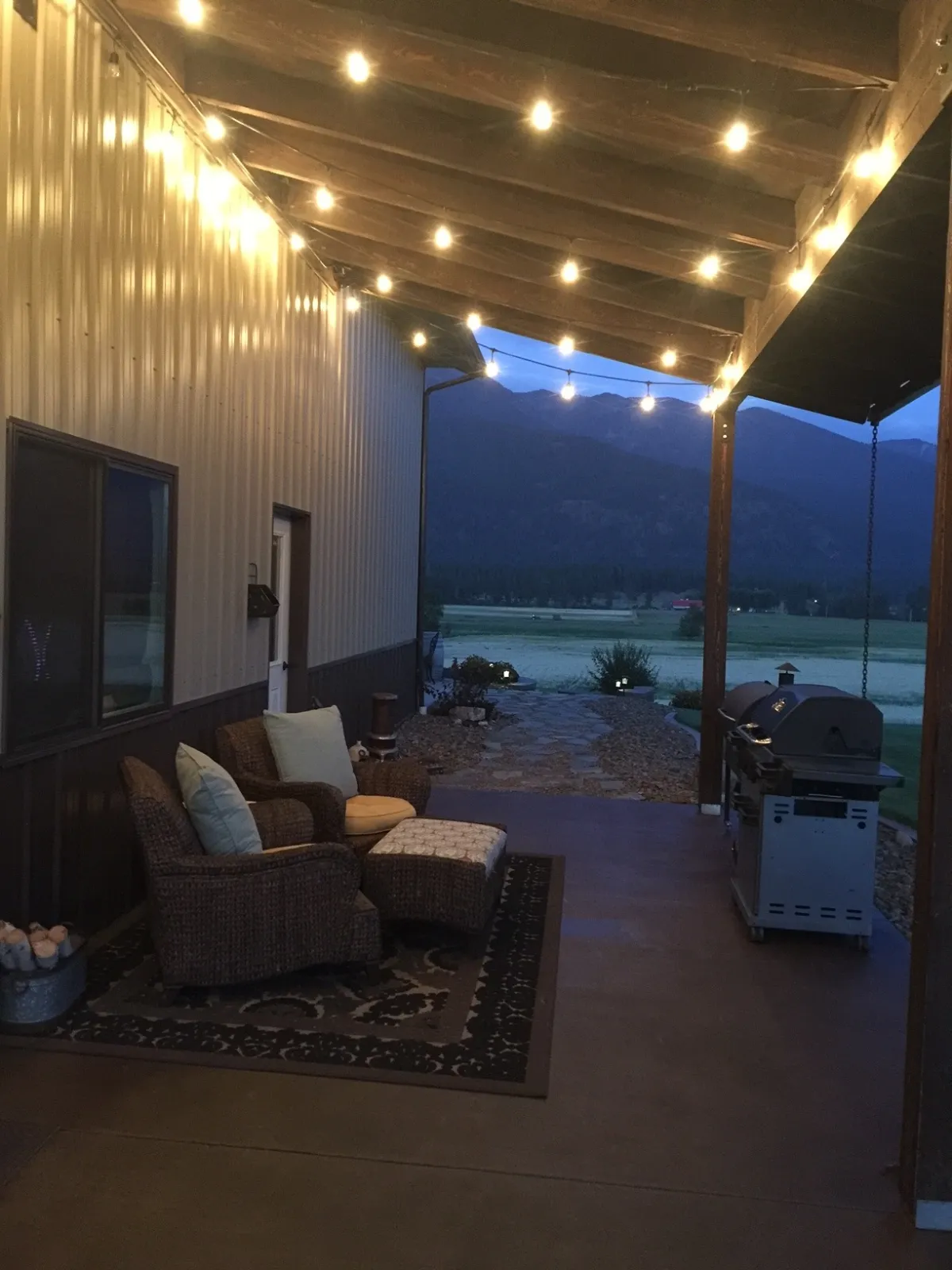
Pole Barn Patio: Driftwood on a Broom Finish Slab
Bare, unfinished concrete in a pole barn outdoor living space, transformed with Driftwood Antiquing™ over a broom finish. The evening photo is the one to look at — string lights over warm brown concrete is exactly the effect people are after and rarely see rendered honestly.
Size 400 sq. ft.
Surface Broom-finish concrete
Color Driftwood Antiquing™
Sealer Satin EasySeal™
Time 2 days
Level Beginner
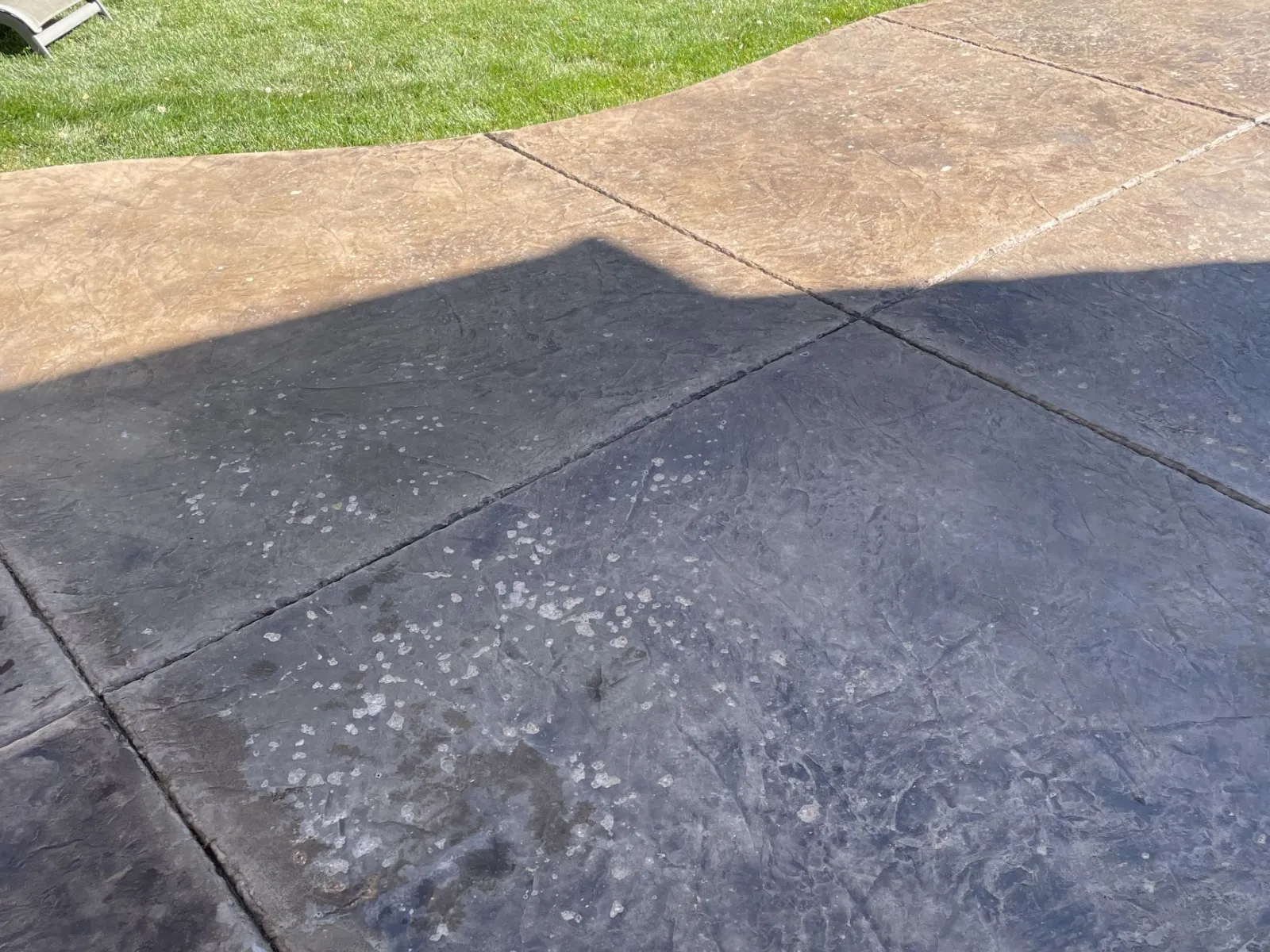
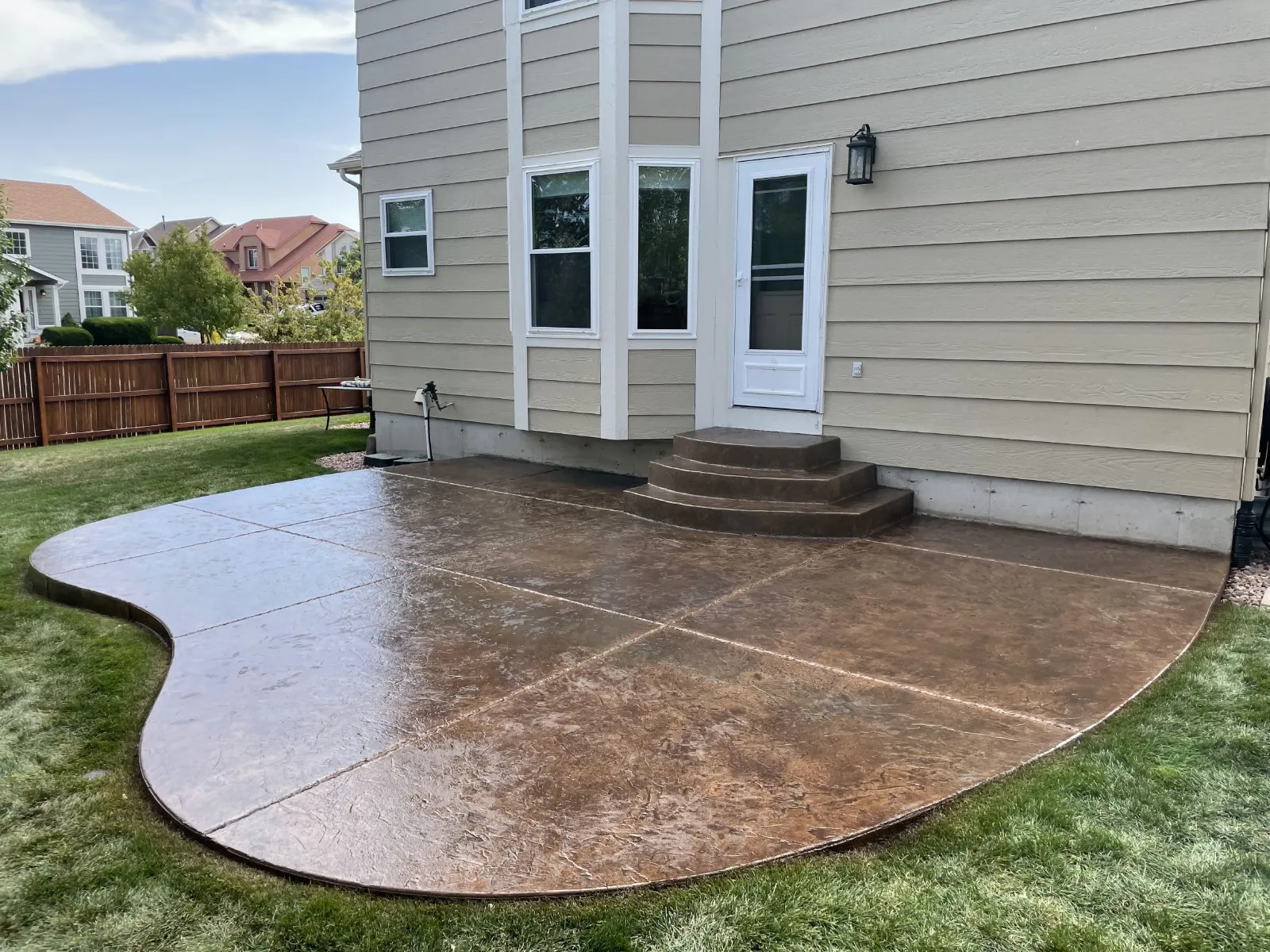
Mountain Majesty: Repairing and Recoloring a Freeze-Damaged Patio
Starting with a surface pitted and faded by the harsh Colorado elements, this patio was revived by patching the damage, tinting the repairs with concrete pigment so they’d blend rather than show through, and finishing with antiquing stain applied by pump sprayer.
Size 400 sq. ft.
Surface Stamped concrete
Color Driftwood Antiquing™ & Cocoa Brown Pigment
Sealer Satin EasySeal™
Time 2 days
Level Intermediate
From Faded Pink to Rich Again: Driftwood on a Smooth Concrete Patio
This 1,600-square-foot patio was poured in 2012 with dark red integral color that had faded to a washed-out pink. Driftwood Antiquing™ Stain and EasySeal™ Satin restored its color depth and dimension while preserving the concrete’s original character.
Size 1600 sq. ft.
Surface Stamped concrete
Color Driftwood Antiquing™
Sealer Satin EasySeal™
Time 2 days
Level Beginner
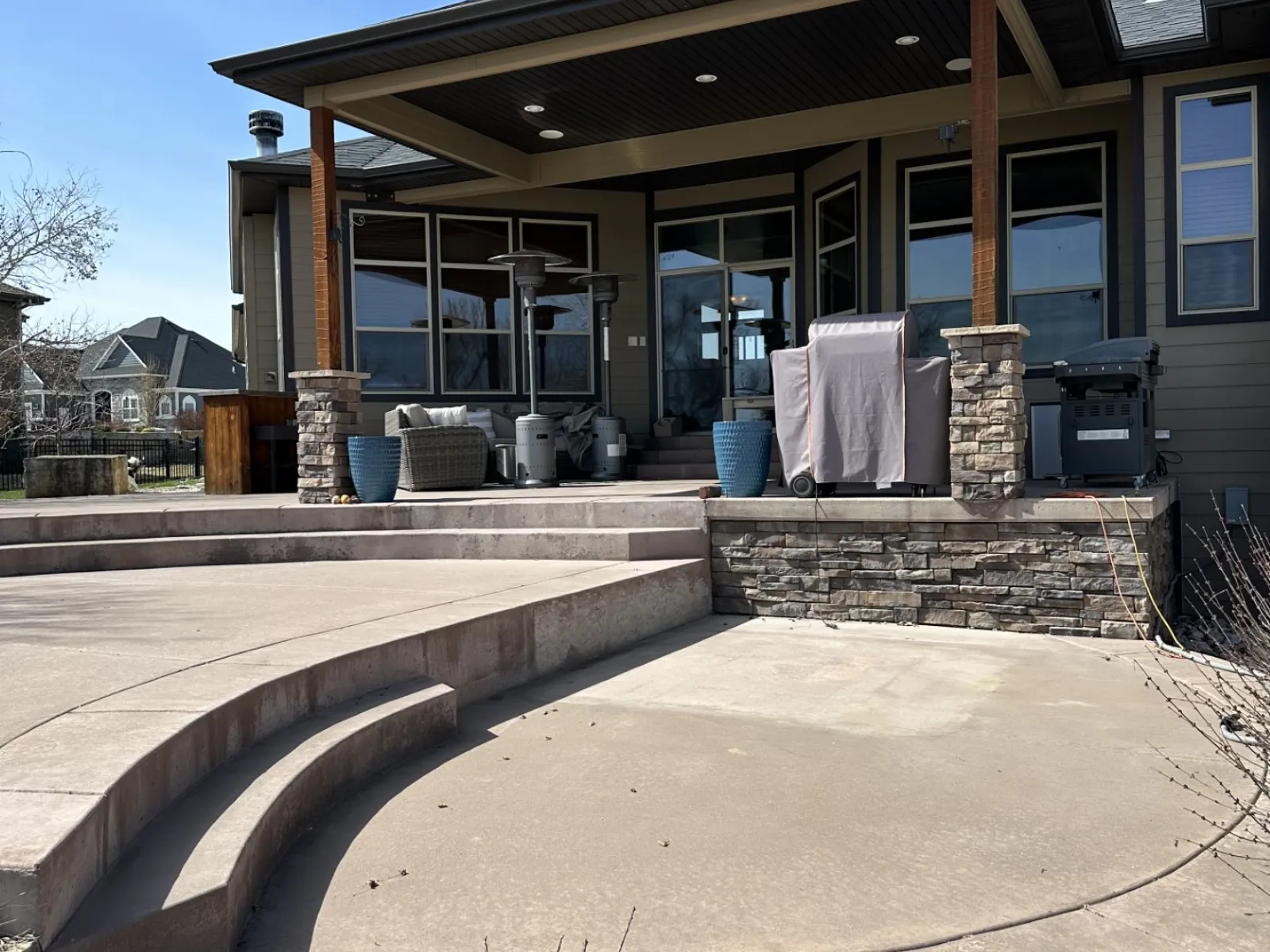
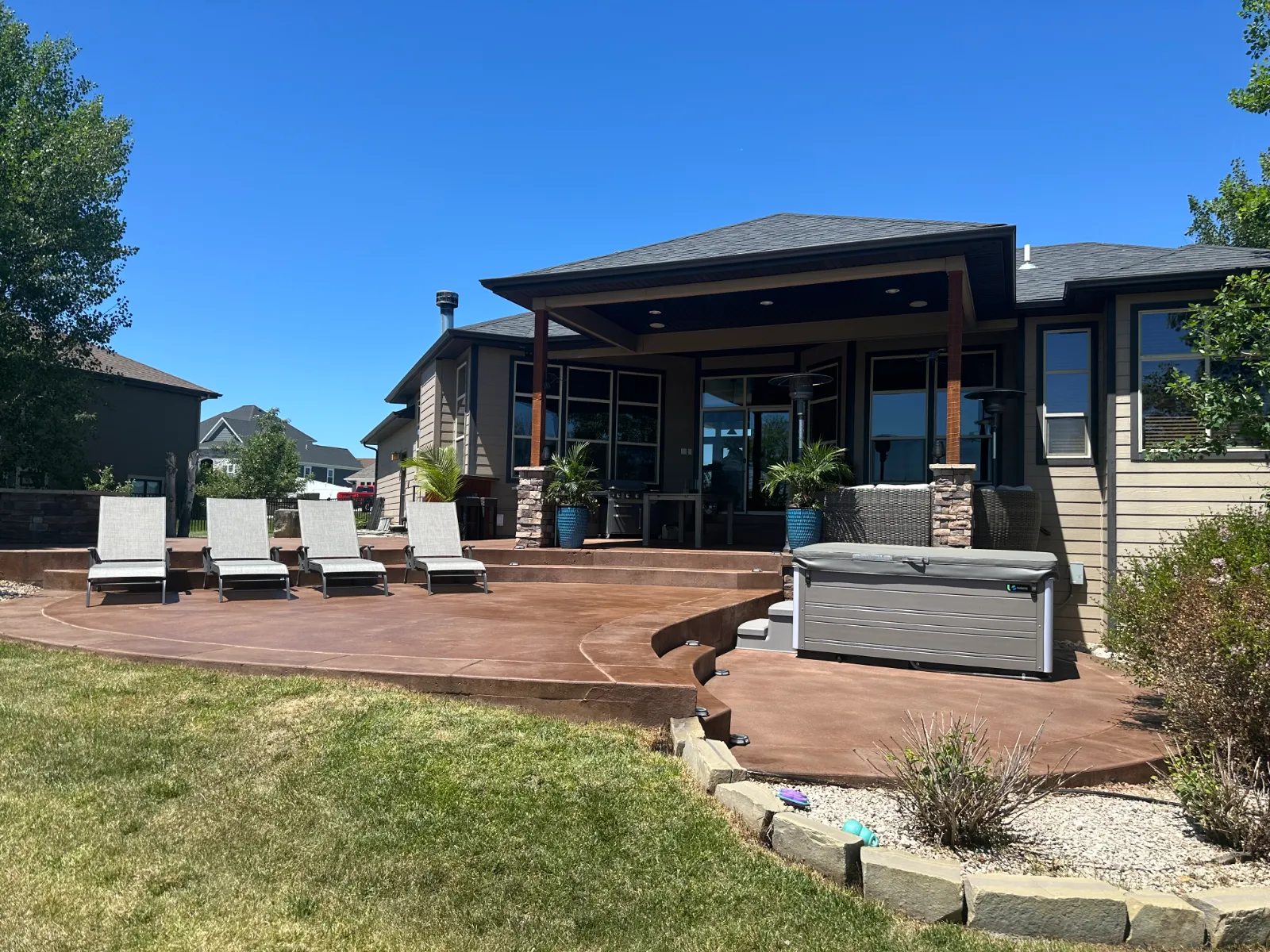
Sweet Outdoor Living: Chocolate EasyTint™ on a Covered Patio
Rather than staining and then sealing, this covered patio was finished with Chocolate EasyTint™ — a tinted sealer that colors and protects in a single application.
Size 150 sq. ft.
Surface Smooth concrete
Color Chocolate EasyTint™
Sealer Chocolate EasyTint™
Time 1 day
Level Beginner
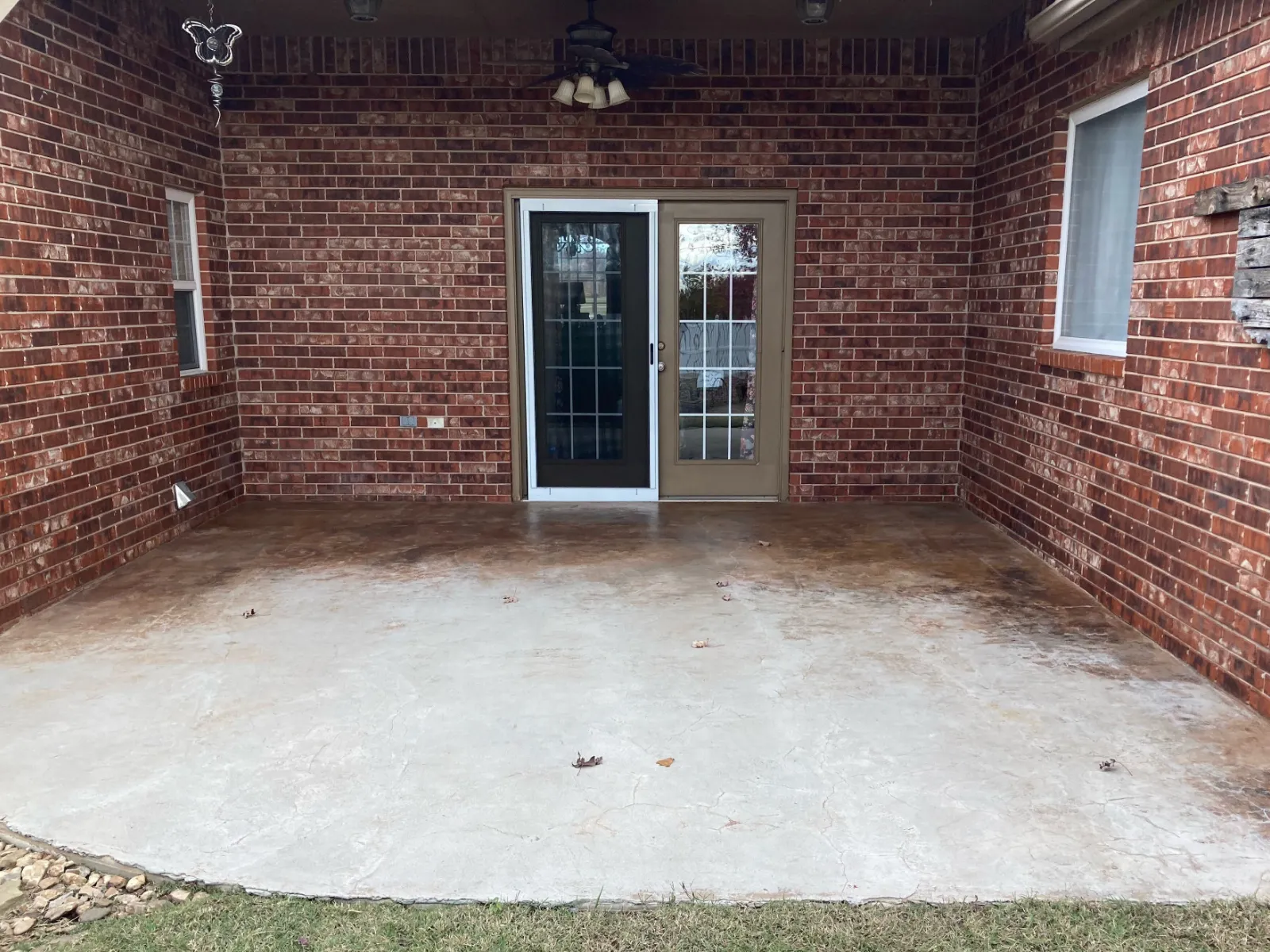
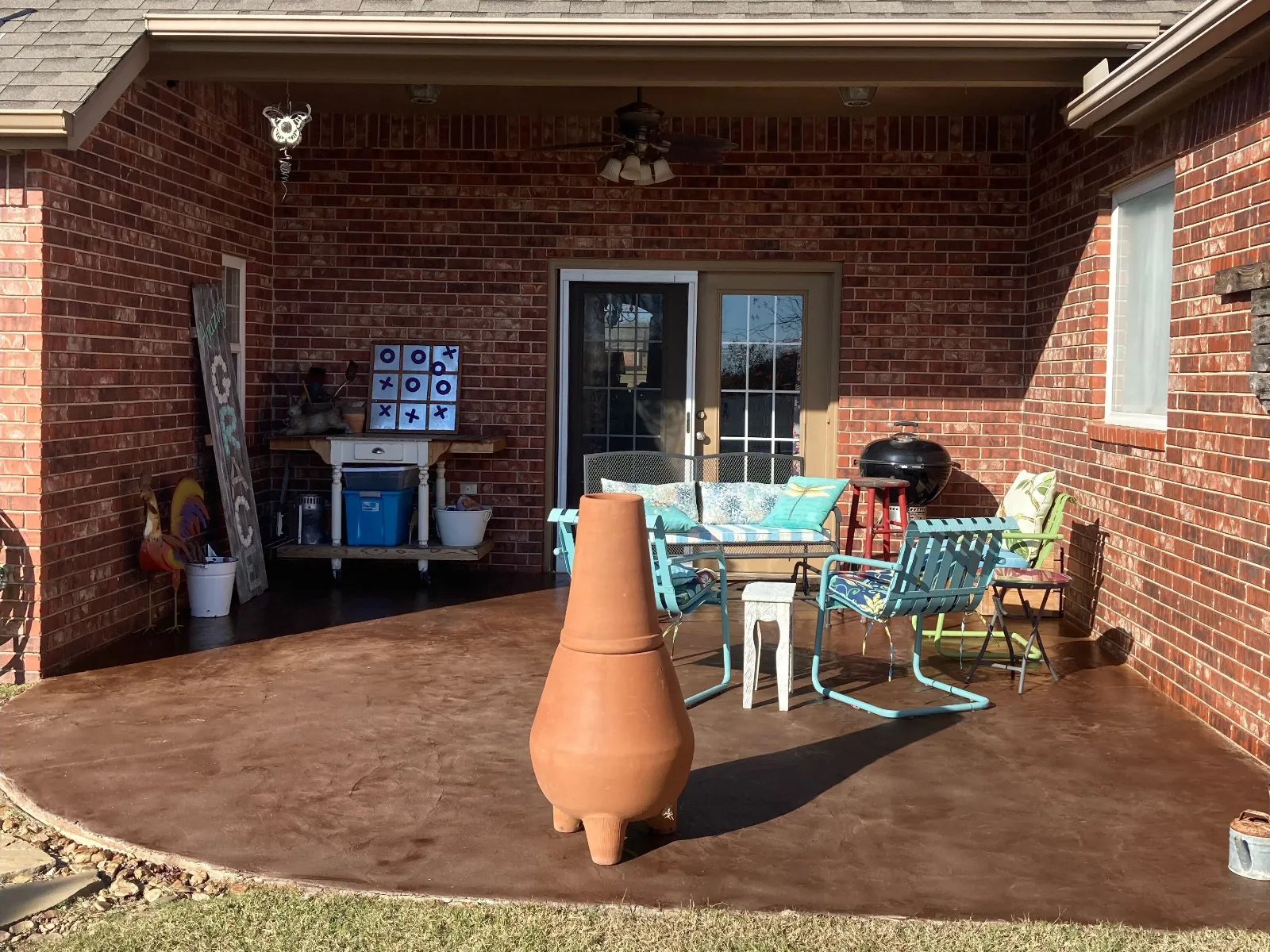
11-Year-Old Patio Reborn: Chocolate EasyTint™ on Stamped Concrete
This 11-year-old stamped concrete patio had lost its original color, leaving it faded, chalky, and uneven. Chocolate EasyTint™ tinted sealer restored a rich brown tone, revived the stamped pattern, and gave the outdoor space a refreshed finish.
Size 950 sq. ft.
Surface Stamped concrete
Color Chocolate EasyTint™
Sealer Chocolate EasyTint™
Time 2 days
Level Beginner
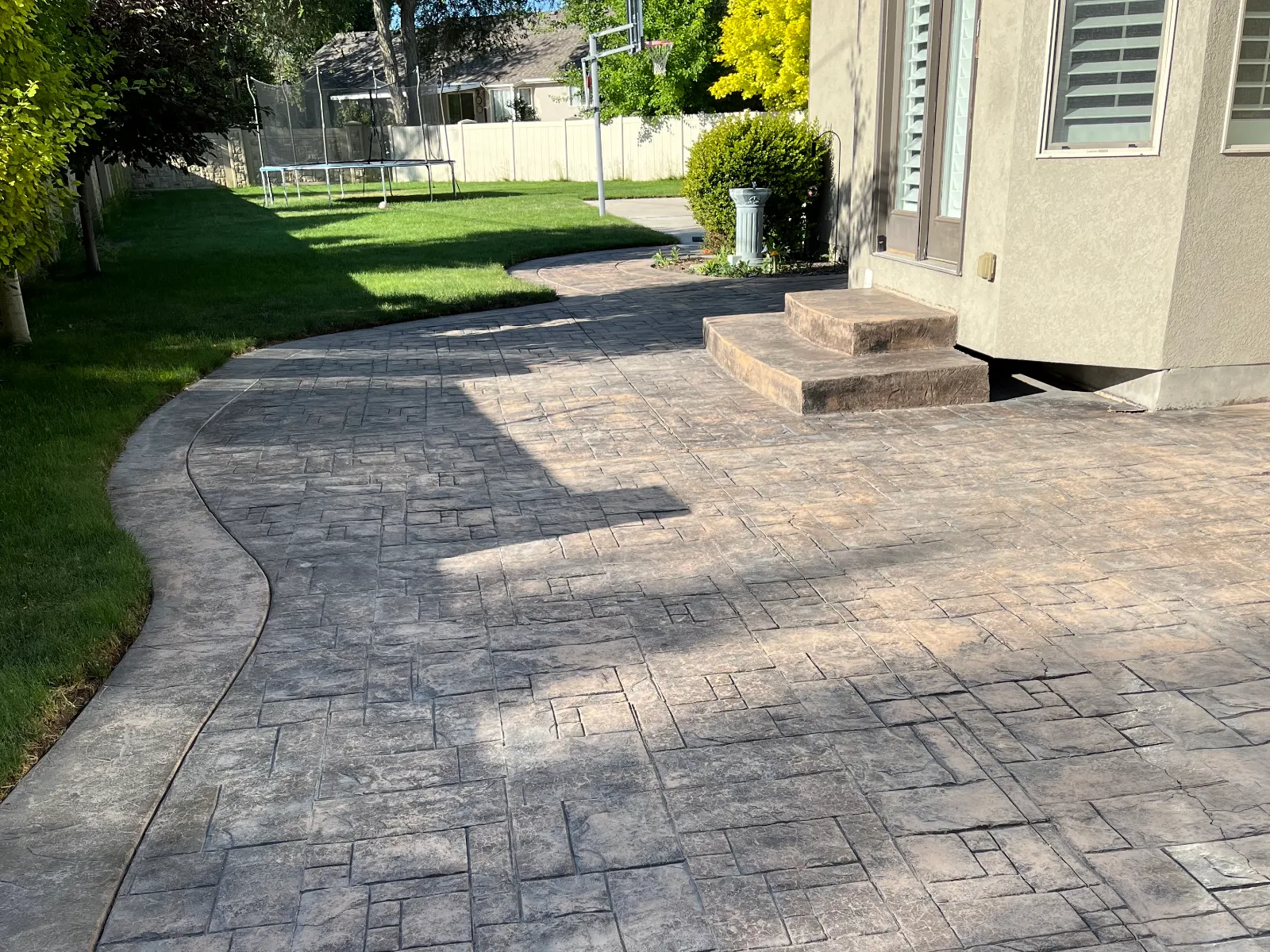
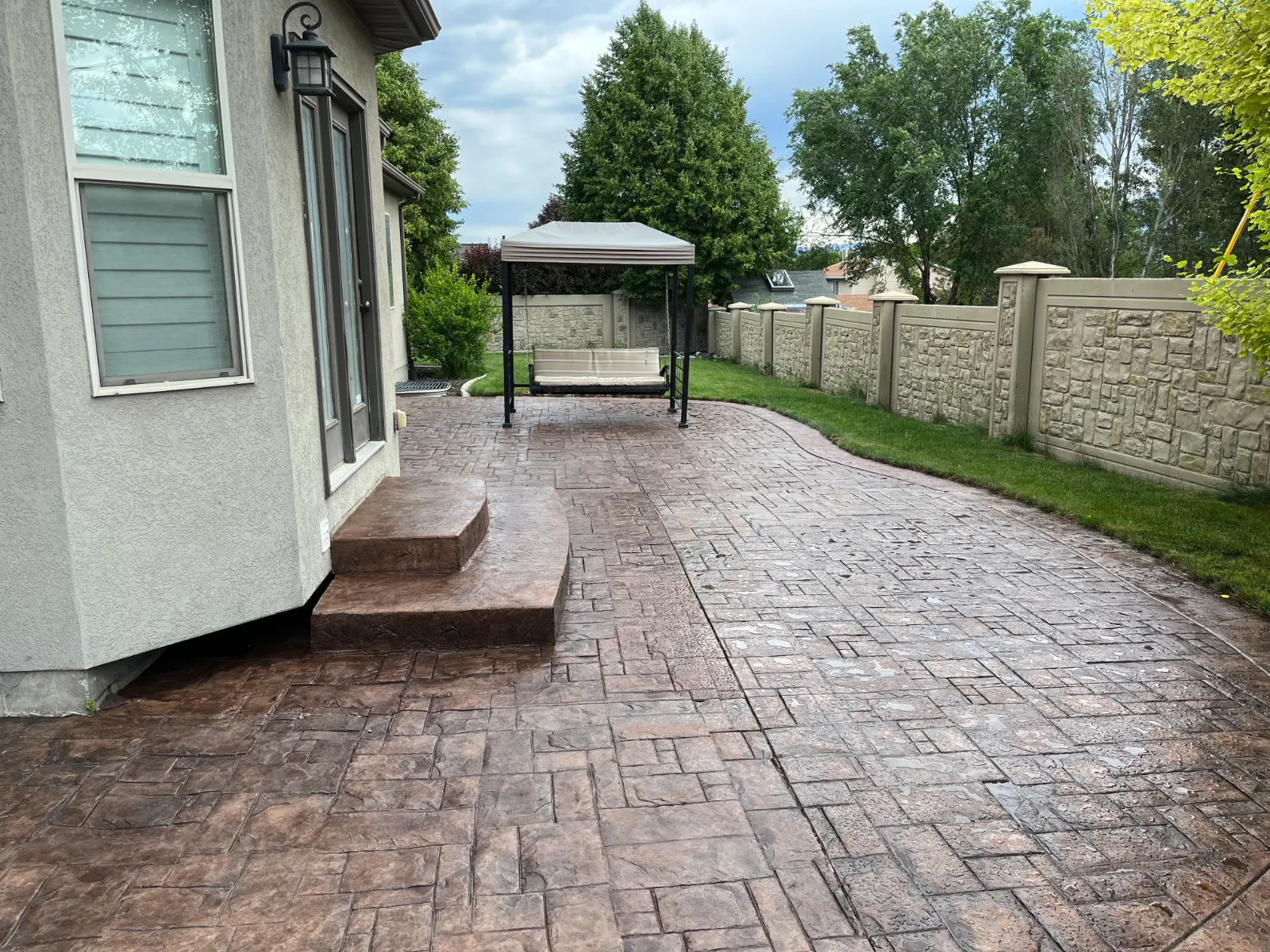
Two-Tone Restoration: Aztec Brown and Khaki on 3,000 sq. ft. of Stamped Concrete
A weathered two-tone stamped patio brought back with Khaki Antiquing™ across the main field and Aztec Brown on the borders and steps. Using a second color to define edges is what keeps a patio this size from reading as one flat expanse.
Size 3000 sq. ft.
Surface Stamped concrete
Color Aztec Brown & Khaki Antiquing™
Sealer Gloss EasySeal™
Time 4 days
Level Intermediate
Red, Crimson & Warm Earth Tones
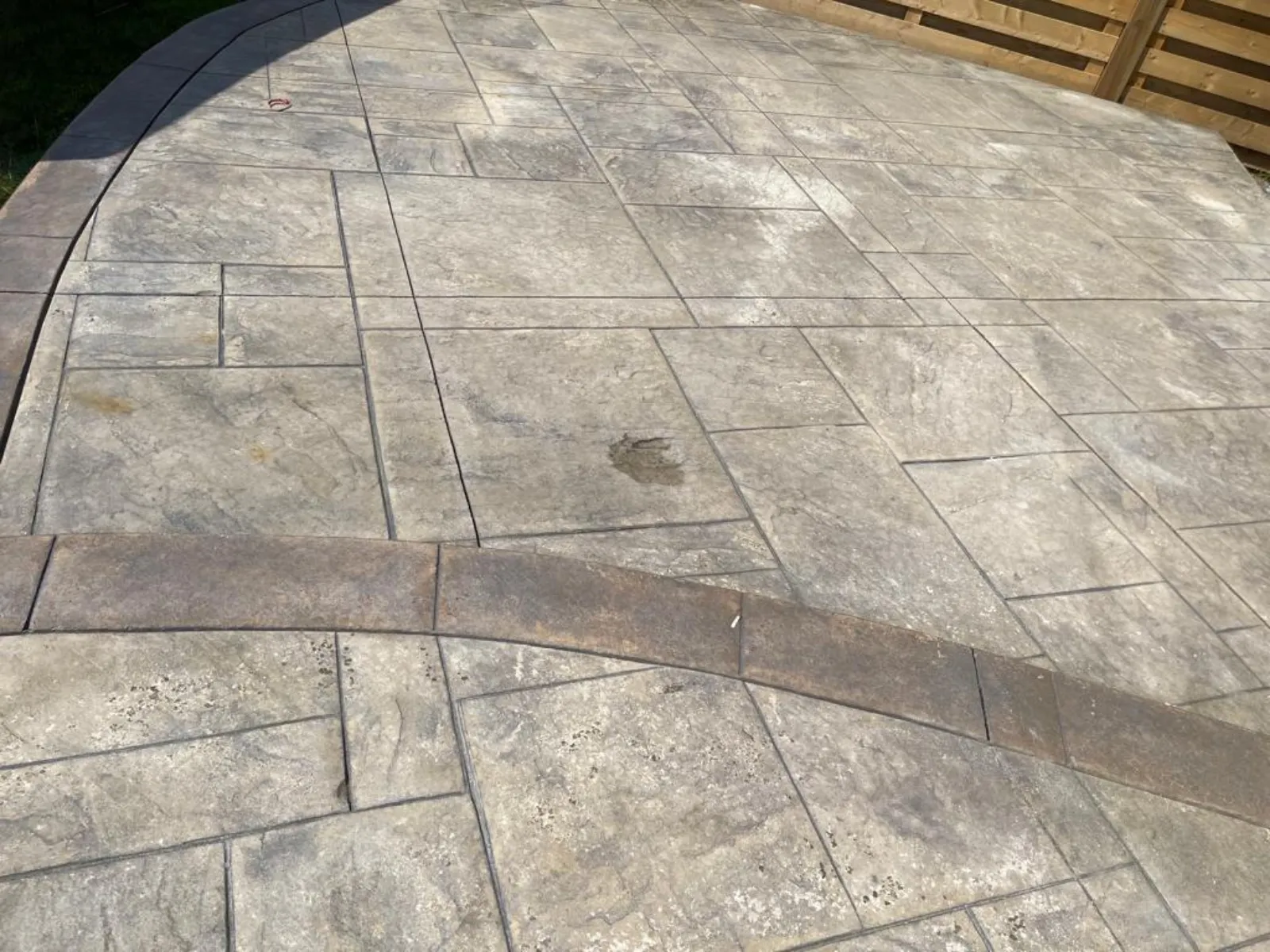
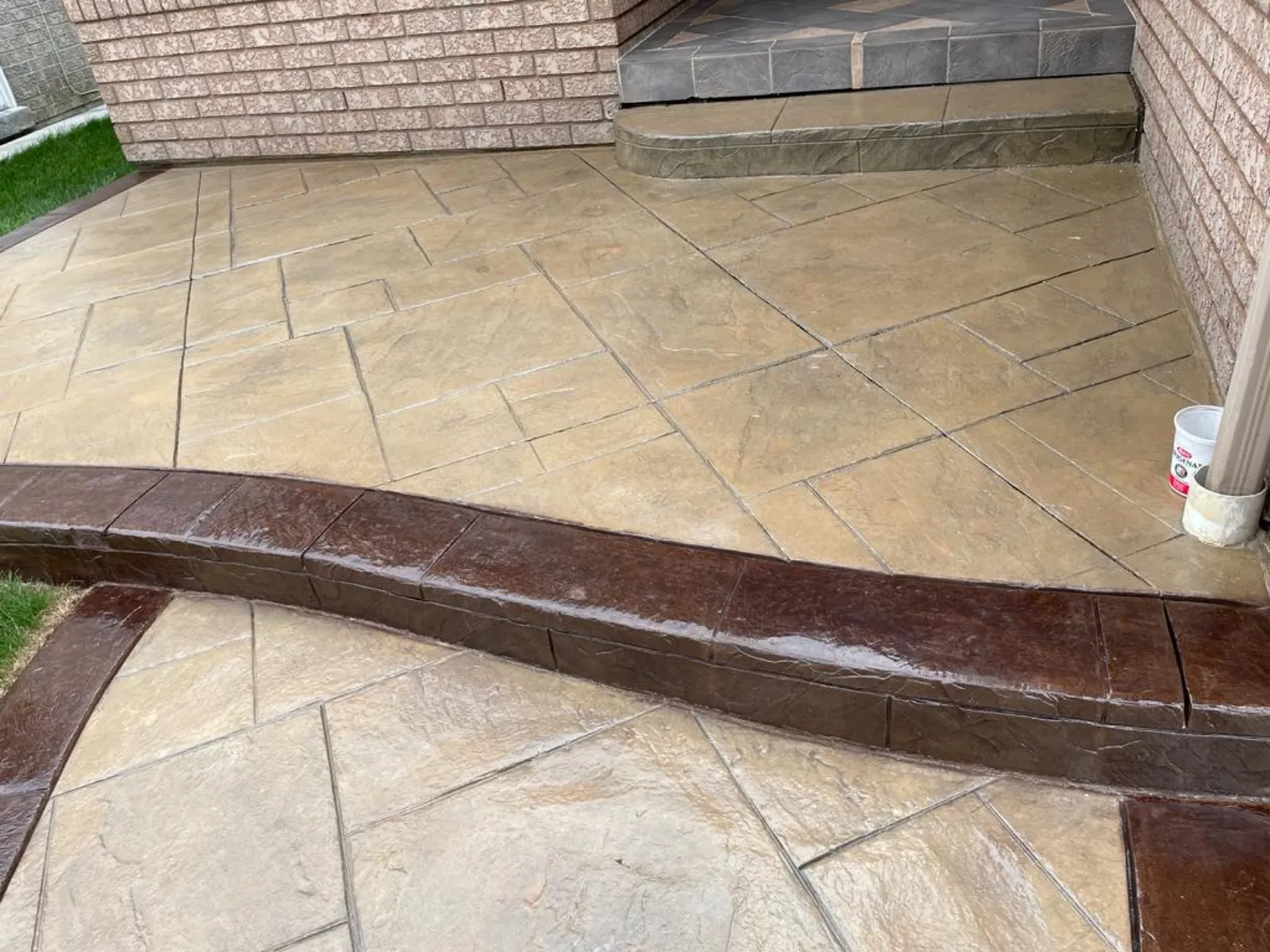
Reds, crimsons, and warm spice tones bring out the character in stamped and textured concrete, and read especially well against brick and stone. These are among the most forgiving colors on faded or unevenly weathered slabs — the warmth blends inconsistency rather than exposing it.
Crimson Revival: Red Stain on 1,236 sq. ft. of Stamped Concrete
The homeowner was unhappy with the original color and went over it with Crimson Antiquing™, then finished in high gloss for a wet-look sheen that makes the stamp pattern pop. Scale like this is where DIY staining saves the most money against contractor pricing.
Size 1236 sq. ft.
Surface Stamped concrete
Color Crimson Antiquing™
Sealer Gloss EasySeal™
Time 4 days
Level Beginner
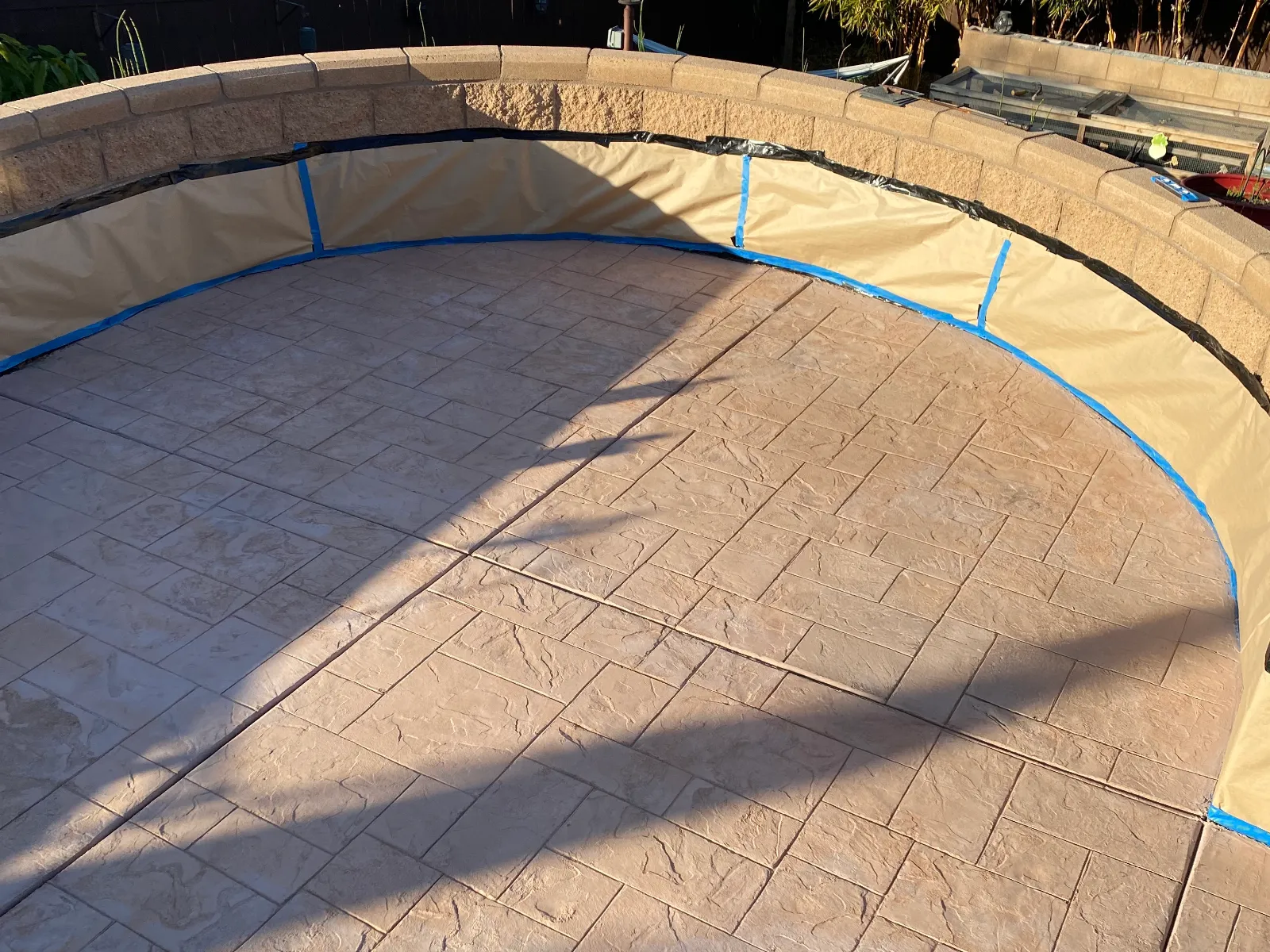
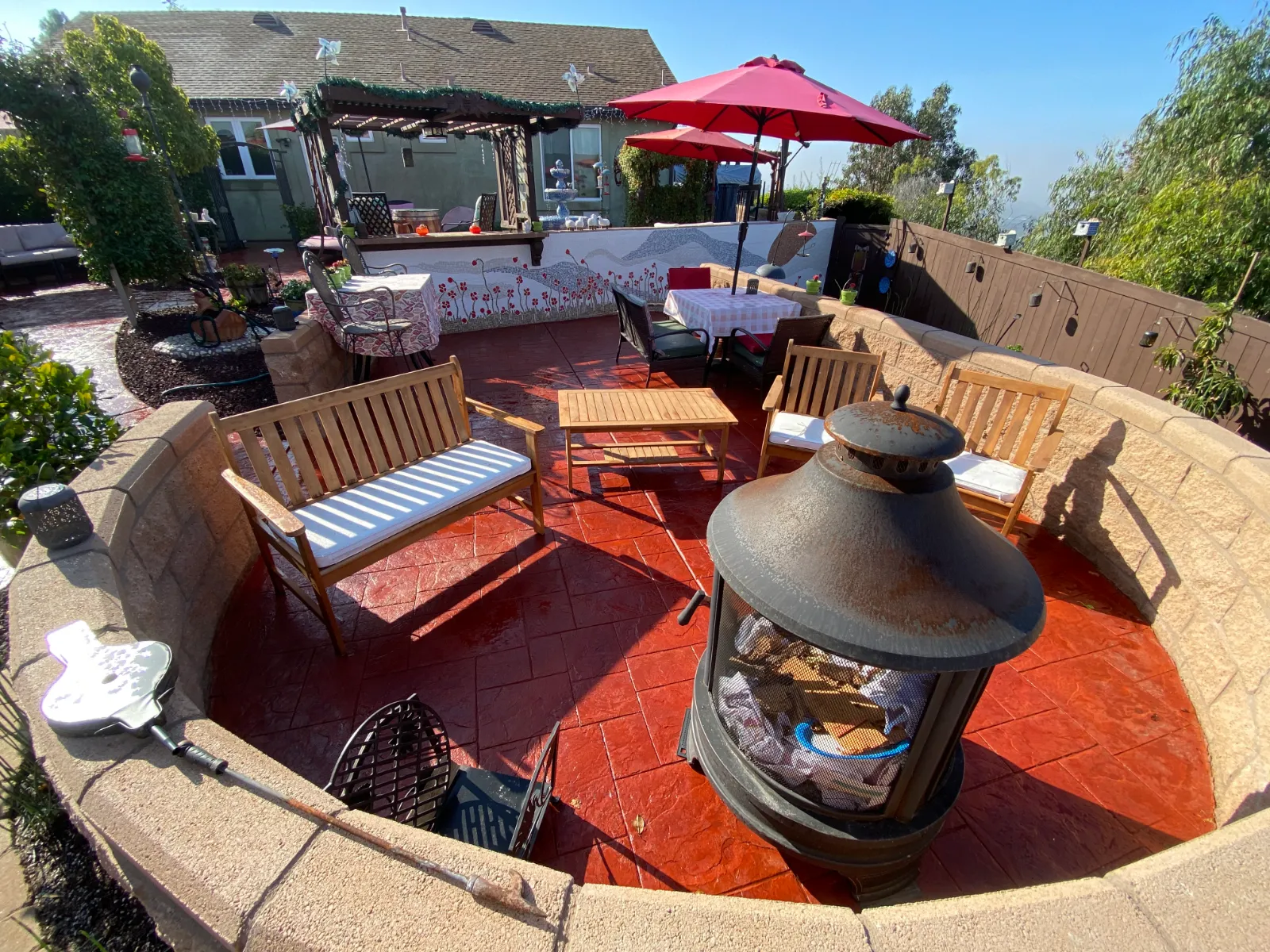
Cafe Royale: Clearing Efflorescence From a Faded Stamped Patio
This patio had two problems — faded color and efflorescence, the chalky white mineral bloom that surfaces on weathered concrete. Cleaning came first; staining second. Cafe Royale Antiquing™ then restored a deep, warm brown across the whole surface.
Size 400 sq. ft.
Surface Stamped concrete
Color Cafe Royale Antiquing™
Sealer Satin EasySeal™
Time 4 days
Level Beginner
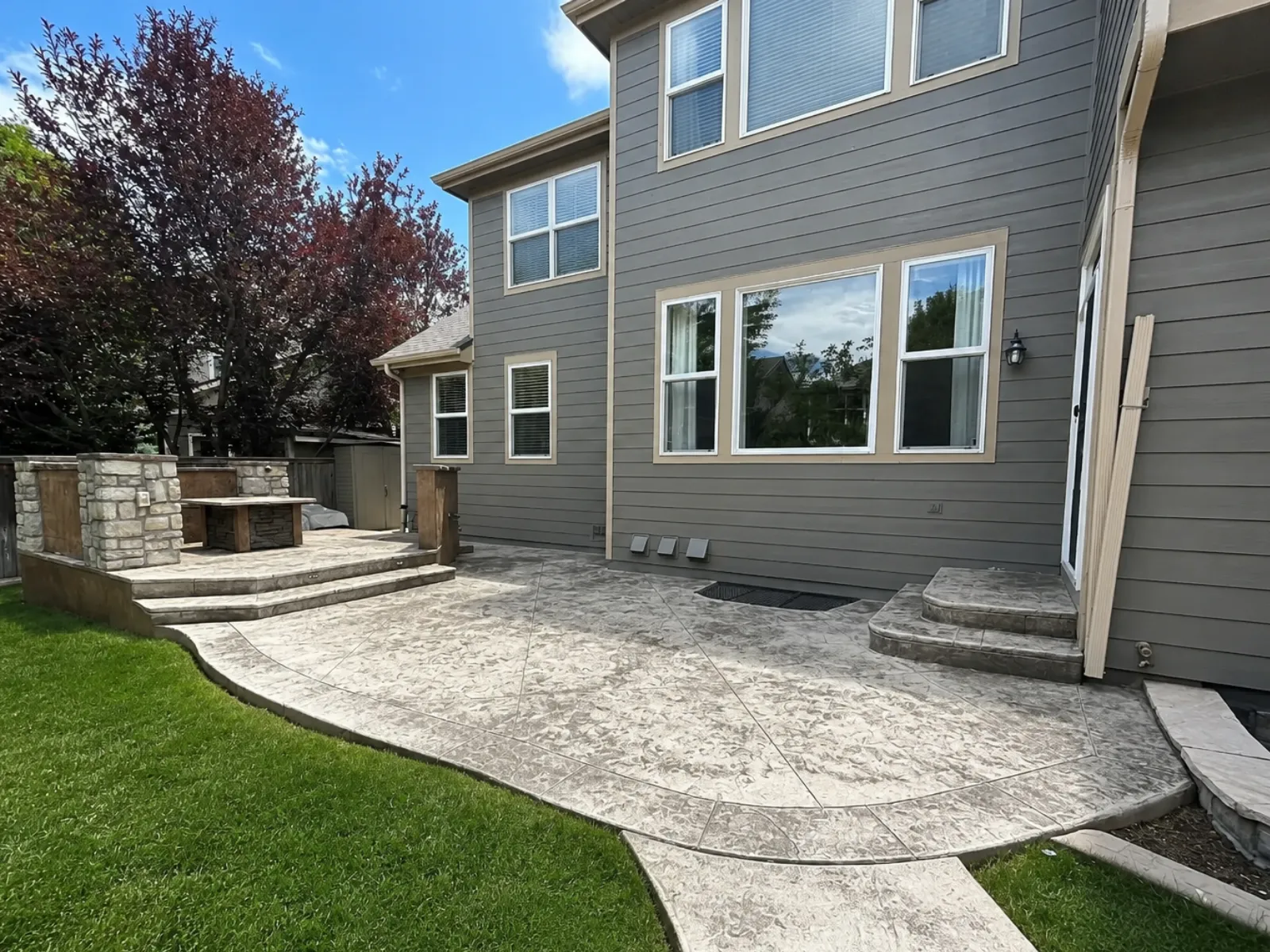
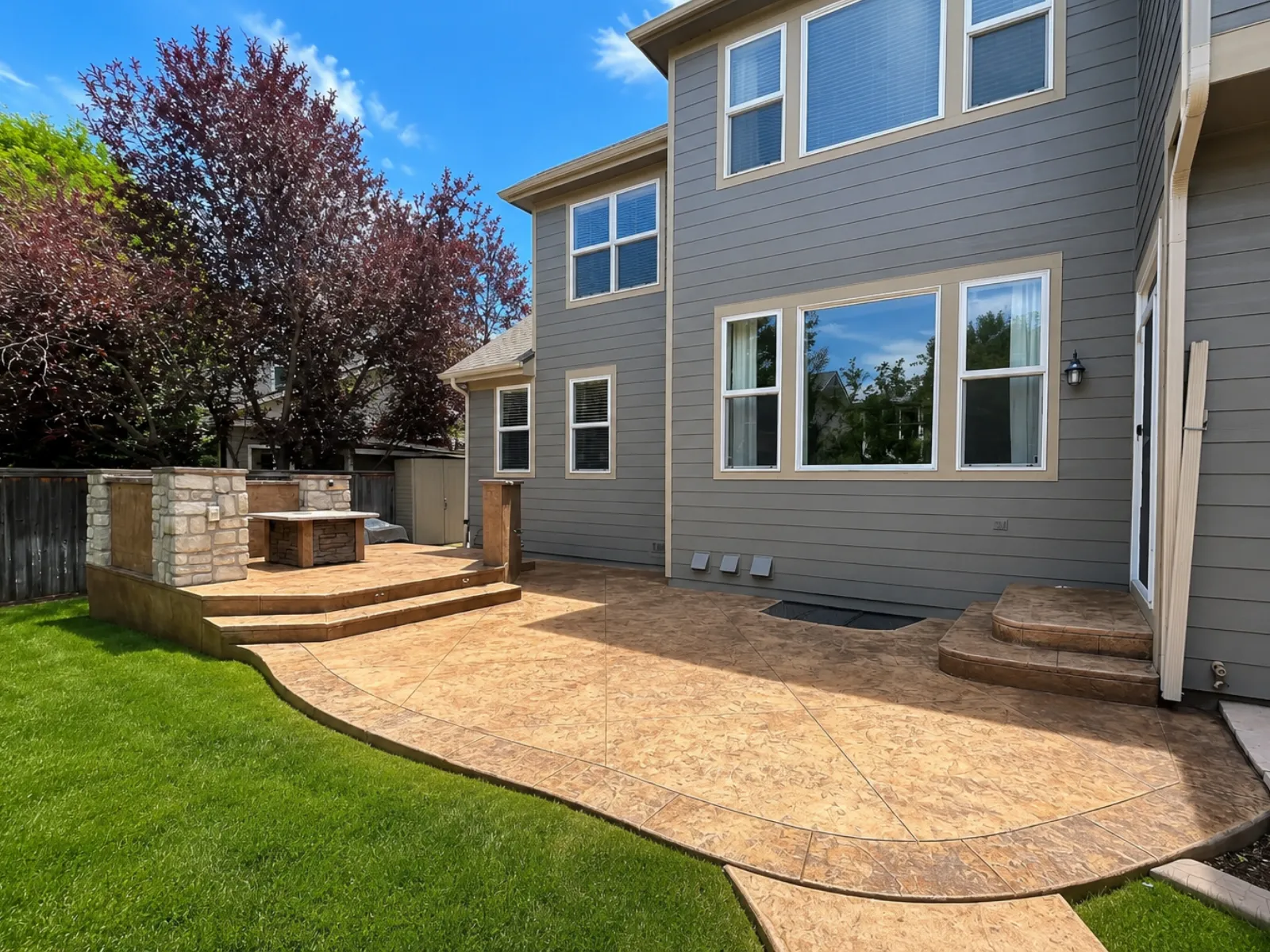
Cumin: A Warm Spice Tone on Stamped Concrete
Cumin sits between terracotta and gold, and it’s the color to reach for when a patio needs warmth without going red. On stamped concrete the tone settles into the pattern’s low points and highlights the raised texture.
Size 375 sq. ft.
Surface Stamped concrete
Color Cumin Antiquing™
Sealer Satin EasySeal™
Time 3 days
Level Beginner
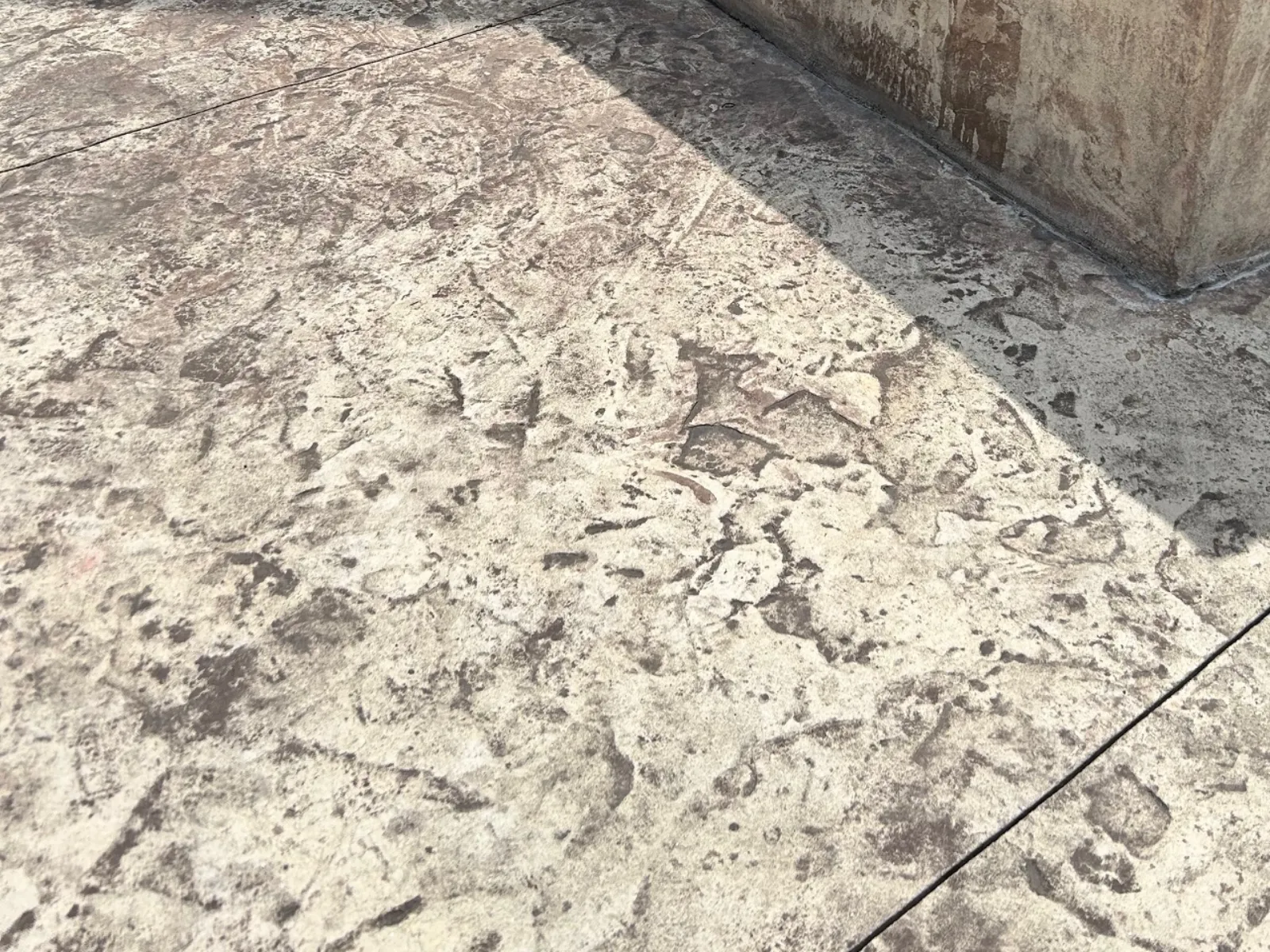
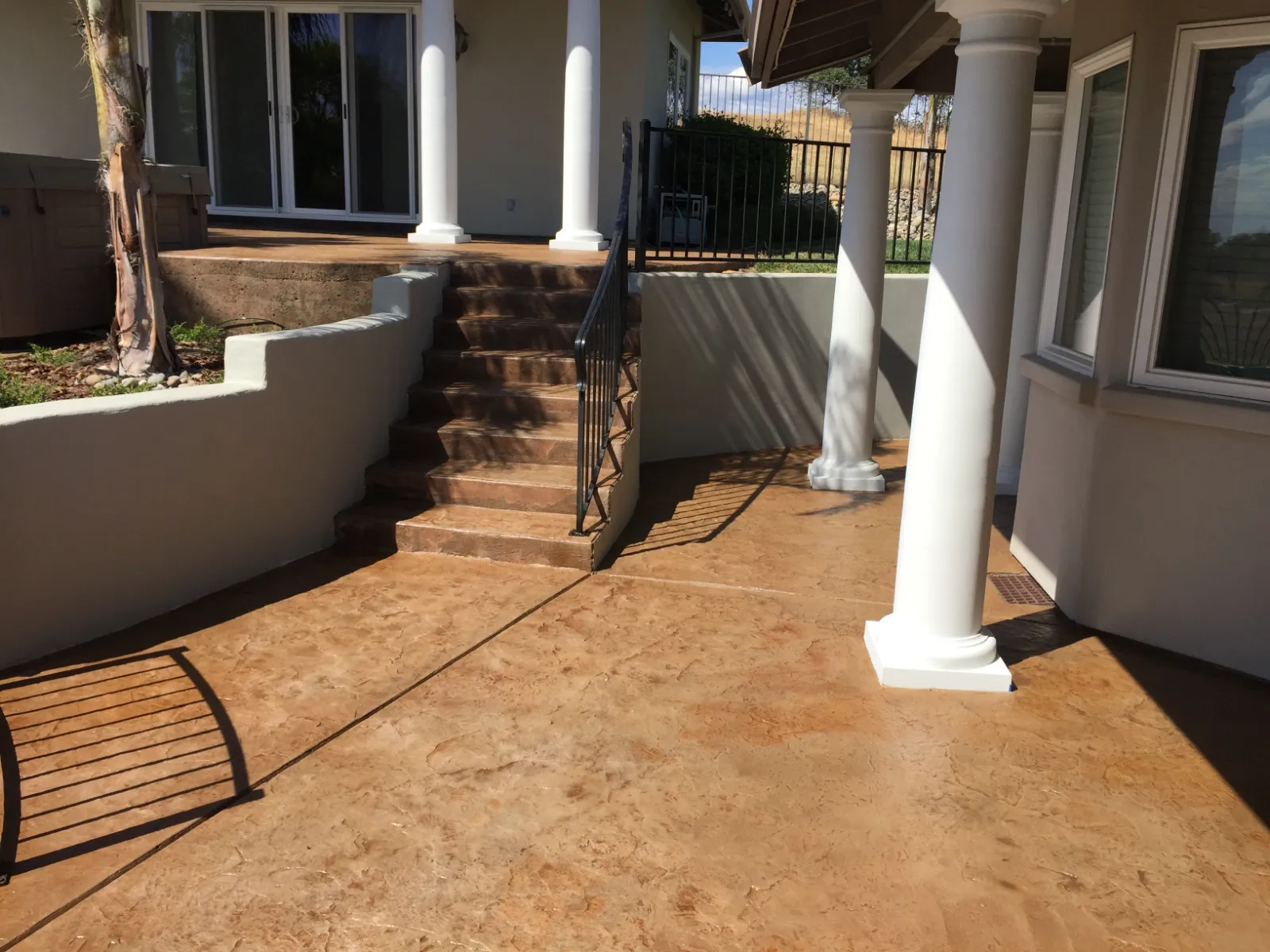
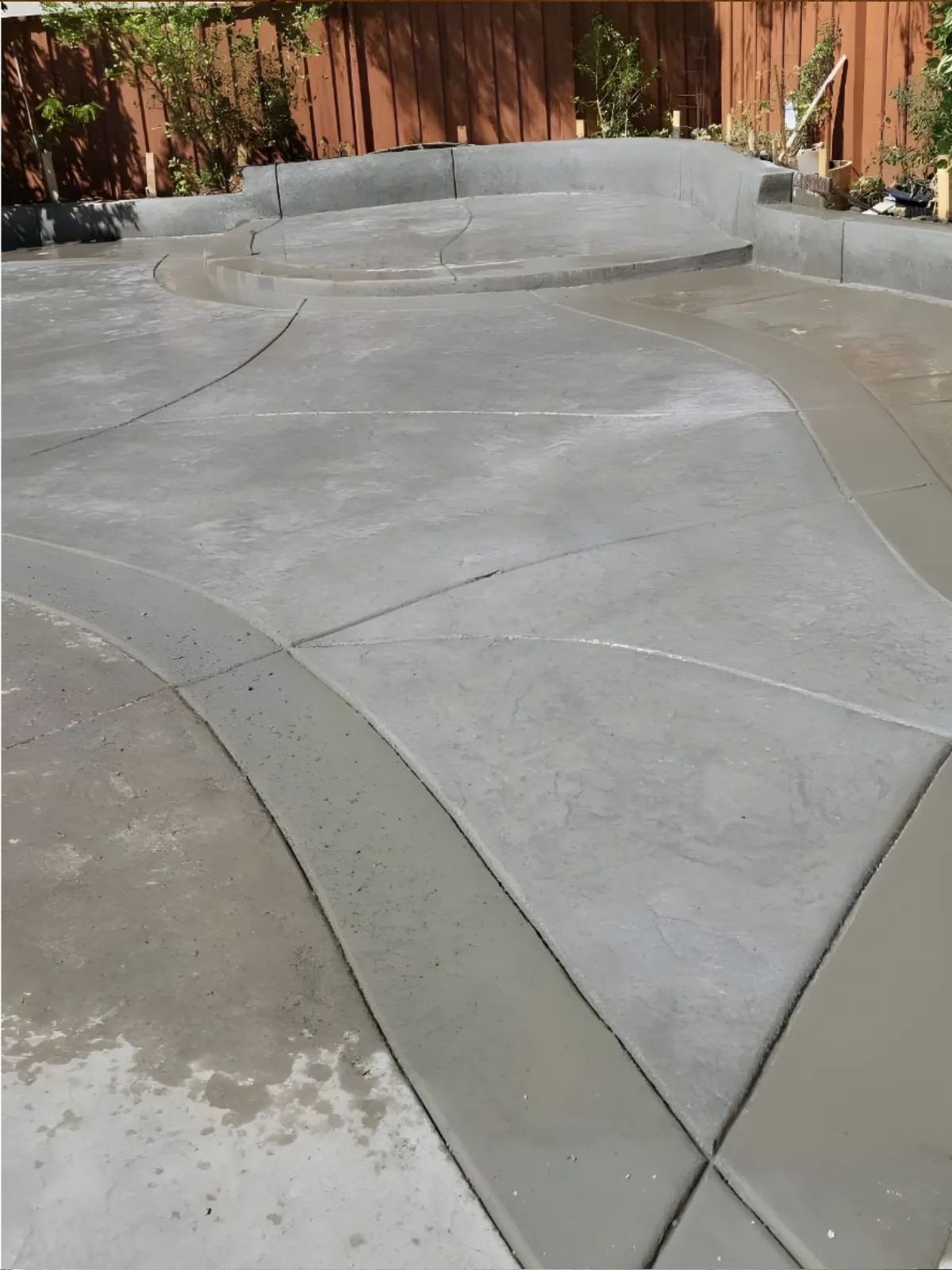
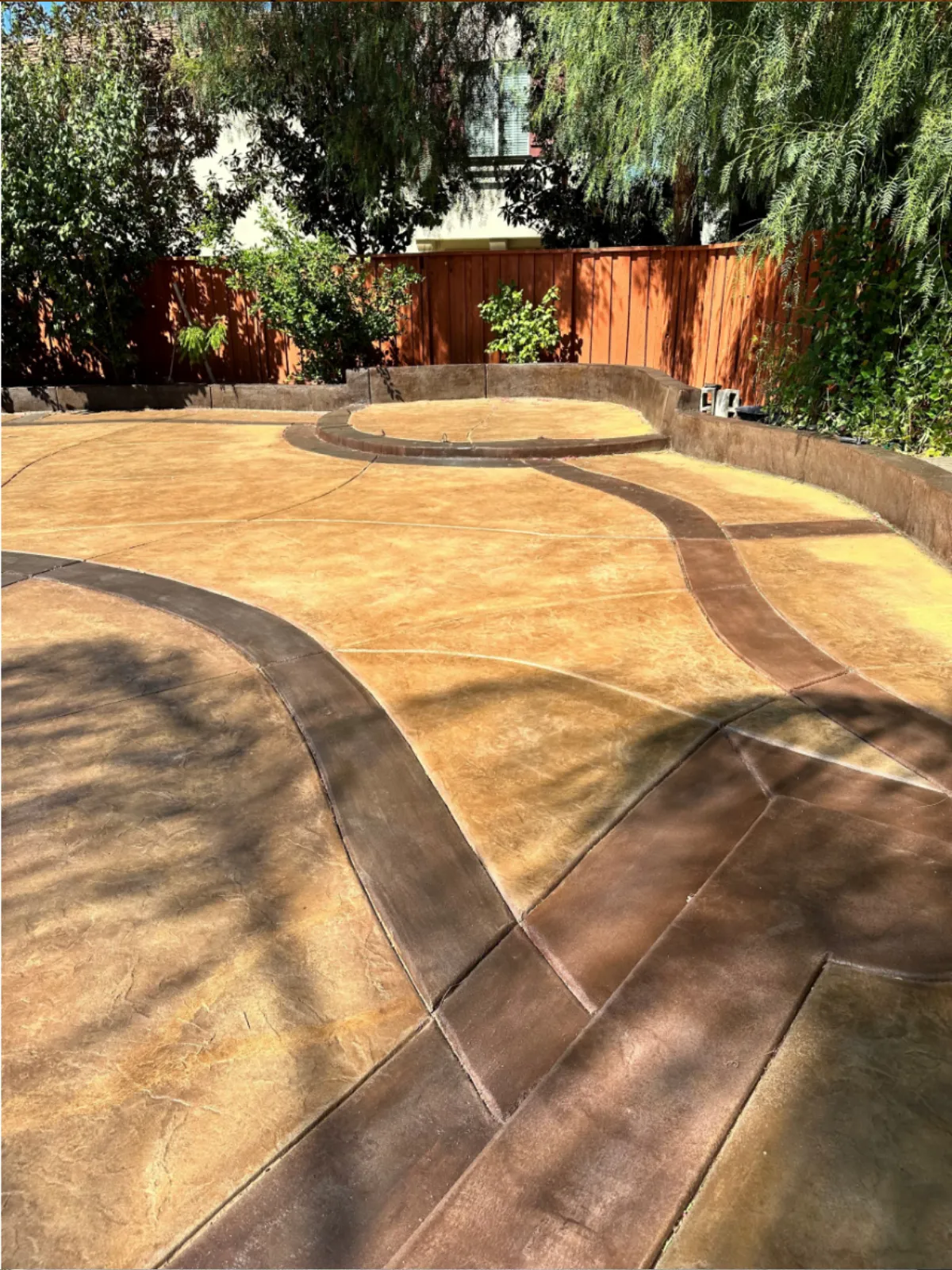
Old Meets New: Unifying 1,500 sq. ft. of Mismatched Scored Concrete
A ten-year-old patio extended with a fresh pour — two slabs a decade apart, in obviously different shades. Aztec Brown and Cafe Royale Antiquing™ across both brought them into one continuous surface. This is the answer for anyone whose addition doesn’t match the original concrete.
Size 1,500 sq. ft.
Surface Scored concrete, mixed age
Color Cafe Royale & Aztec Brown Antiquing™
Sealer Gloss EasySeal™
Time 4 days
Level Intermediate
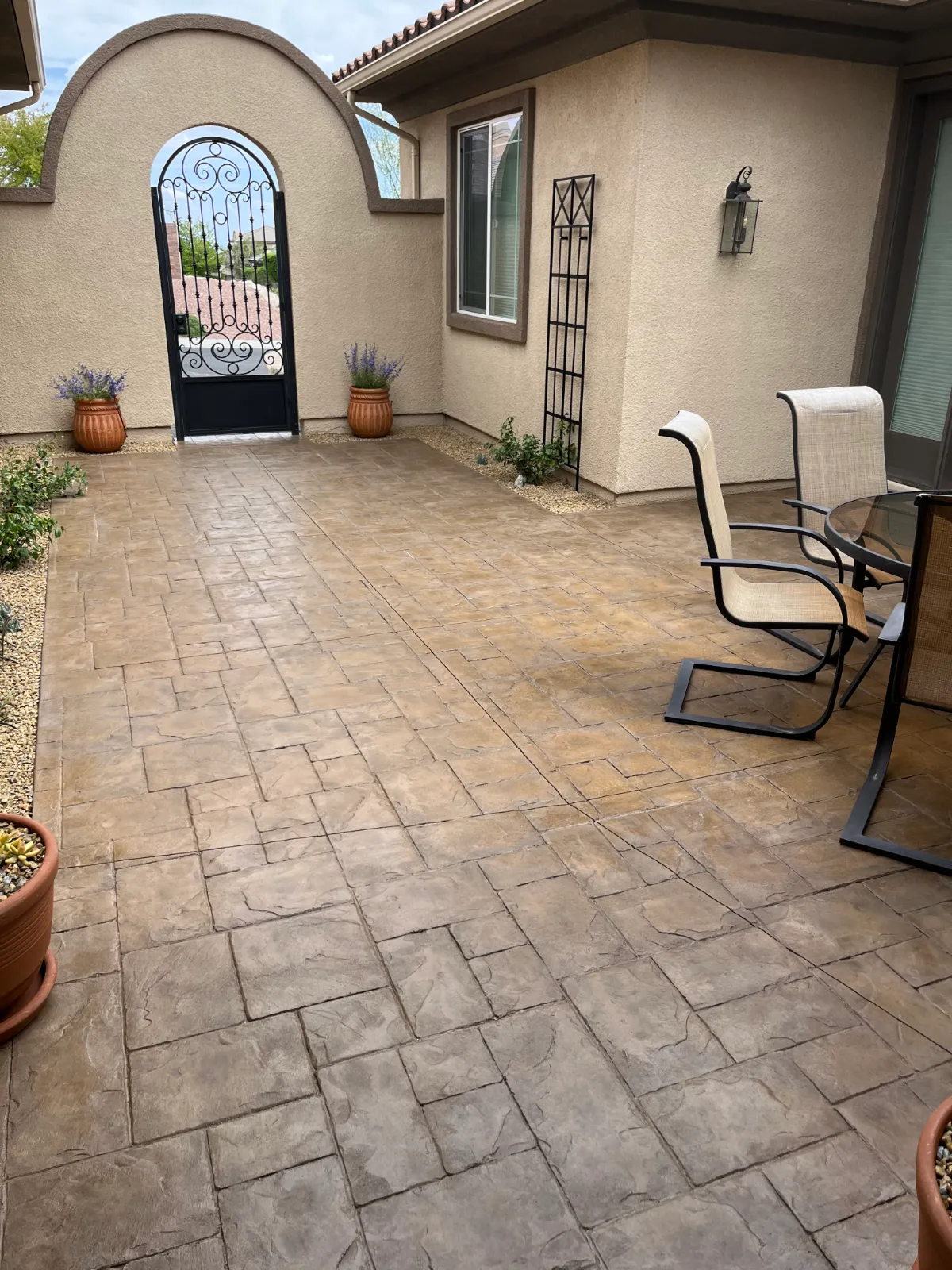
Mediterranean Courtyard: Tweed on Faded Stamped Concrete
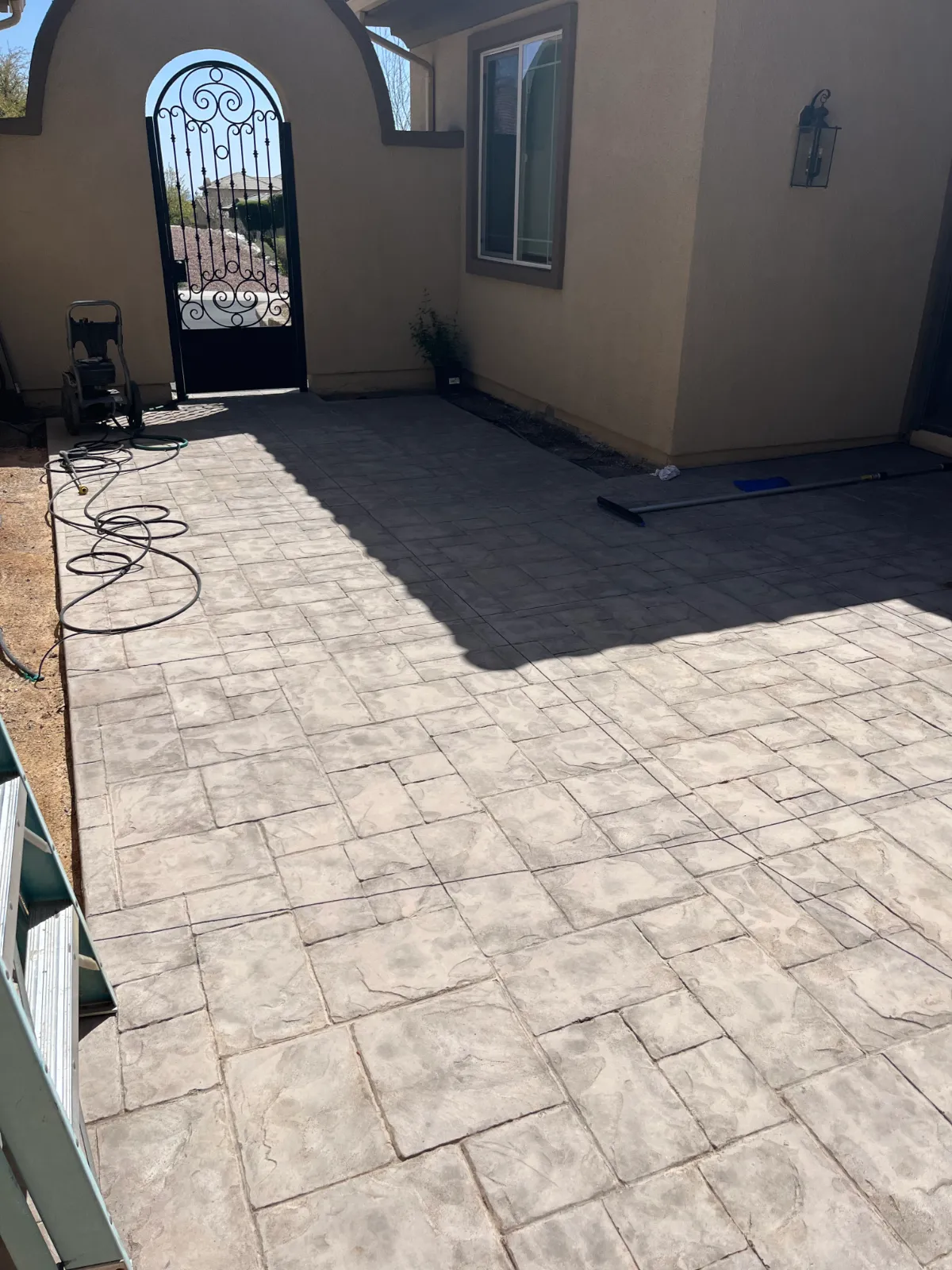
Tweed is the subtlest color in this gallery — a soft, warm neutral that adds variation without announcing itself. On this Mediterranean-style courtyard it replaces washed-out gray with something that reads as aged stone rather than fresh stain.
Size 400 sq. ft.
Surface Stamped concrete
Color Tweed Antiquing™
Sealer Satin EasySeal™
Time 3 days
Level Beginner
Gray, White & Multi-Color Designs
Cool tones and multi-color layouts, for patios where the concrete is meant to complement the house rather than dominate the yard.
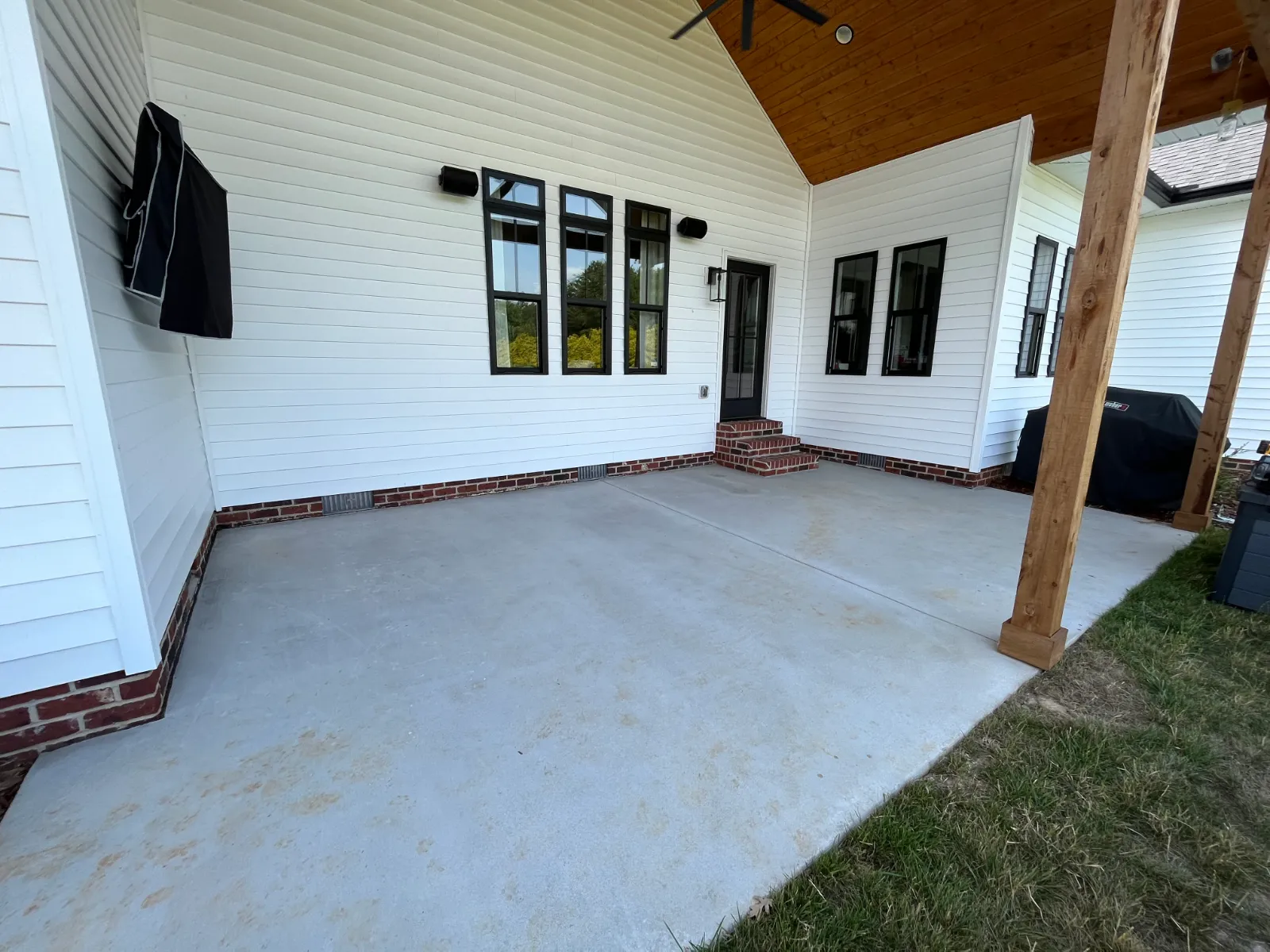
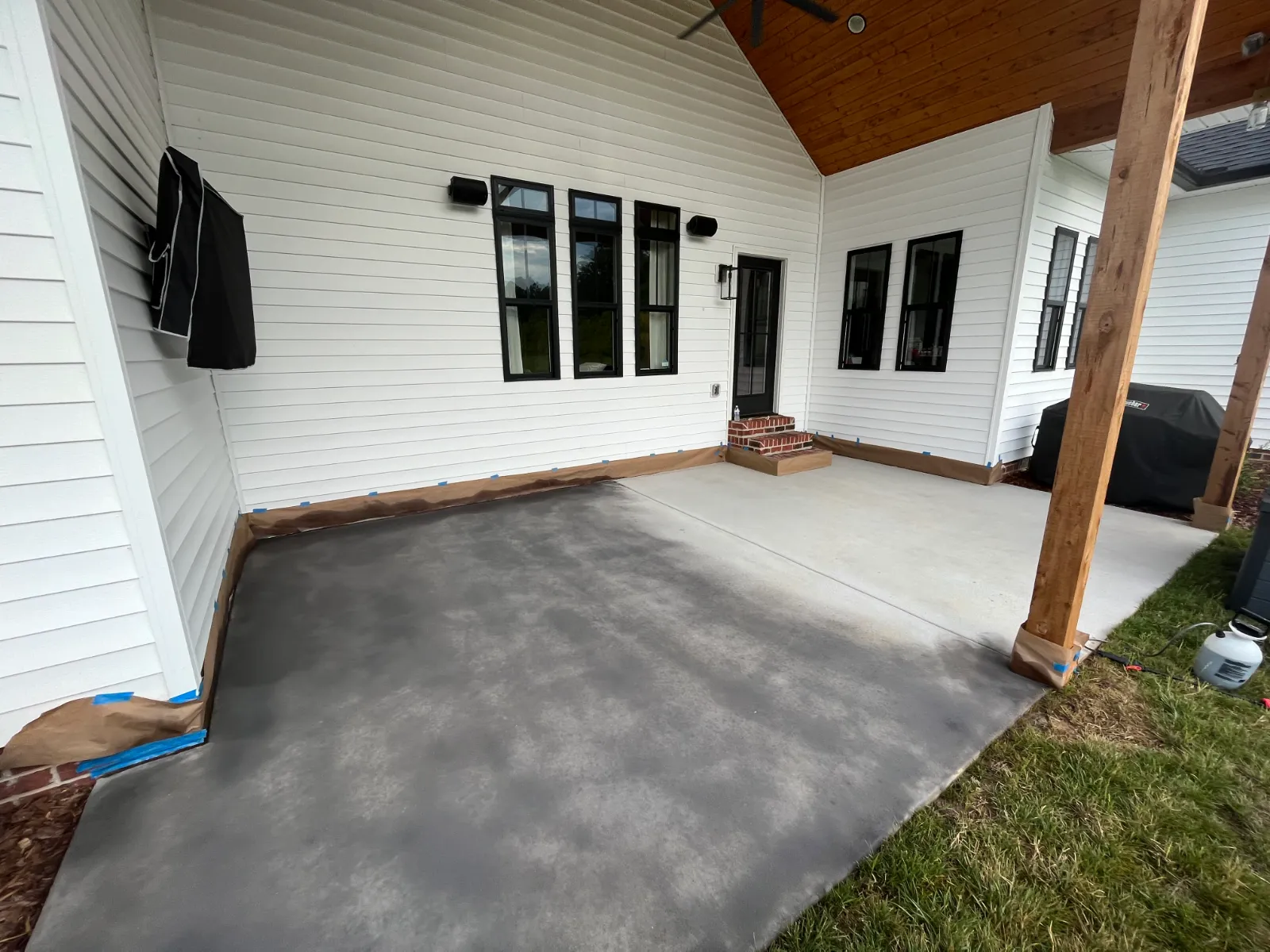
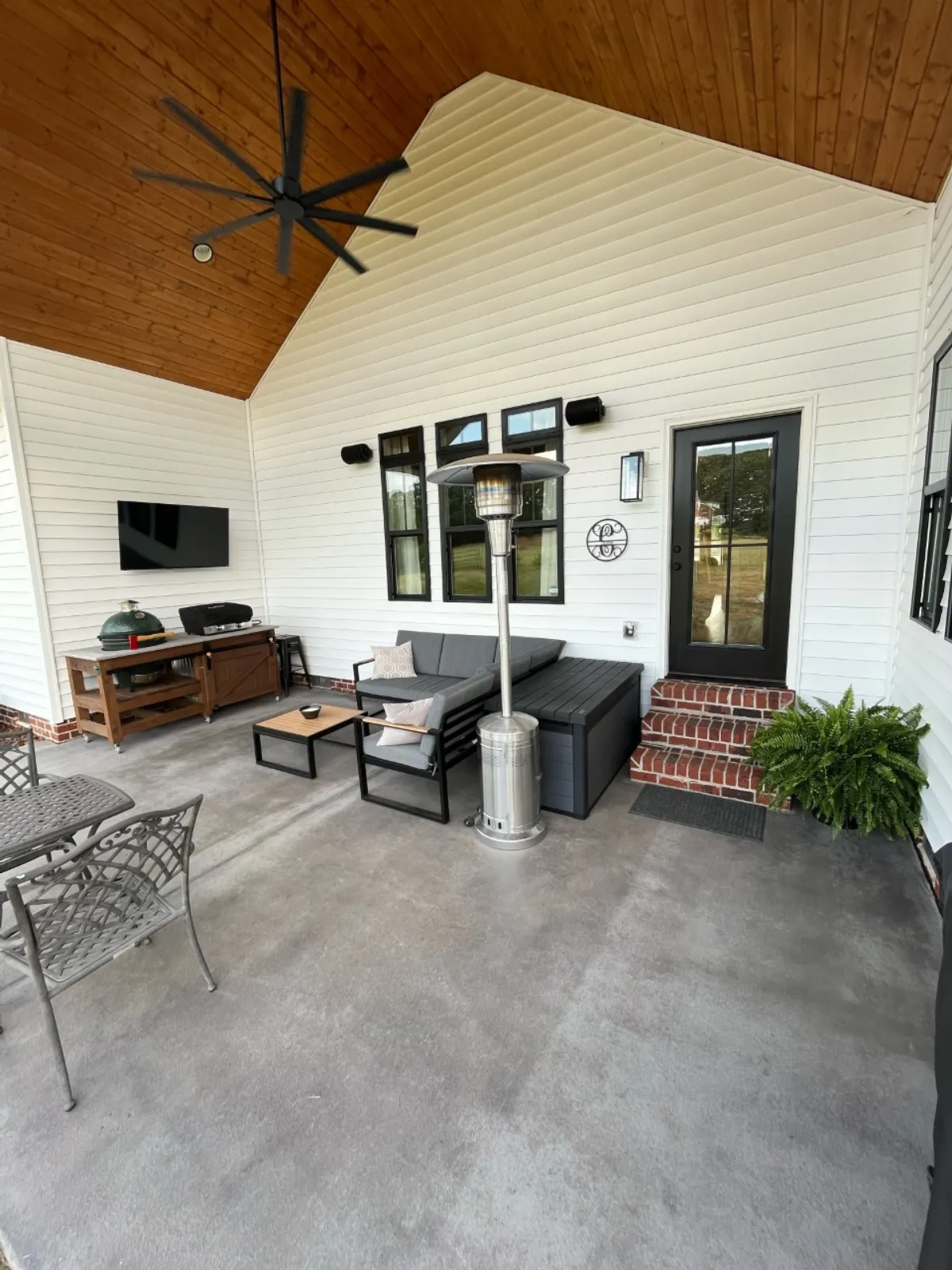
Farmhouse Chic: Silver Gray Antiquing on a Covered Smooth Finish Patio
Silver Gray Antiquing™ applied with a pump sprayer and sealed with two coats of satin EasySeal™. The satin finish is a deliberate choice — high gloss would have fought the farmhouse look, where satin keeps it understated. Worth noting for anyone assuming gloss is always the goal.
Size 433 sq. ft.
Surface Smooth concrete
Color Silver Gray Antiquing™
Sealer Satin EasySeal™
Time 3 days
Level Beginner
Cobblestone Character: Three Colors on a Small Stamped Patio
At 160 sq. ft. this is the smallest project here, and the most approachable. Three Antiquing™ colors — Cafe Royale, Olive, and Charcoal — worked across a cobblestone stamp pattern, varied stone to stone so no two match. Proof that multi-color technique doesn’t require a large patio or a large budget.
Size 160 sq. ft.
Surface Stamped concrete, cobblestone pattern
Color Cafe Royale, Charcoal & Olive Antiquing™
Sealer Satin EasySeal™
Time 2 days
Level Intermediate
Acid-Stained Patios
Acid stain works differently from every other product on this page: it reacts chemically with the concrete and becomes a permanent part of the slab, producing the mottled, variegated, natural-stone character that nothing else can match. These are the most artistic projects in the gallery — turquoise, copper patina, faux flagstone — and proof of the range EverStain™ can reach on a patio.
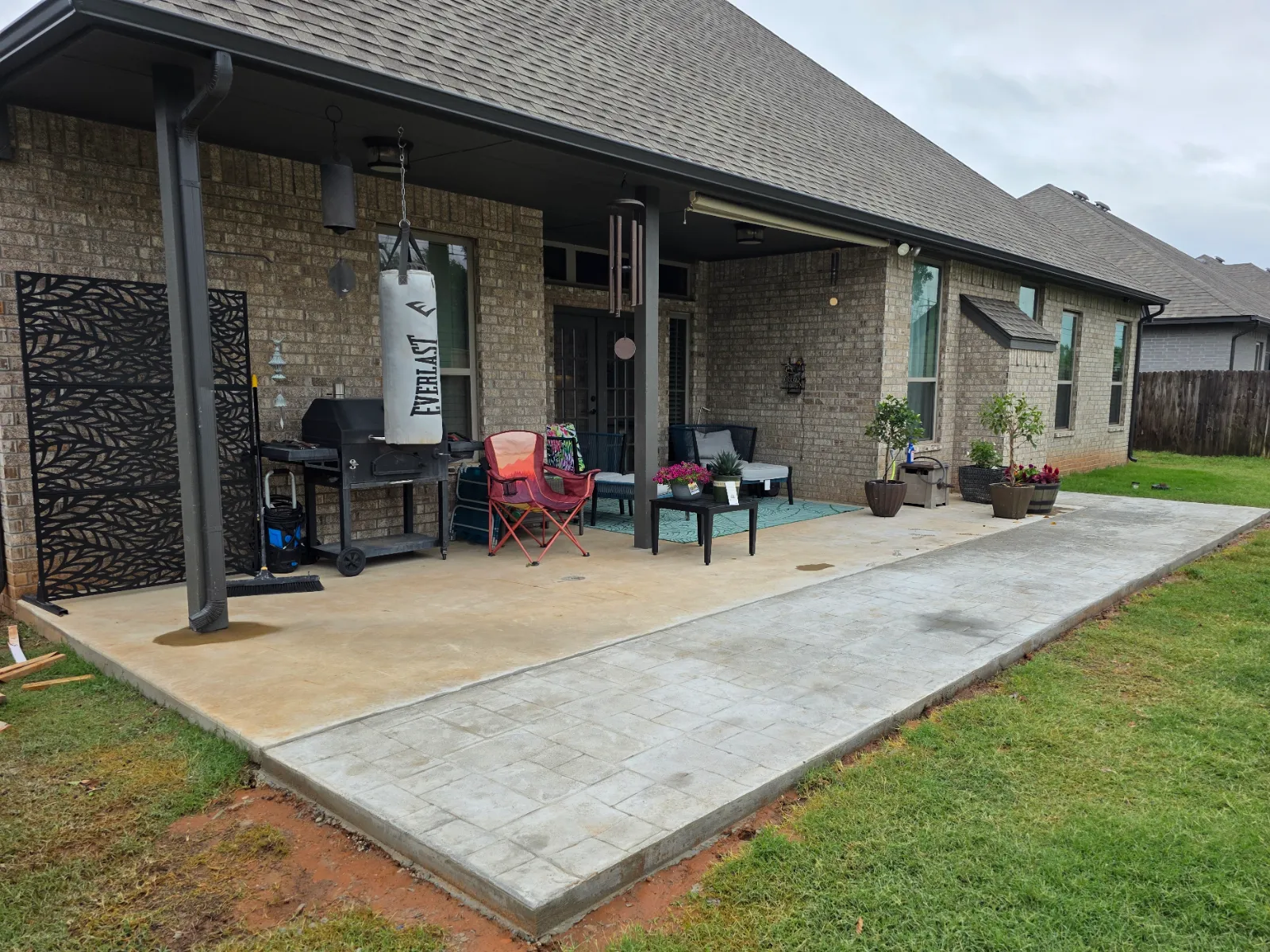
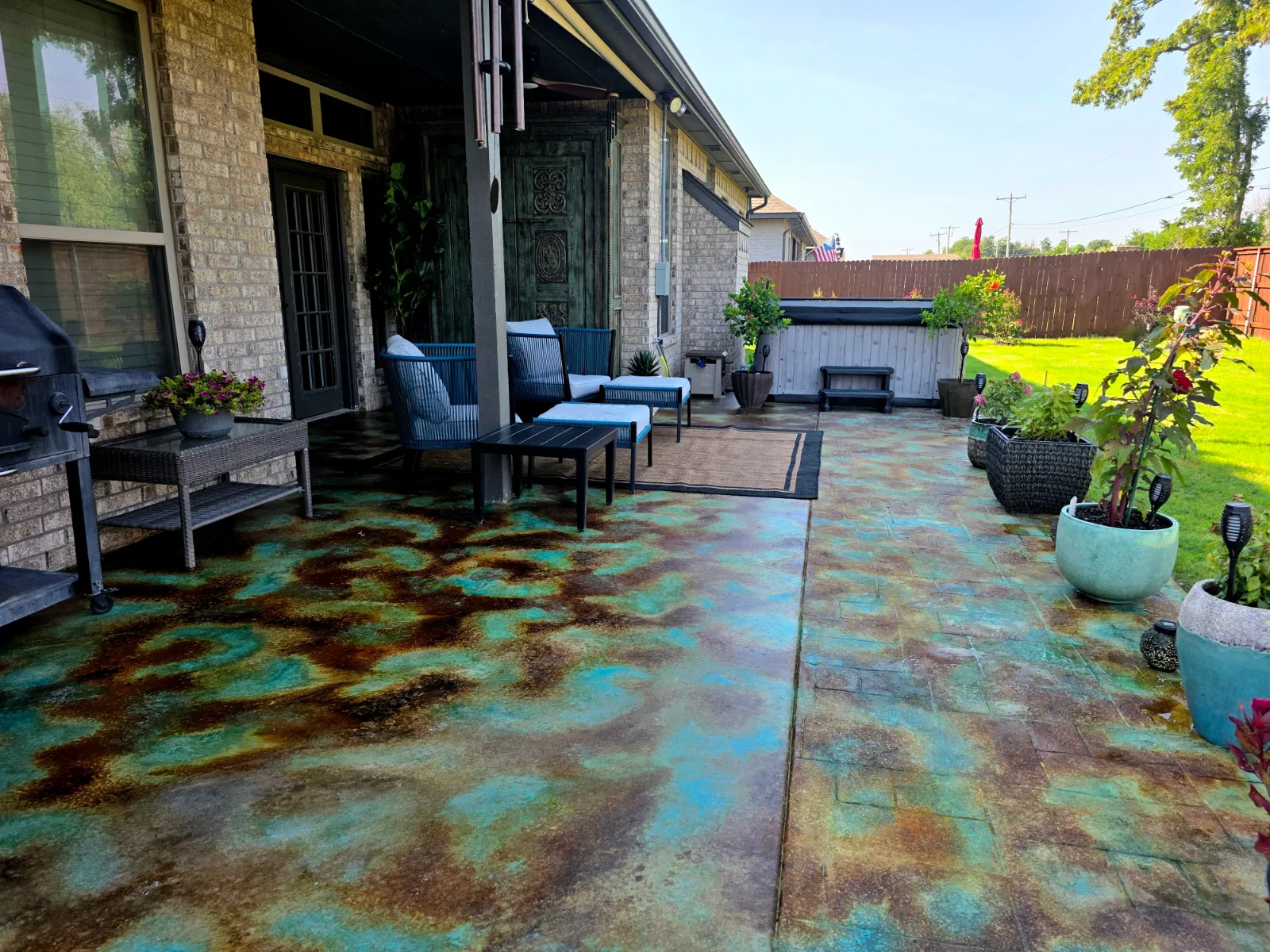
Copper Patina: Azure Blue Acid Stain on Smooth and Stamped Concrete
Chasing a layered copper-patina look to match their home’s style, this Oklahoma couple faced a common challenge: a newly extended patio combining a smooth original slab with a stamped concrete extension, dull and mismatched. Four layered EverStain™ acid stain colors — Azure Blue, Desert Amber, Cola, and Coffee Brown — unified both finishes under one continuous blue-and-rust patina, unlike anything else in this gallery. It’s pure acid stain: the color reacts into the slab rather than sitting on top, so the result is permanent, and a MiracleGro assist pulled the blue back out where the darker colors overpowered it.
Size 540 sq. ft.
Surface Smooth concrete (original) & stamped concrete (extension)
Color Azure Blue, Desert Amber, Cola & Coffee Brown EverStain™
Sealer EasySeal™ Satin
Time 10 days
Level Advanced
Bin There Bar: Turquoise and Rust Acid Stain on a New Concrete Patio
Built around a repurposed grain-bin bar for “cocktail hour where the shade hits just right,” this 900 sq. ft. patio started as a blank, freshly poured slab. The homeowner hand-blended Azure Blue, Coffee Brown, and Shifting Sand EverStain™ acid stains — thinning with water for lighter tones — into a turquoise-and-rust finish sealed with EasySeal™ Satin. Because acid stain reacts into the slab, the mottled, watery movement across the surface is permanent, not painted on.
Size 900 sq. ft.
Surface New poured concrete
Color Azure Blue, Coffee Brown & Shifting Sand EverStain™
Sealer EasySeal™ Satin
Time 5 days
Level Intermediate
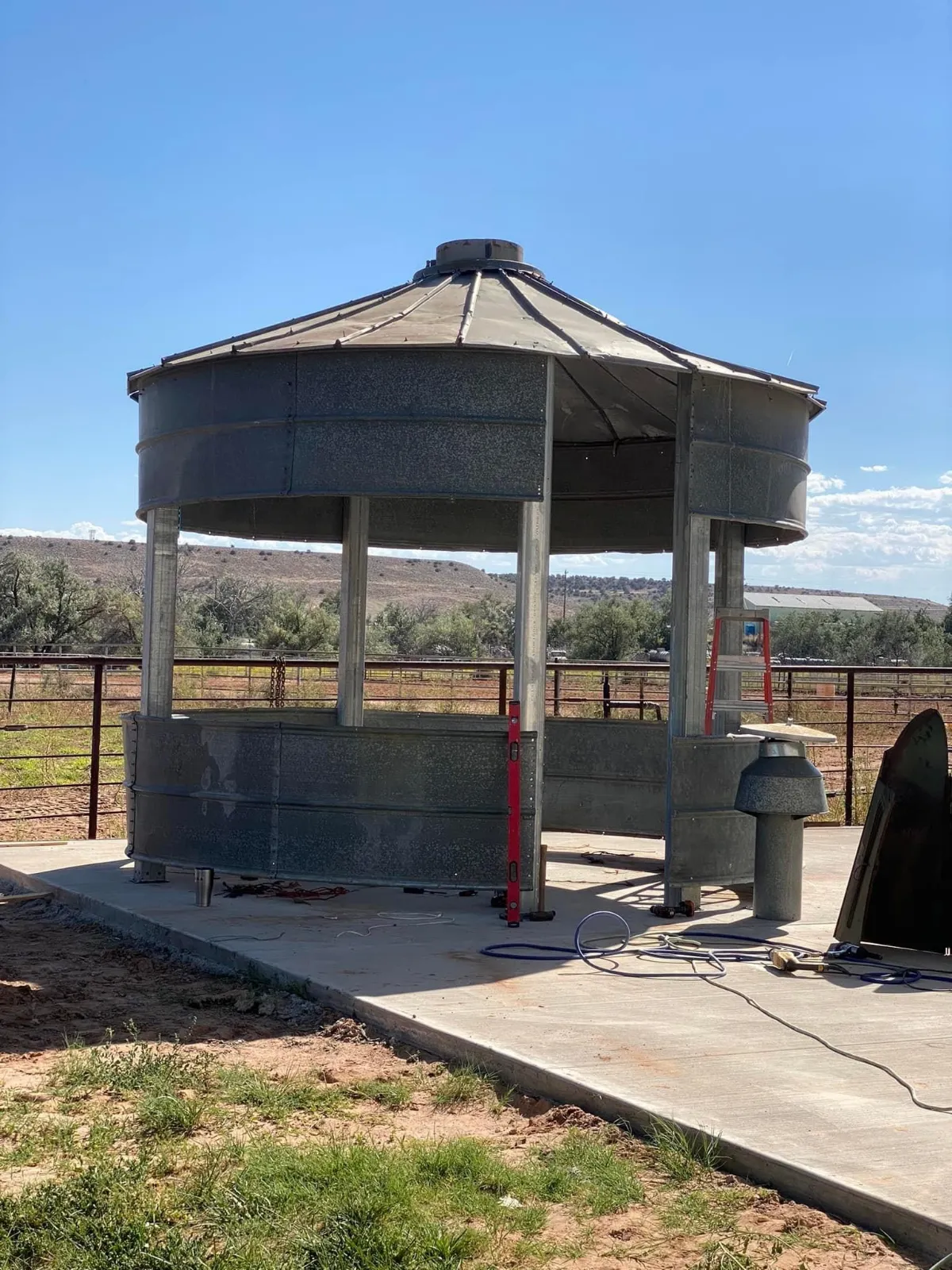
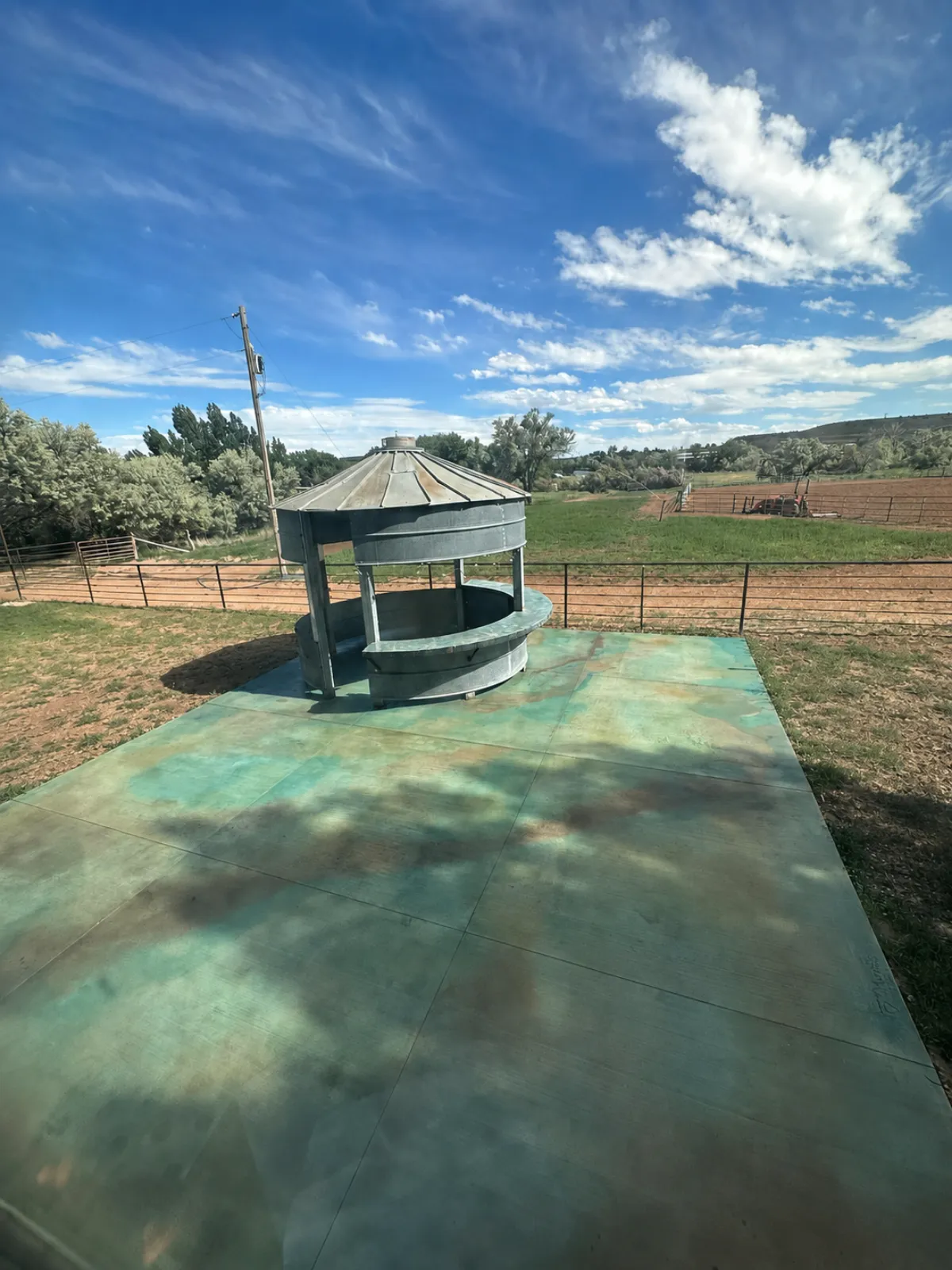
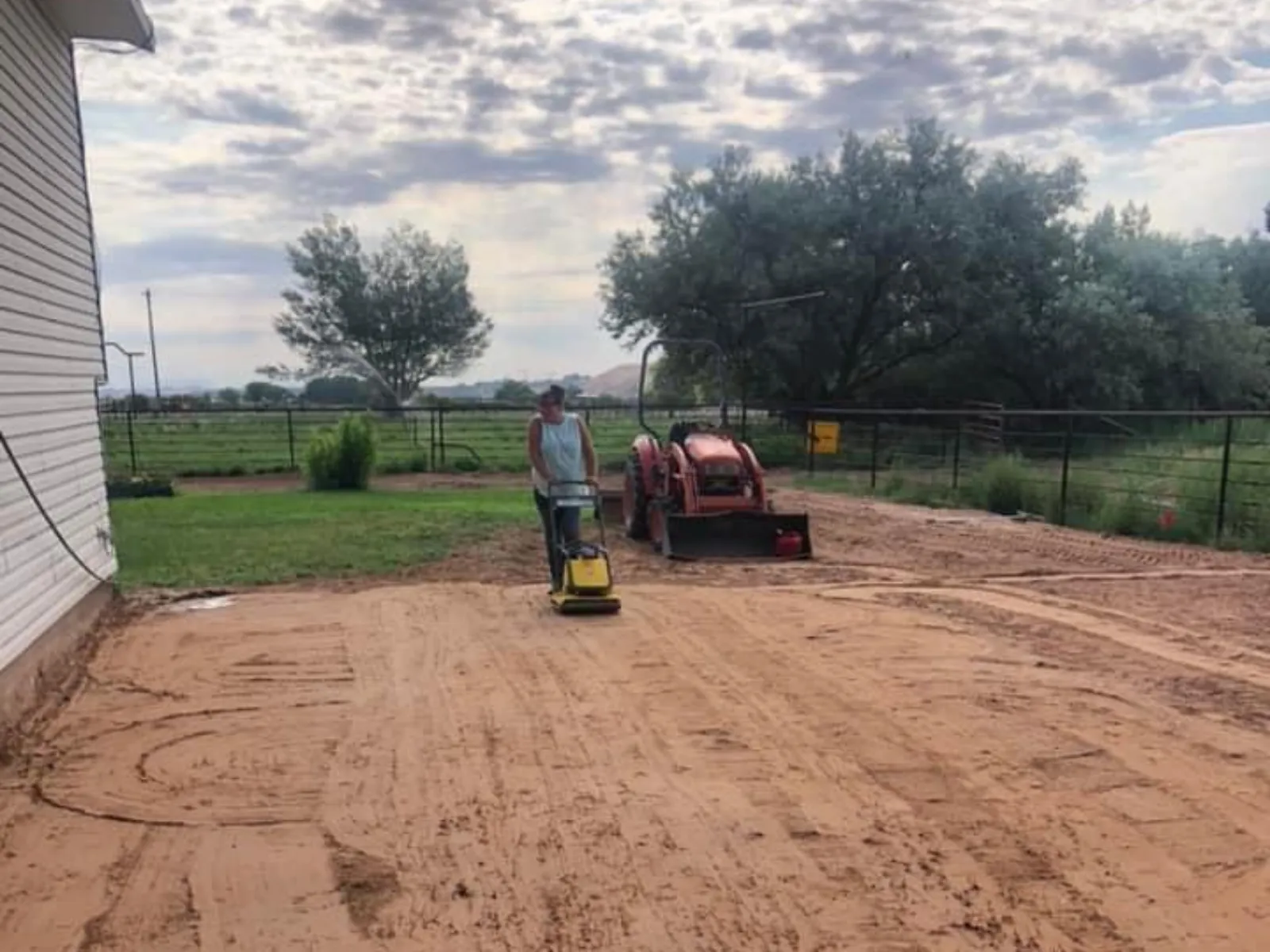
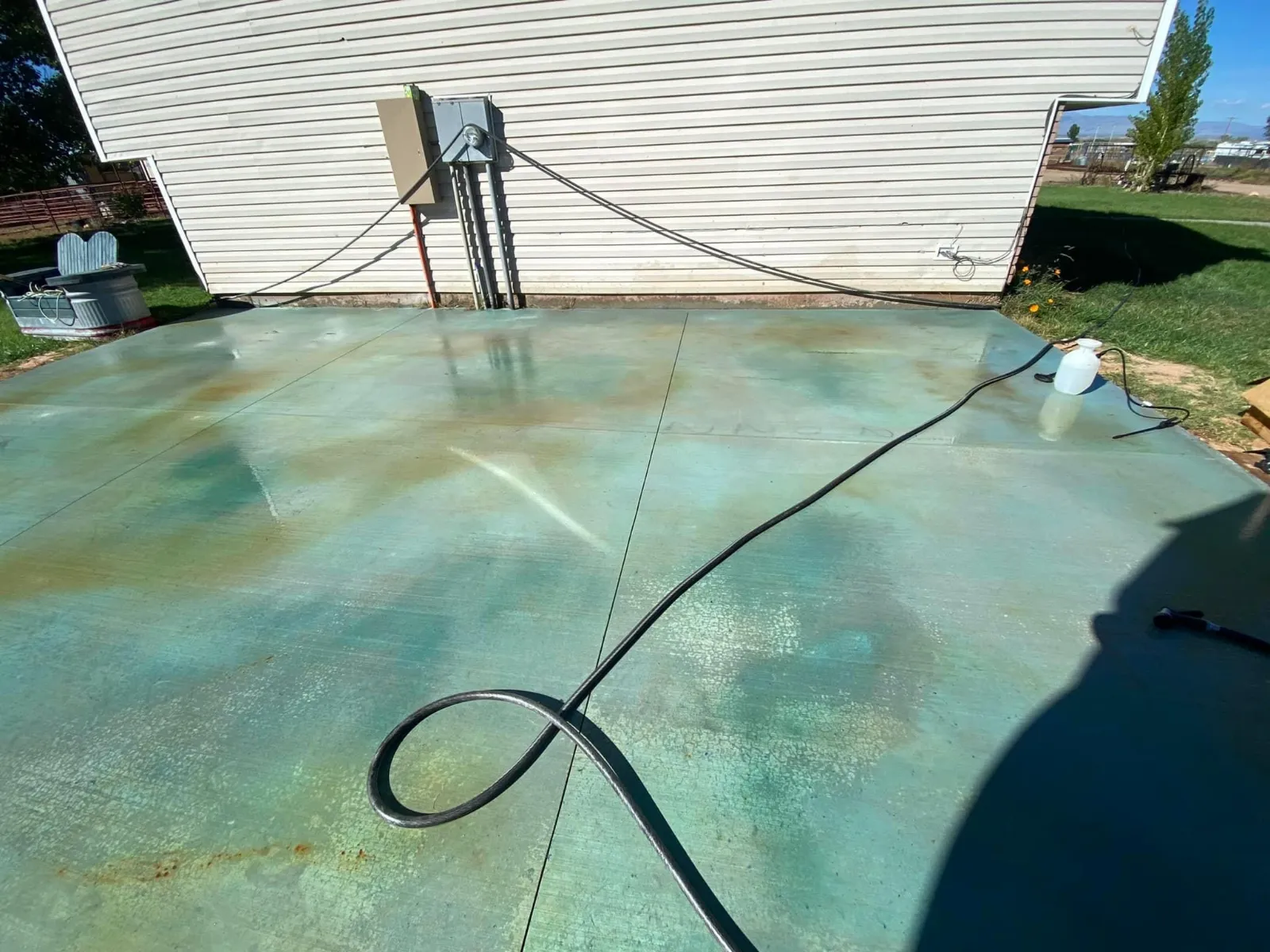
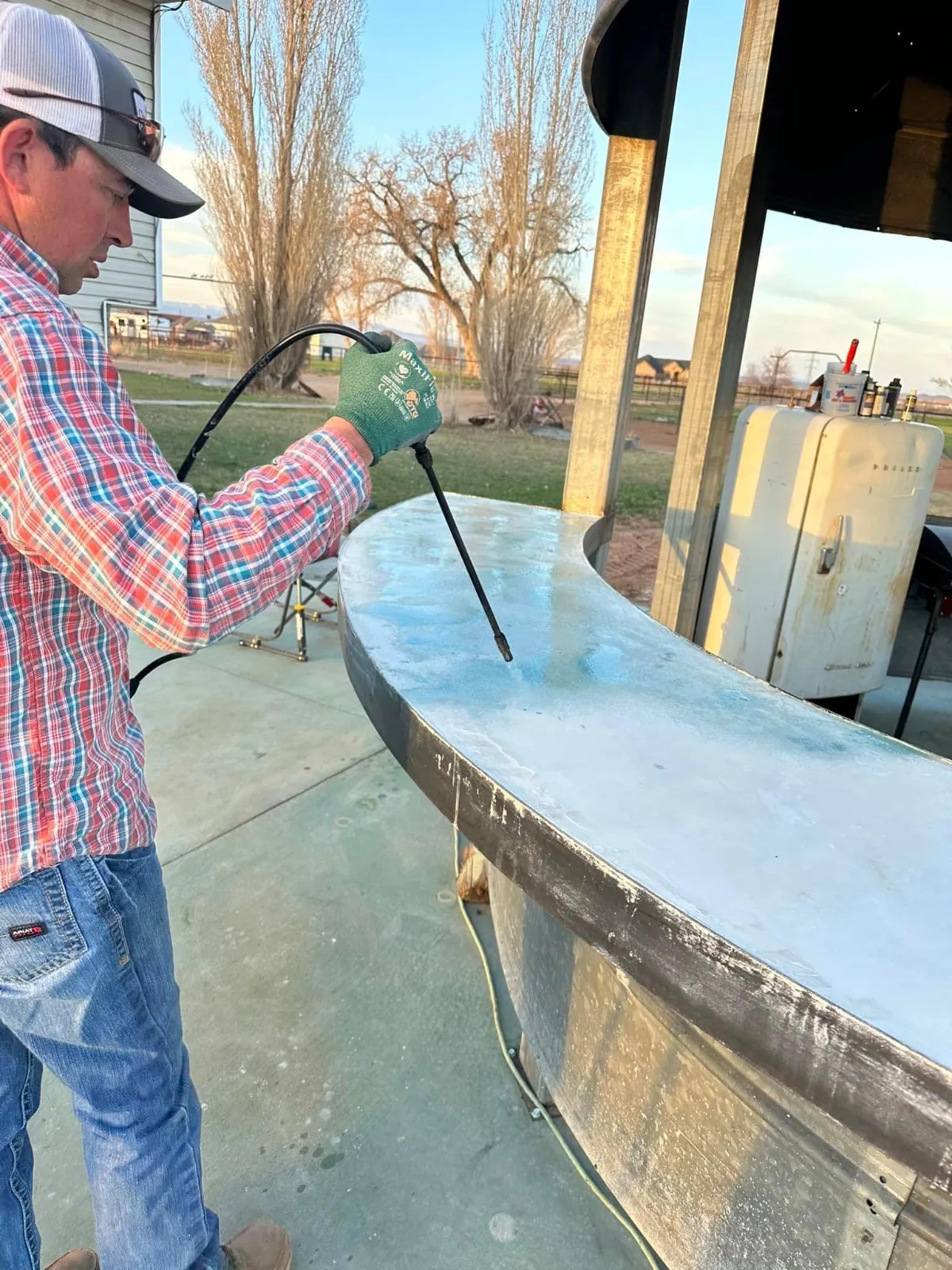
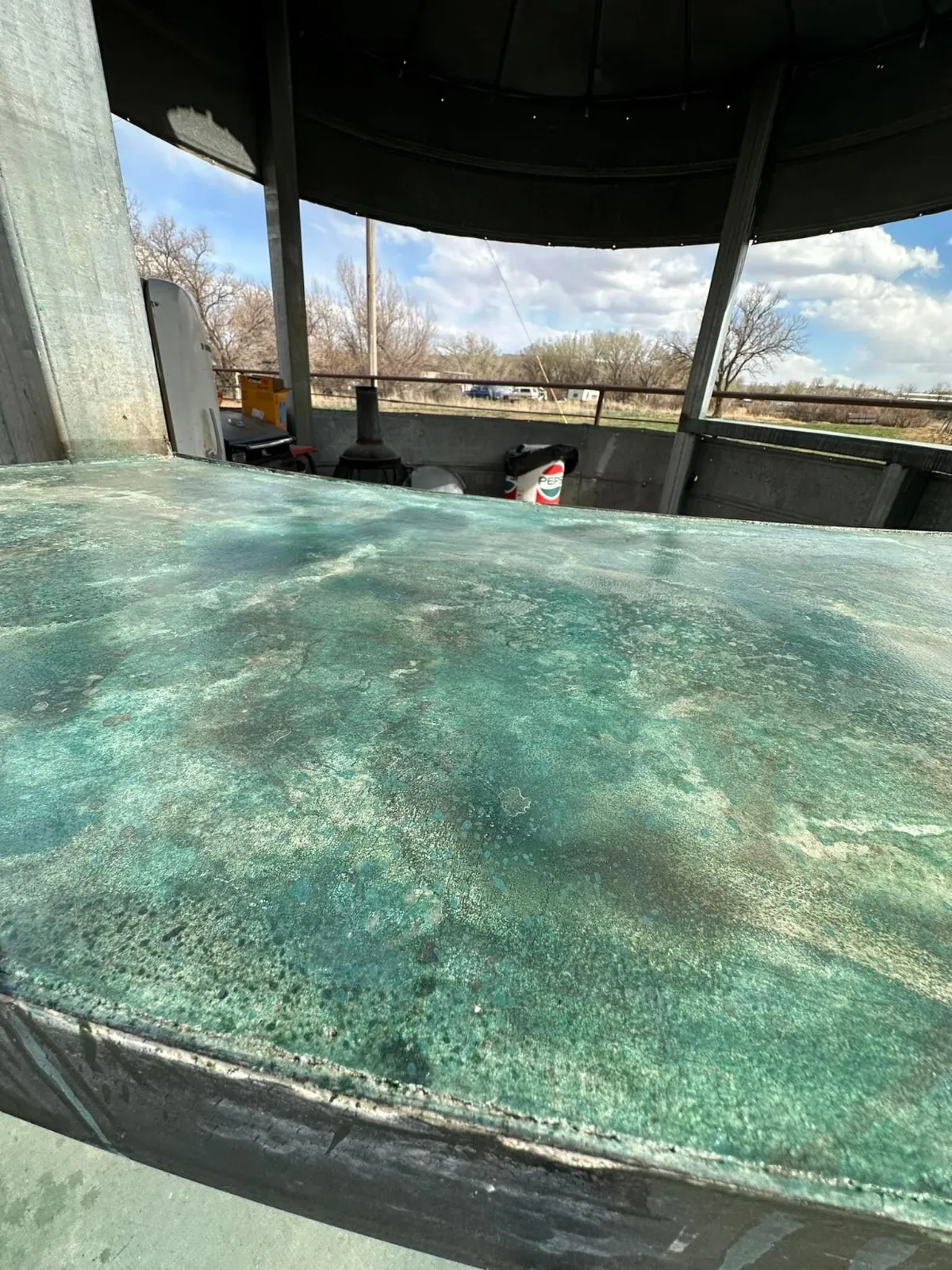
“A patio off the side of the house where the shade hits just right for cocktail hour with the ‘Bin There Bar.’ Turquoise and rust — my favorite!”
Tanna’s technique: “Mix the colors however you want — more water for a lighter color, less for darker. Keep a hose handy and add water in some areas to really make it blend. I used a weed sprayer with an adjustable nozzle, switching between a stream and a mist.”
— Tanna M., DIY Contest Entry
Direct Colors tip: for lasting outdoor vibrance, build color by layering acid stains rather than adding food coloring — food coloring isn’t UV-stable and will fade outdoors. Tanna’s turquoise comes mostly from blending Azure Blue with Shifting Sand, which is what makes it permanent.
Faux Flagstone: Coffee Brown and English Red Acid Stain on Smooth Concrete
A homeowner who’d “never been the artistic type” turned a plain hand-troweled slab into a faux-flagstone floor using nothing but masking tape and acid stain. The stones are Malayan Buff with mixed tones, the walkway Coffee Brown, and the borders English Red — all EverStain™ acid stain, sealed with EasySeal™. Because acid stain reacts into the concrete rather than sitting on top, even a heavy-handed border bleed was recoverable: a Scotch-Brite scrub pulled the color back, and a light restain restored the contrast.
Size 300 sq. ft.
Surface Smooth hand-troweled concrete
Color Coffee Brown, English Red & Malayan Buff EverStain™
Sealer EasySeal™ + non-slip additive
Technique Faux flagstone tape stencil
Time 20 days (weather)
Level Advanced
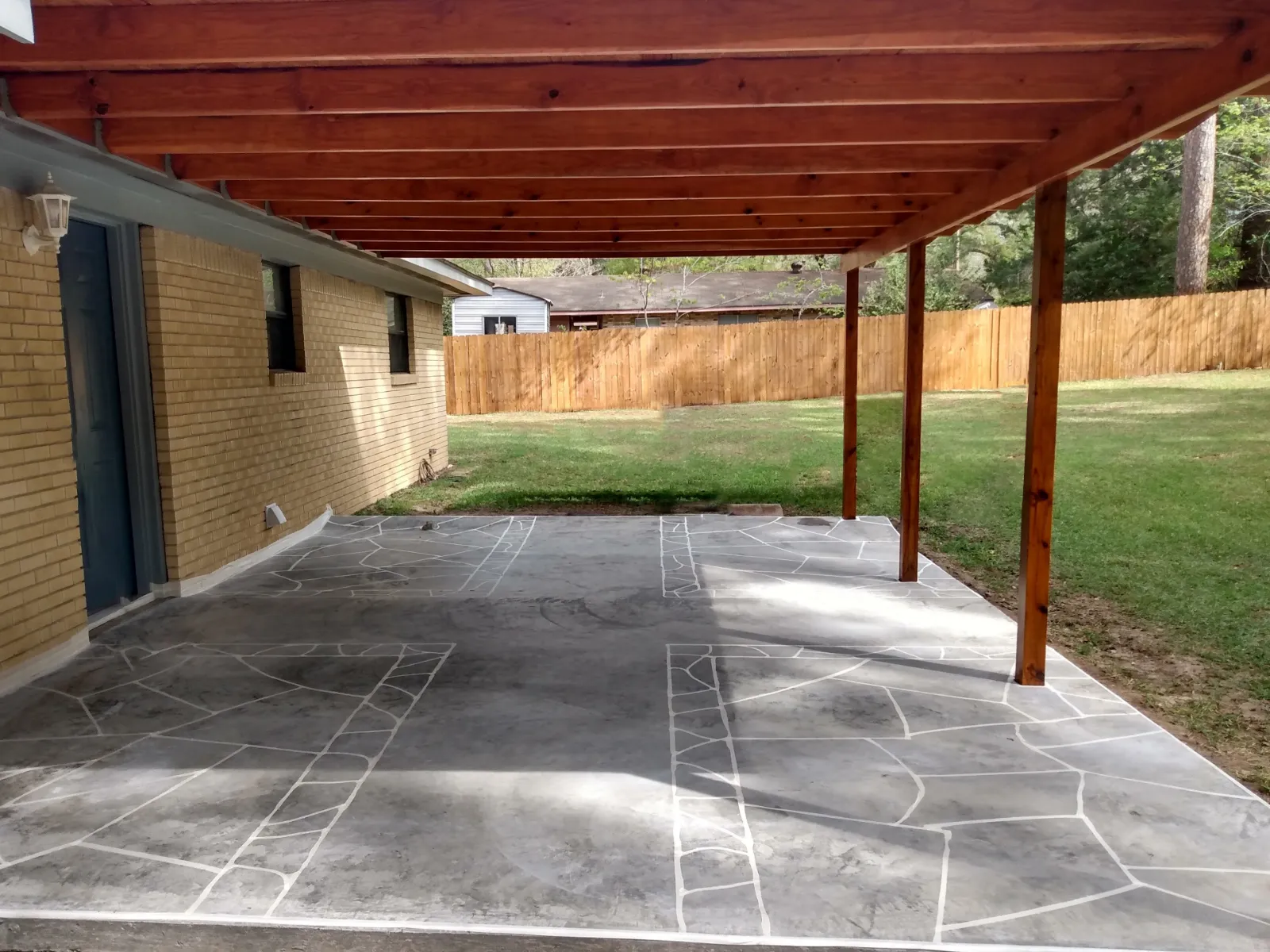
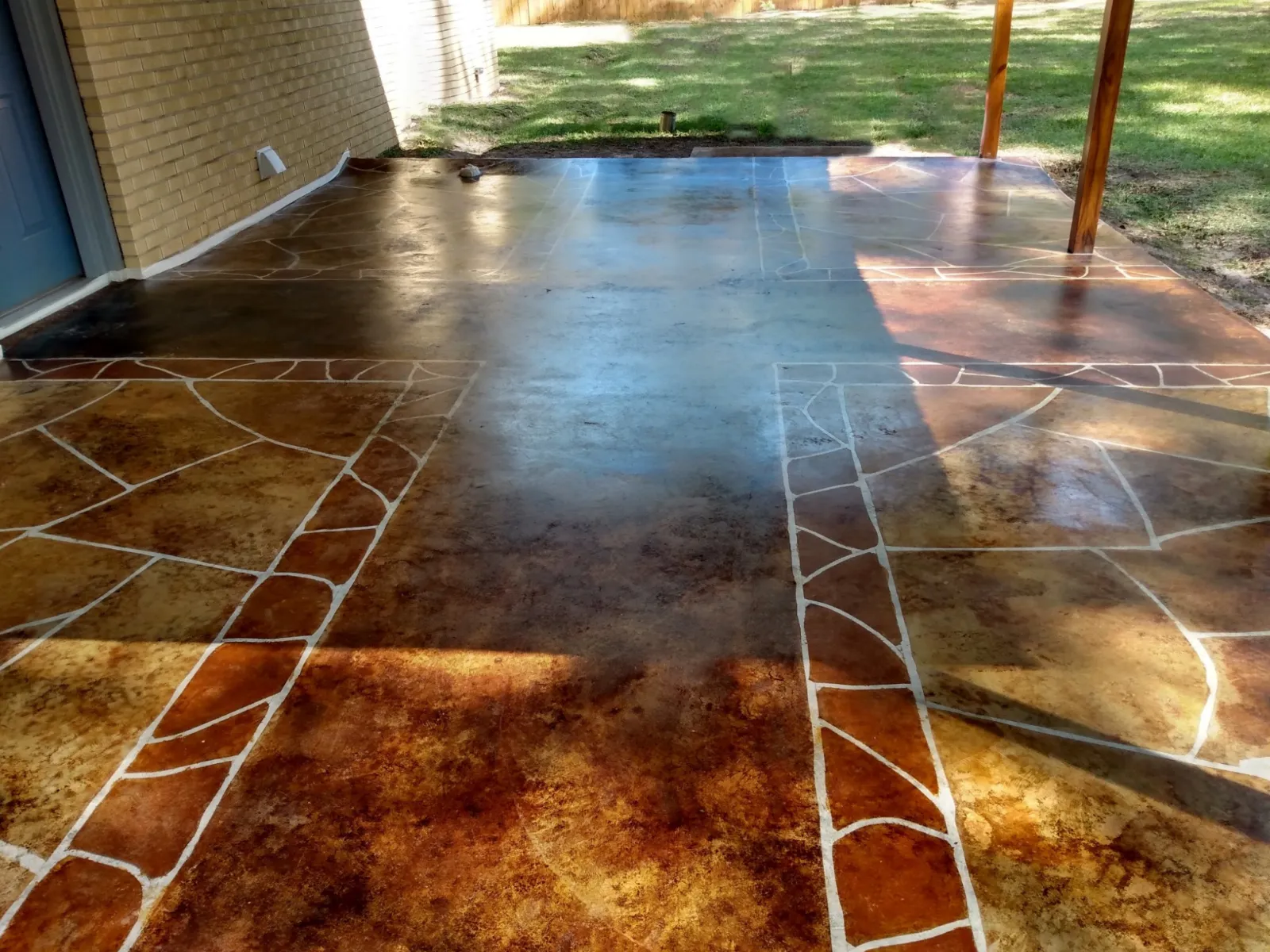
“Never the artistic type ever, I had to try this — Coffee Brown walkway, English Red border, Malayan Buff and mixtures in the stones. To say I’m well pleased with the outcome would be a major understatement.”
Dennis’s tip: “The English Red bled over everywhere even though I thought I was going light. I cleaned up the bleed with a Scotch-Brite pad and ammonia, then touched up with stain again — just enough mineral content was left to return the contrast I wanted. Patience with a project of this nature pays off, and spike shoes are mandatory!”
— Dennis B., DIY Contest Entry
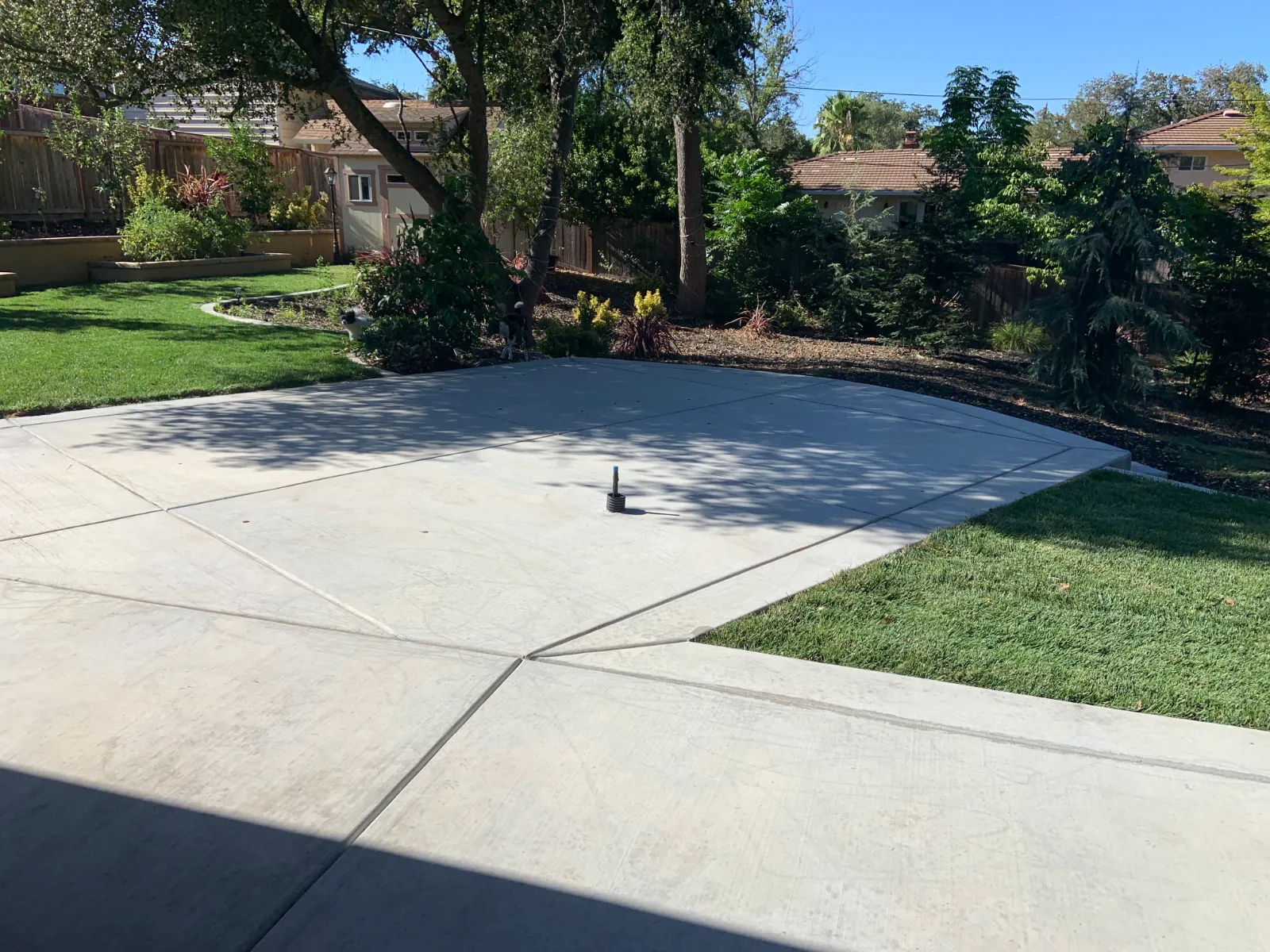
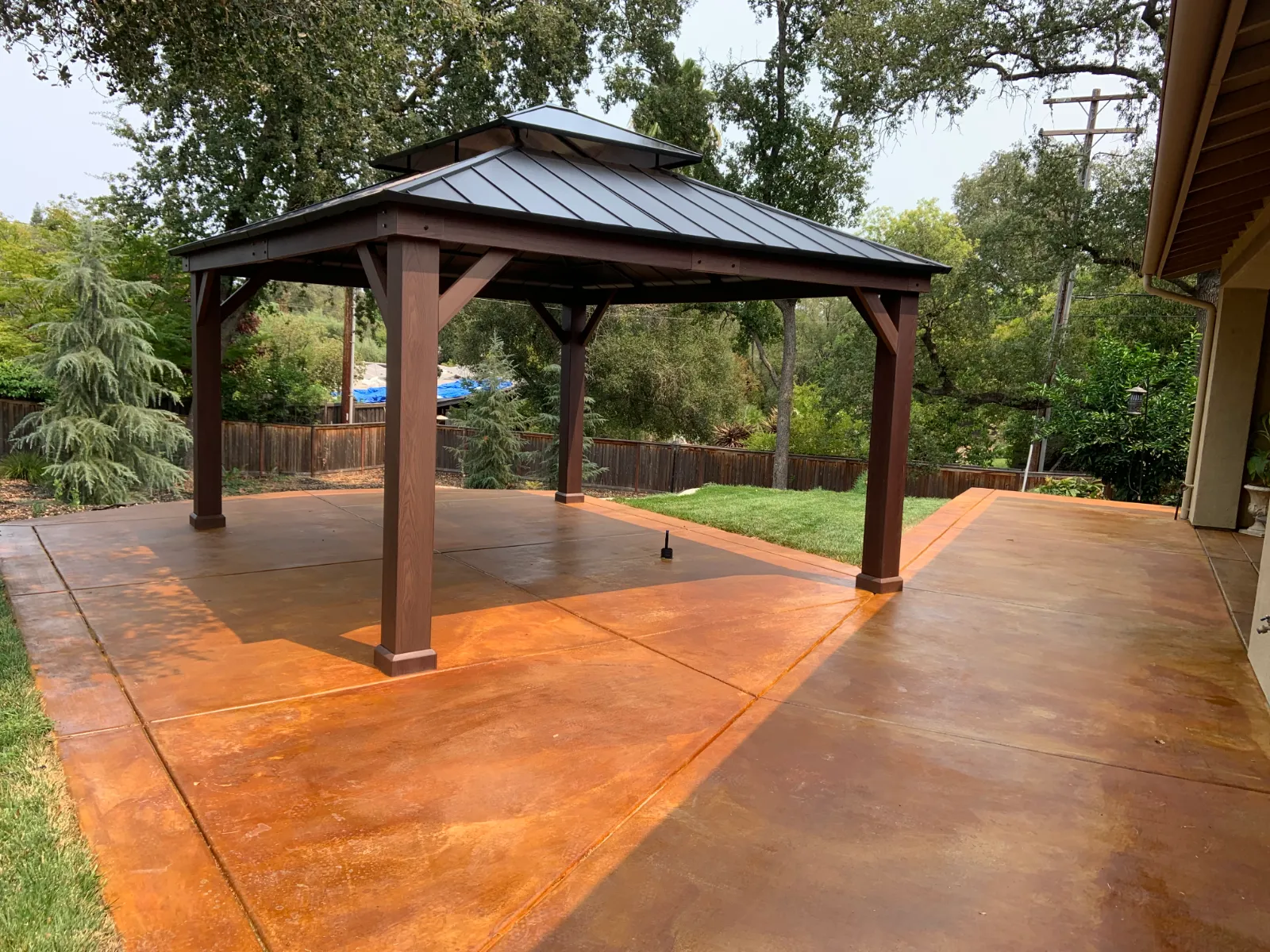
Outdoor Kitchen Upgrade: Cola Acid Stain on 400 sq. ft. of Broom Finish
A California-room outdoor kitchen finished with Cola EverStain™. Acid stain works differently from the Antiquing™ projects above — it reacts chemically with the concrete, becoming part of the slab — and the scoring here breaks the 400 sq. ft. floor into a tile pattern.
Size 400 sq. ft.
Surface Broom finish concrete
Color Cola EverStain™
Sealer Satin EasySeal™
Time 2 days
Level Beginner
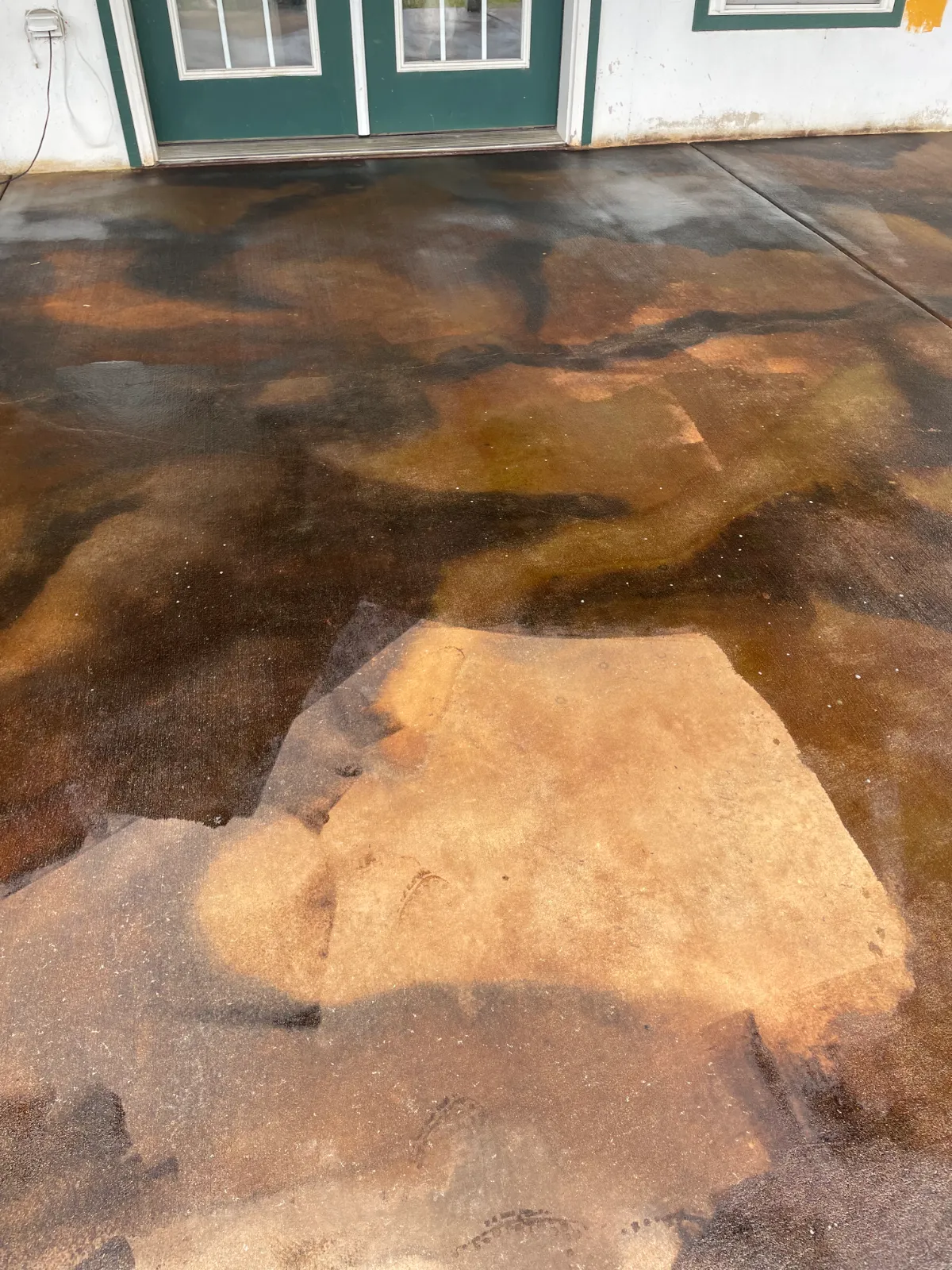
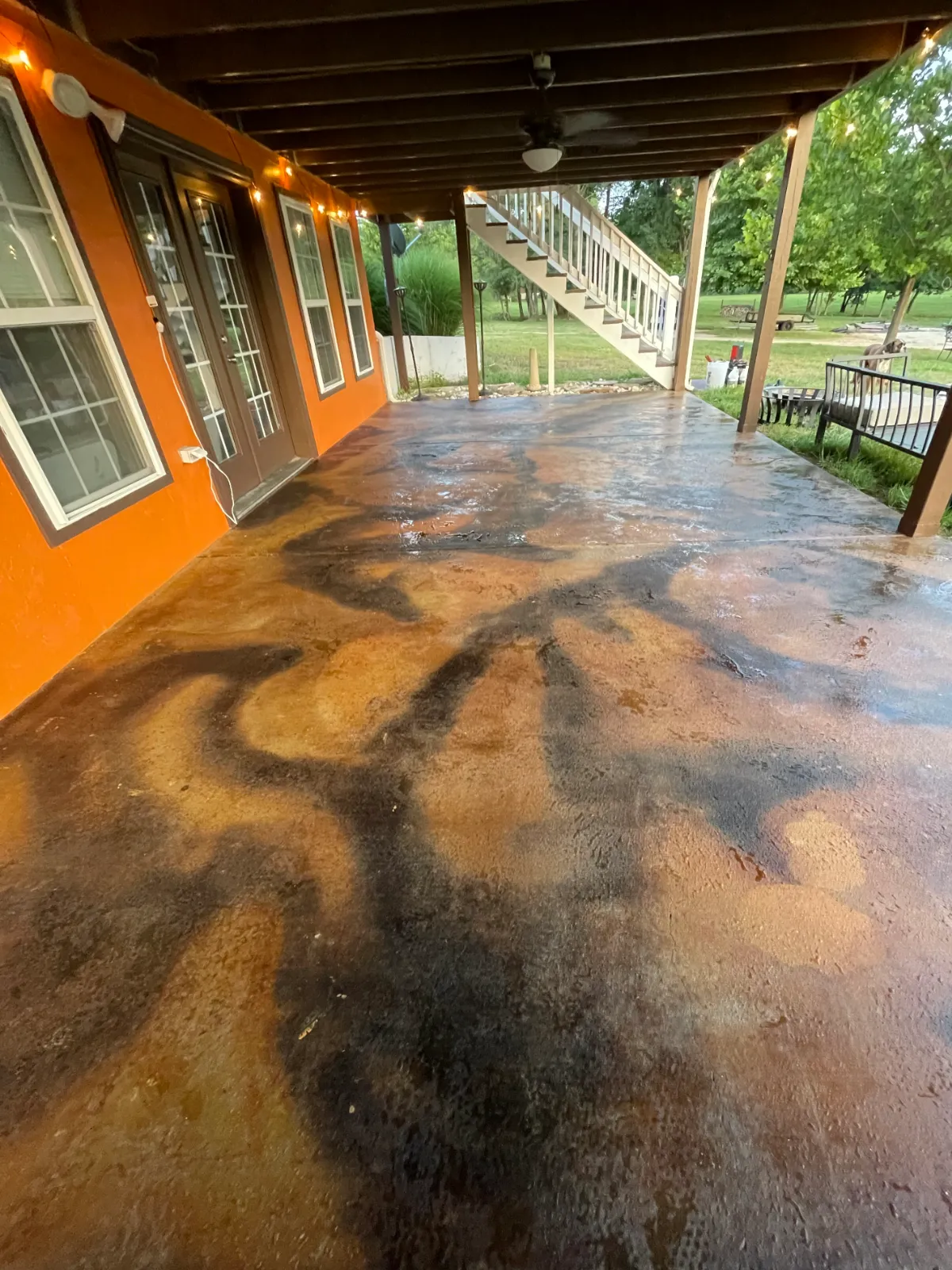
Painted, Stripped, and Stained: Earthy Acid Stain on a Covered Patio
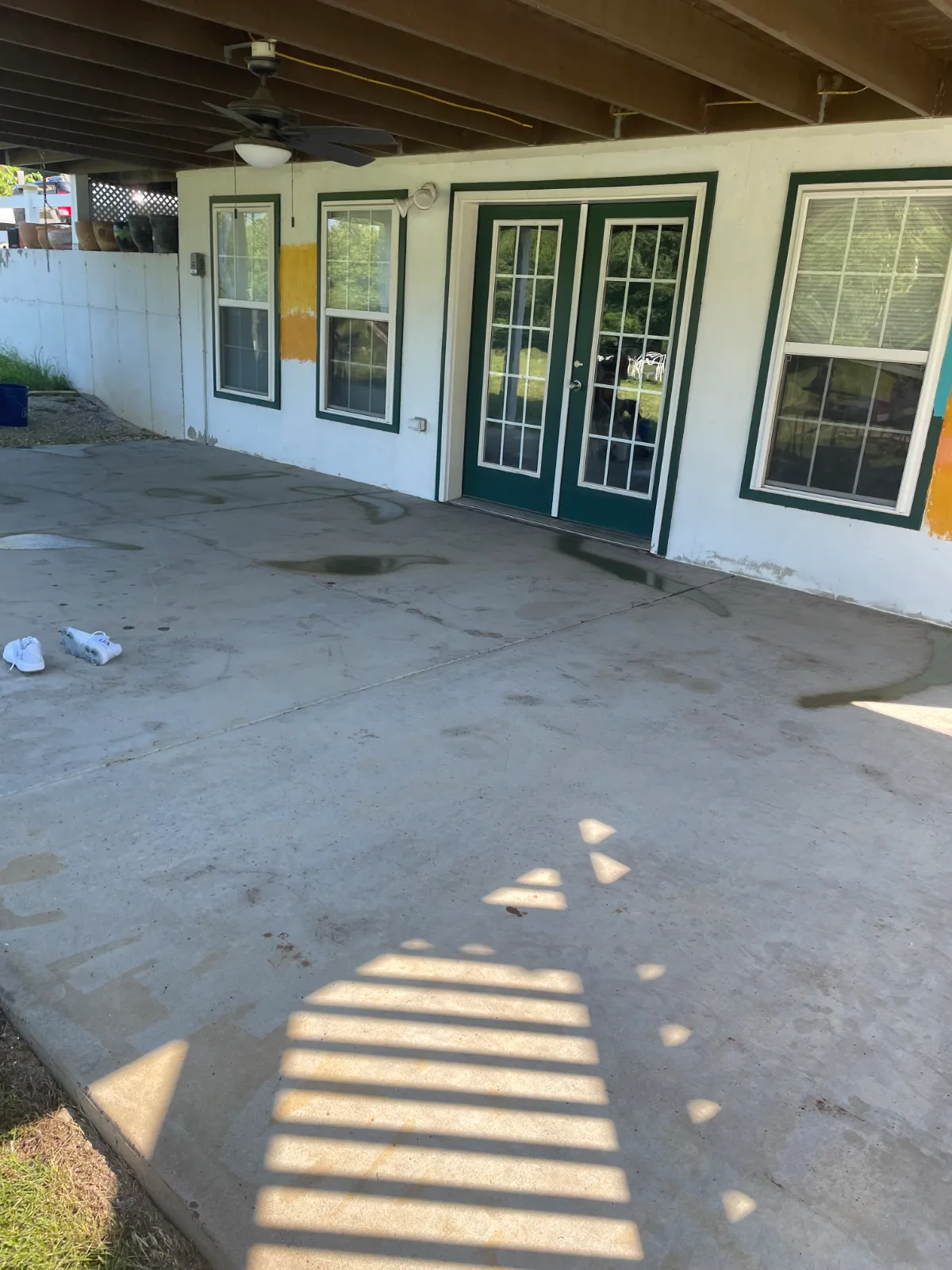
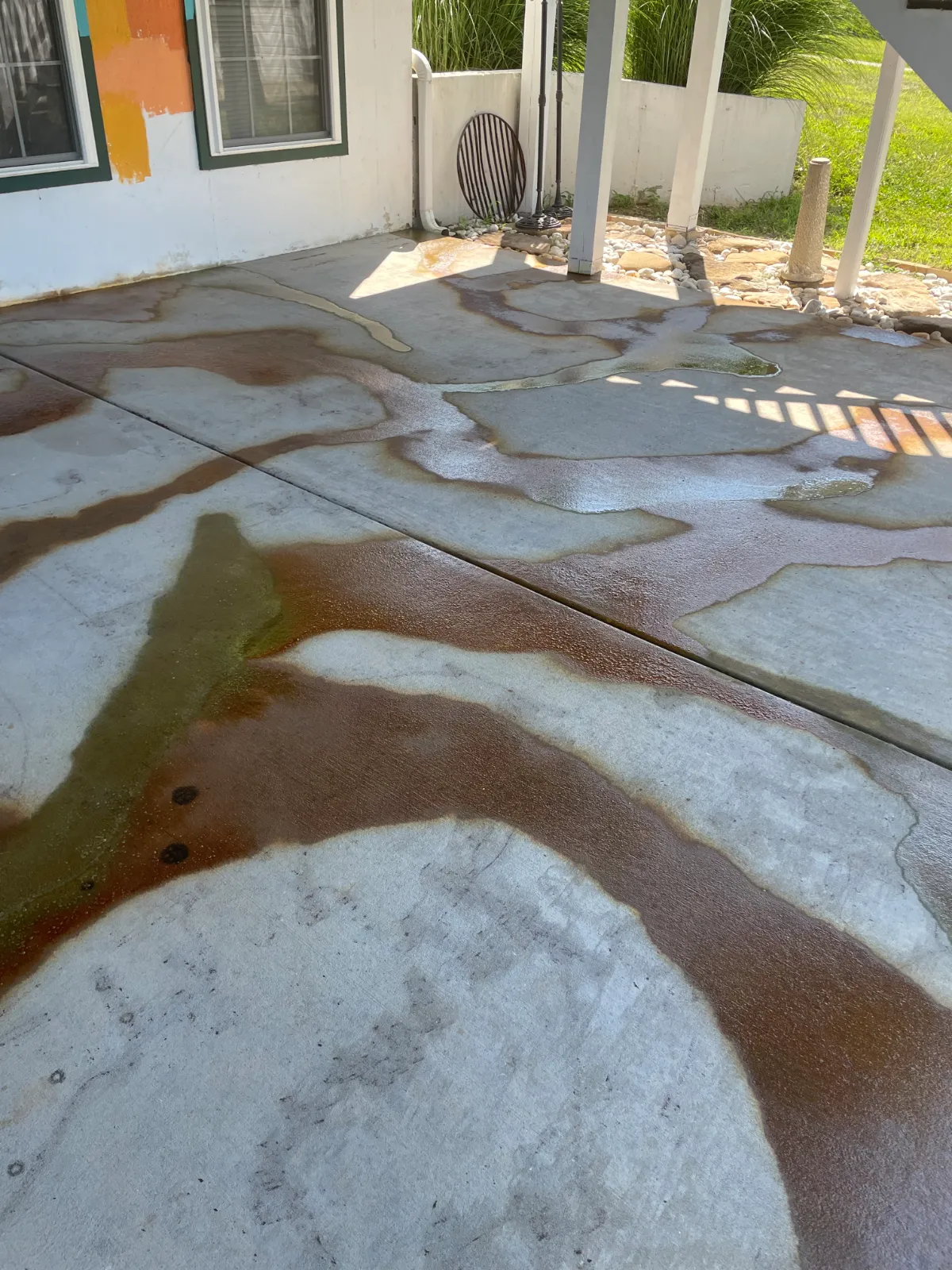
This broom-finish covered patio was painted before its makeover — and the old paint had to be fully stripped before any stain went down, since acid stain can’t penetrate through a coating. Once the concrete was bare, Coffee Brown, Malayan Buff, Shifting Sand, and Desert Amber EverStain™ were layered into a deep, mottled earth-tone patina and sealed with EasySeal™ Gloss for a wet-look finish. Proof that a painted patio isn’t stuck that way — strip it back to bare concrete and acid stain gives you something far better.
Size 450 sq. ft.
Surface Broom-finish concrete, previously painted
Color Coffee Brown, Malayan Buff, Shifting Sand & Desert Amber EverStain™
Sealer EasySeal™ Gloss
Time 30 days
Level Advanced
Robin’s tips: “Test your colors first — my Avocado didn’t show up at all on this slab. And watch out for drips coming off your sprayer!”
— Robin M., DIY Contest Entry
Concrete Paver Patios
Concrete pavers need a stain built for their surface and texture — Portico™ and PaveWave™ are formulated for exactly that. These projects show both ends of what’s possible on pavers: reviving faded color, and completely changing it with a clean whitewash.
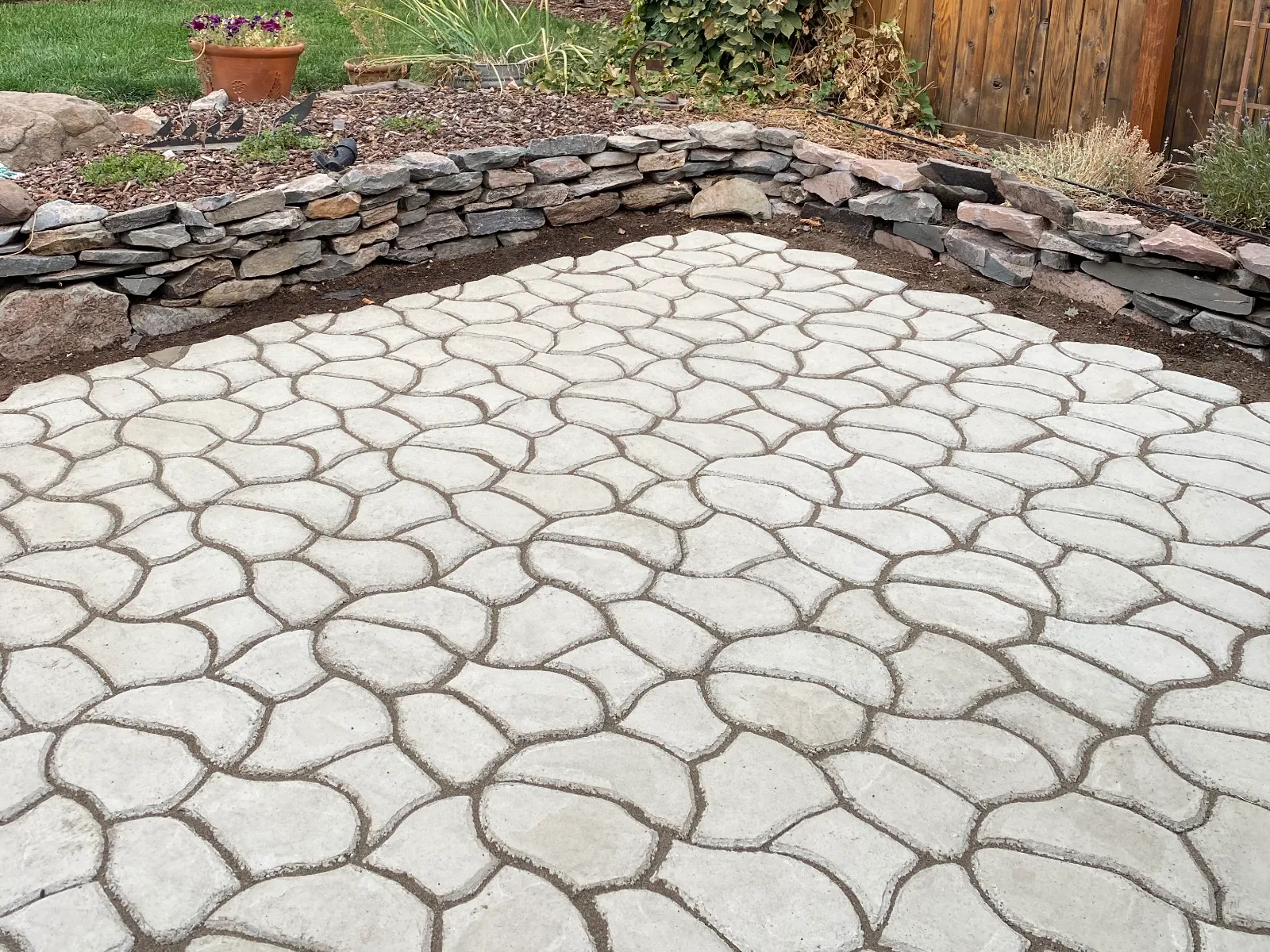
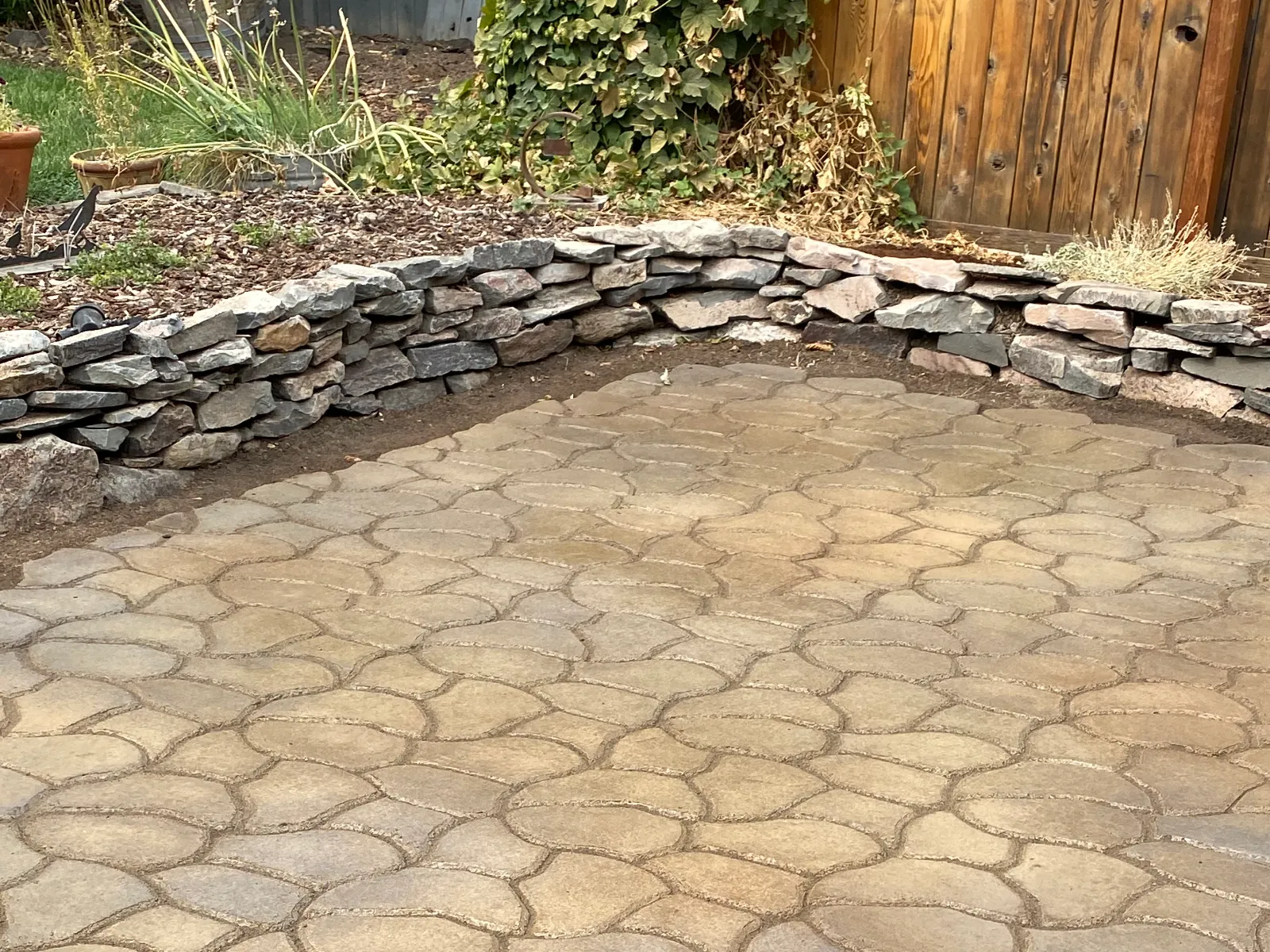
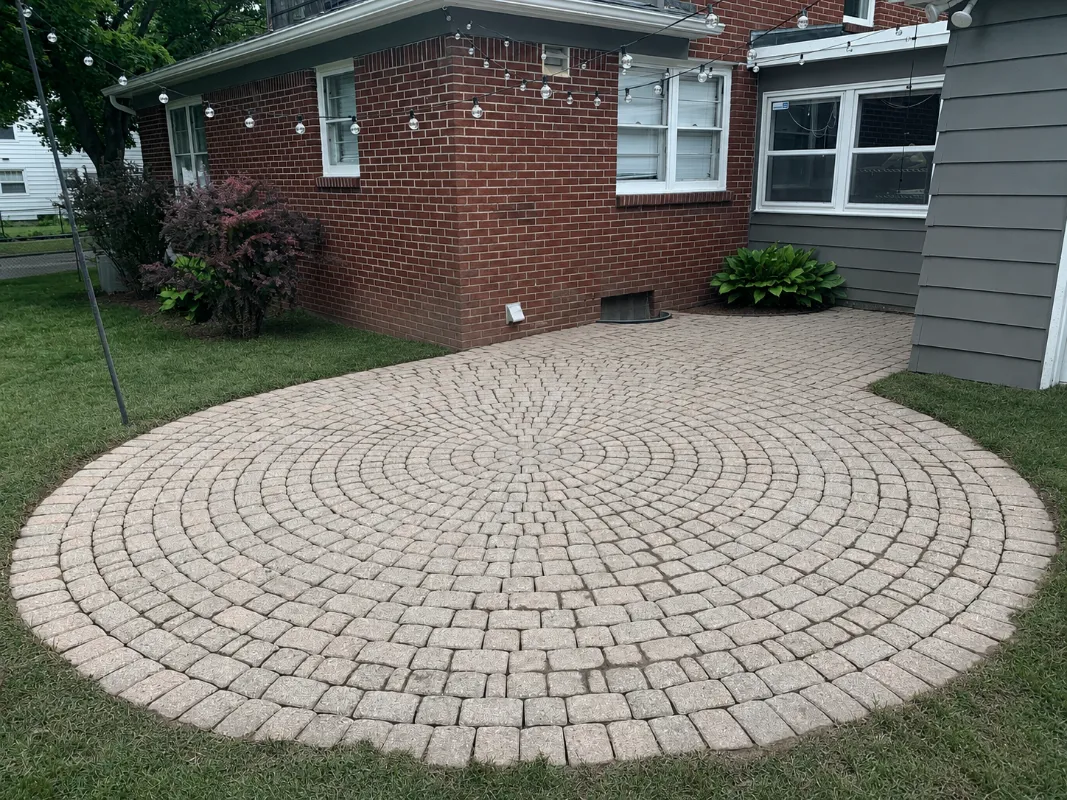
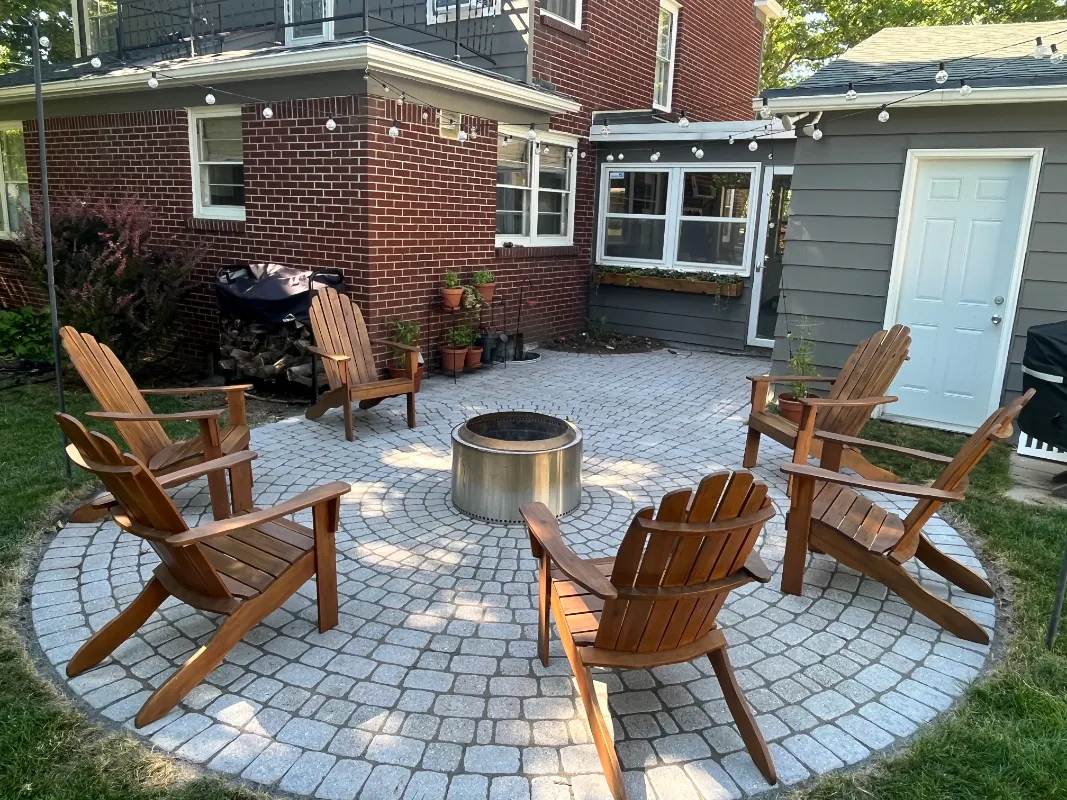
From Pink to Whitewashed: PaveWave White on a Circular Paver Patio
This homeowner loved everything about the backyard except a dated pink paver brick patio — and after paint, big-box products, and even real lime wash all failed, PaveWave™ White finally delivered the clean, whitewashed look they were after. Three coats built the white to full opacity over the light pink pavers, with a touch of Granite to make it pop, sealed with EasySeal™ Satin. Unlike the lime wash that washed away, this penetrating paver stain is built to last.
Size 300 sq. ft.
Surface Concrete pavers (circular cobblestone)
Color PaveWave™ White + Granite accent
Sealer EasySeal™ Satin, 2 coats
Time 4 days
Level Intermediate
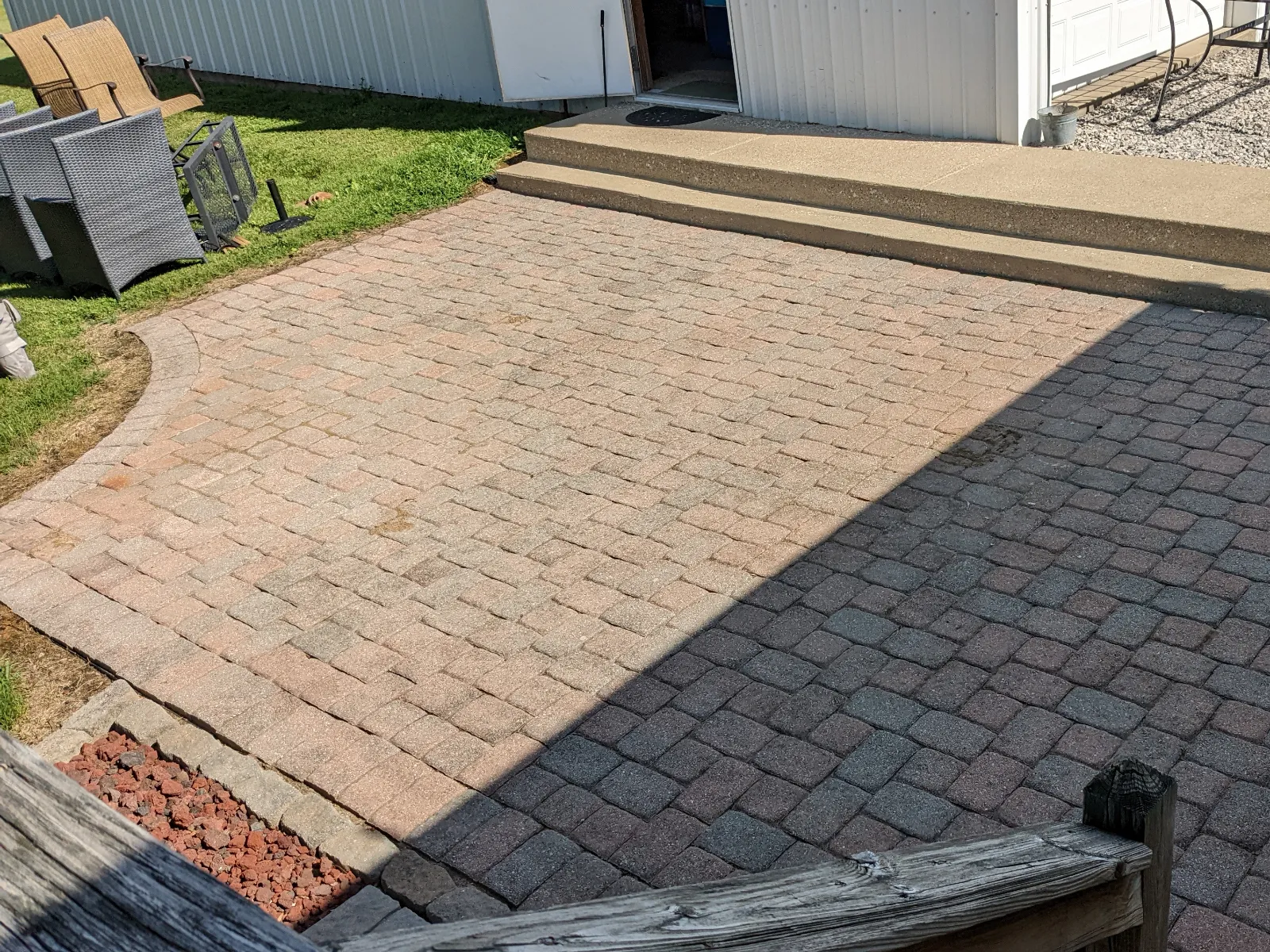
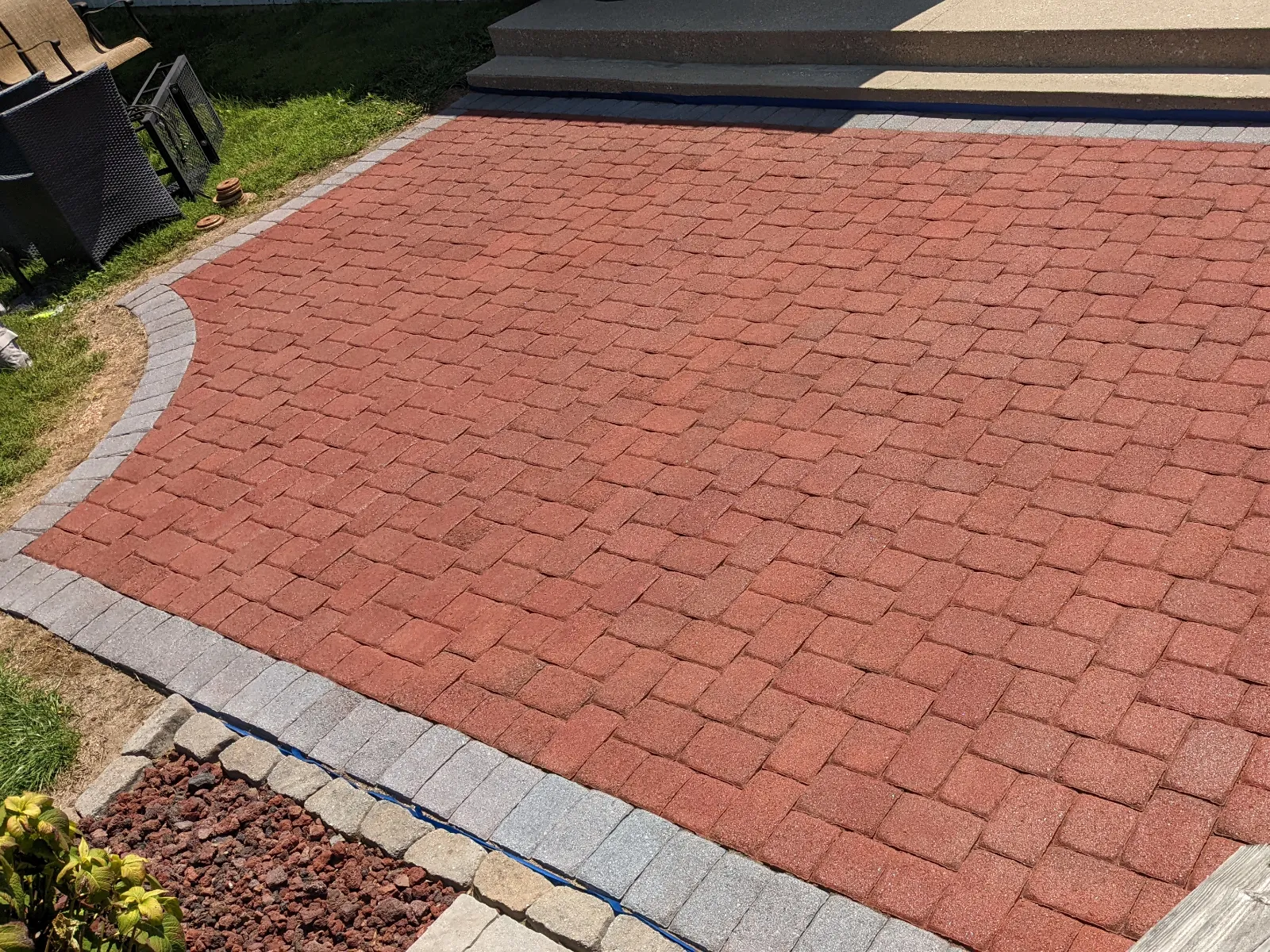
15-Year-Old Paver Patio Restored with Portico Stain
Fifteen years of weather had left this concrete paver patio faded and tired, its original color washed out. Rather than replace the pavers, the homeowner restored them with Portico™ — Crimson across the field with an Eagle Gray border to frame it — sealed with EasySeal™ Satin. Staining brought back richer color than the pavers had when they were new, at a fraction of the cost of tearing them out.
Size 315 sq. ft.
Surface Concrete pavers
Color Crimson & Eagle Gray Portico™
Sealer Satin EasySeal™
Time 5 days
Level Beginner
How Much Does It Cost to Stain a Concrete Patio?
Hiring a contractor to stain a concrete patio generally runs $3 to $15 per square foot, depending on surface prep, how many colors are involved, and whether the design includes borders, scoring, or custom graphics. On a typical 300 sq. ft. patio, that’s roughly $900 to $4,500.
Doing it yourself changes the math substantially, because you’re paying for materials instead of labor.
| Approach | 200 sq. ft. patio | 400 sq. ft. patio |
|---|---|---|
| Hire a contractor $3–$15 per sq. ft. | $600 – $3,000 | $1,200 – $6,000 |
| DIY with a complete stain & seal system | From $129.95 | From $259.90 |
Not sure which color?
Trial kits start at $29.95 with free shipping — test the exact color on your own slab first. Shop Trial KitsA complete Antiquing™ 2-Step Stain System includes both the stain and the EasySeal™ topcoat — the two things that actually determine how your patio looks and how long it lasts. For acid-stained looks, the EverStain™ 3-Step Stain System runs $144.95.
Beyond the stain itself, budget for surface prep (a degreaser and, on hard-troweled slabs, an etcher), a pump-up sprayer, and spiked shoes. Most homeowners already own a pressure washer or can rent one for the day.
Not sure about a color? Trial kits start at $29.95 with free shipping and lets you test the exact color on your own slab before committing to a full system — worth doing, because concrete’s existing color and porosity affect the final result more than most people expect.
Can You Stain an Existing Concrete Patio?
Yes — and most of the projects in the gallery below are exactly that. Faded stamped concrete, sun-bleached slabs, patios the builder sealed incorrectly, and 20-year-old broom finishes all take stain well.
What to understand going in: concrete stain is semi-transparent. It enhances the surface rather than covering it. It will not hide cracks, patches, or heavy discoloration, and the slab’s existing color influences the final result — which is why staining over an orange-toned patio reads differently than staining over gray.
An existing patio is a good candidate if it’s structurally sound and the surface is clean and absorbent. Test absorbency by pouring a cup of water on the slab in a few places: if it soaks in within five minutes, you’re ready to stain. If it beads, there’s likely a sealer or coating to remove first.
If your slab has significant cracking or spalling, patch it first. One tip that saves a lot of frustration: tint your patching compound with concrete pigment before you apply it. Untinted patch material cures a different shade than the surrounding slab and reads straight through the stain — a tinted patch disappears. The Mountain Majesty project below shows this approach on a freeze-damaged Colorado patio.
Already have colored concrete you want to change? See How to Change the Color of Already Colored Concrete.
Which Concrete Patio Stain Should You Use?
The right product depends on your surface, the look you’re after, and how much of a project you want it to be.
| Feature | Antiquing™ Best for most patios |
EverStain™ Acid Stain | Portico™ / PaveWave™ | EasyTint™ / AcquaTint™ Most even color |
|---|---|---|---|---|
| Best for | Stamped, broom, brushed, swirled, poured | Smooth and lightly textured slabs | Concrete pavers, rough exteriors | Blotchy or uneven slabs that need consistent color |
| Look | Rich color that highlights texture | Variegated, marbled, translucent patina | Even color on porous units | Uniform and consistent, still semi-transparent |
| How it works | Pigment sits on the surface; the sealer bonds it permanently | Reacts chemically — becomes part of the slab | Pigment sits on the surface; the sealer bonds it permanently | Bonds to the surface — color and sealer in one |
| Application | Stain, then seal — sealing is required | Stain, neutralize, then seal | Stain, then seal — sealing is required | One step — no separate sealer needed |
| Color range | Broad range | Earth tones — browns, terra cottas, blue-greens | Broad range | Broad range |
| Surface prep | Minimal | Etching often required | Moderate | Minimal |
| Trial kit | $39.95 | $39.95 | $39.95 | $29.95 |
Not sure which color?
Trial kits start at $29.95 with free shipping — test the exact color on your own slab first. Shop Trial KitsAntiquing™ is the default recommendation for patios. It handles textured surfaces well, requires less prep, and because it doesn’t react chemically it will blend over patched areas — which matters on any patio that’s been repaired. Most of the transformations in this gallery use it.
Choose EverStain™ when you want the mottled, natural-stone character that only an acid stain produces. EverStain™ is the one product here that reacts chemically with the concrete, becoming part of the slab itself. It’s the classic look, and on a smooth or lightly textured slab nothing else matches it.
Choose a tinted sealer — EasyTint™ or AcquaTint™ — when evenness matters more than character. These carry the pigment in the sealer itself, so you color and seal in a single application. That delivers noticeably more uniform coverage — exactly what you want on a slab that’s blotchy, patchy, or unevenly weathered, where a semi-transparent stain would let that inconsistency read straight through.
They’re still semi-transparent, so you keep some of the concrete’s natural depth. And practically speaking, it’s the fastest route to a finished patio: one product, one application, half the steps.
EasyTint™ is solvent-based and exterior-only. AcquaTint™ is water-based and works indoors or out — the better pick for a covered patio or three-season room where fumes are a concern. Both have $29.95 trial systems, the least expensive way to test a color on your own slab.
Why the sealer isn’t optional
This is the single most important thing to understand before you start, and it’s where most DIY patio projects go wrong.
With Antiquing™, Portico™, ColorWave™, and PaveWave™, the pigment sits on the surface of the concrete. Until you seal it, that color is not bonded to anything. It will wash away in the first rain, wear off under foot traffic, and track through the house on shoes and pet paws.
The sealer is what creates the permanent bond between the pigment and the concrete. It isn’t a finishing touch or a protective extra — it’s the step that makes the color stay. A stained-but-unsealed patio is an unfinished patio, and leaving it overnight before a storm can cost you the entire job.
This is why every Direct Colors patio product is sold as a system rather than as stain alone. Budget for the sealer, plan your weather window around it, and don’t stop halfway.
The exception is EverStain™ acid stain, which reacts chemically and becomes part of the slab. It still needs sealing for protection and color depth, but the color itself won’t rinse away before you get there.
A note on stain vs. paint: paint forms a thick opaque film that, on an exterior slab with foot traffic and freeze-thaw cycles, typically starts peeling within a year or two. Concrete stain colors the surface and is locked in by a thin, breathable, UV-stable sealer — no thick film to delaminate. Maintained on a normal resealing cycle, a stained patio holds up for the life of the slab.
How to Stain a Concrete Patio in 4 Steps
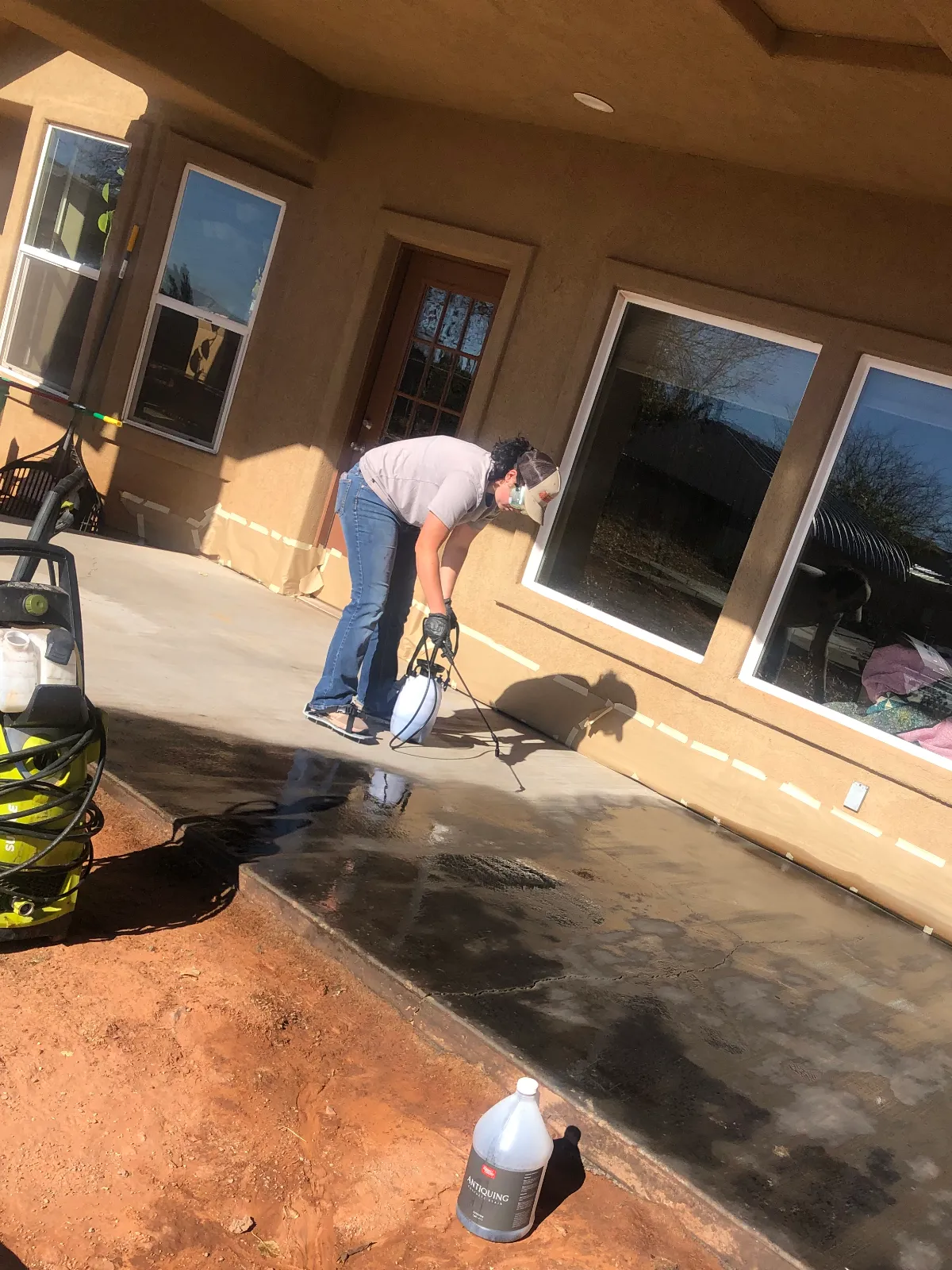
- Prep the surface. New concrete needs to cure 30 days first. Remove any existing paint or sealer, then clean the slab of oil, dirt, and organic matter with a degreaser and a scrub brush. Test absorbency with the water test above; if the slab repels water, etch it, neutralize, and rinse. Let it dry completely. Mask off walls, landscaping, and anything else within over-spray range.
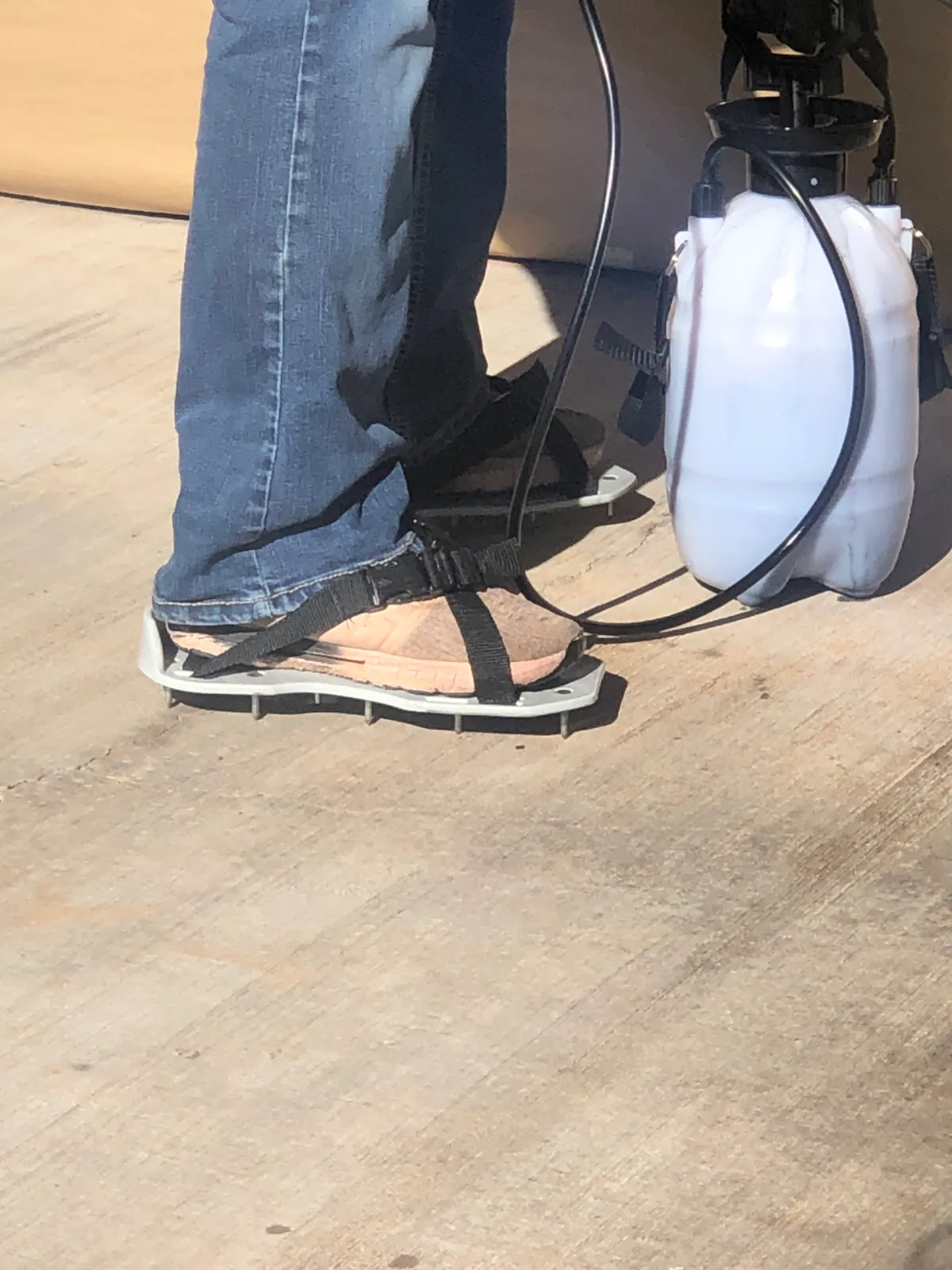
- Apply the stain. Only stain when the surface temperature is between 40°F and 95°F. Remove the filters from your pump-up sprayer, shake the stain thoroughly, and spray in overlapping circular motions. Wear spiked shoes so you don’t leave prints, and start from the corner farthest from your exit. Shake the tank frequently to keep color consistent.
- Don’t panic when it looks faint. Antiquing™ stain dries noticeably lighter than the final result. The sealer is what brings the color to full depth — this trips up nearly every first-timer.
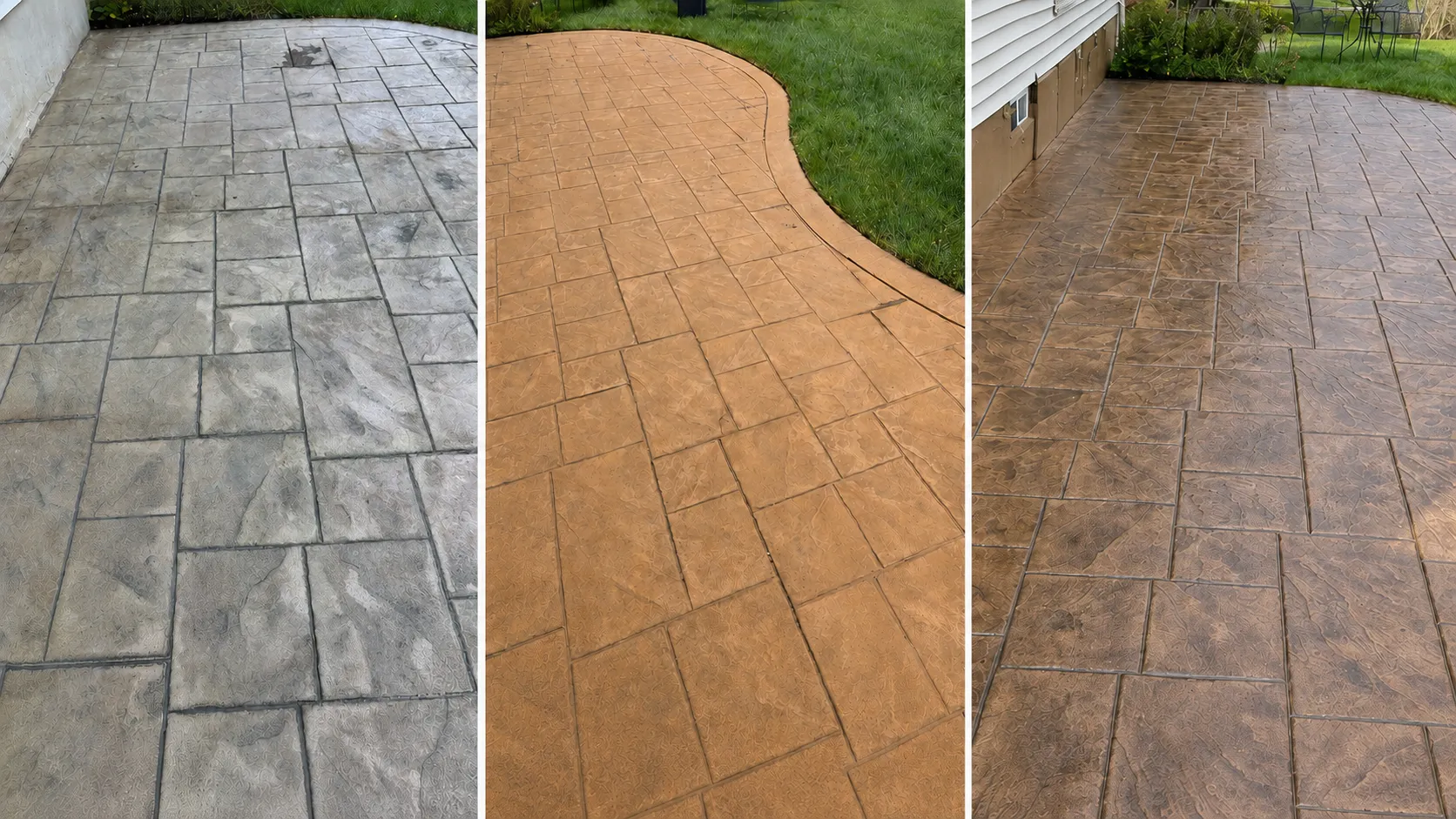
Left to right: prepped surface, dry unsealed Cafe Royale Antiquing™ Stain, and the finished color after sealing. The middle stage is where most first-timers think something has gone wrong. - Seal it — this step is not optional. Until the sealer goes down, the pigment is only sitting on the surface. Rain, foot traffic, or pet paws will take it right off. The sealer is what bonds the color to the concrete permanently, so plan your weather window to get it done. Use a fresh sprayer, apply thin coats to avoid puddling, and wait 8 hours between coats. Check cure with a thumbnail before recoating. Allow foot traffic after 16 hours.
👉 Full walkthrough with video: How to Stain a Concrete Patio 👉 Acid staining specifically: How to Acid Stain a Patio
How Long Does a Stained Concrete Patio Last?
Properly sealed, a stained concrete patio holds its color for the life of the slab. There’s no thick film to delaminate the way paint does, so it won’t peel, flake, or chip.
The key word is sealed. With Antiquing™, Portico™, ColorWave™, and PaveWave™, the sealer is what bonds the pigment to the concrete — so keeping the sealer intact isn’t just about gloss and protection, it’s what keeps your color where you put it. On an exterior patio exposed to UV and weather, plan to reseal every 2–3 years. High-traffic areas and full-sun exposure may need it sooner; covered patios go longer.
Don’t wait for the finish to look obviously worn. Resealing on schedule is far easier than recovering color that’s already started wearing through.
The same 2–3 year cycle applies to tinted sealers like EasyTint™ and AcquaTint™, where color and protection refresh together in a single step. And with EverStain™ acid stain, the color has reacted chemically into the slab and won’t go anywhere regardless — but the sealer still carries the color depth and gloss, so the same maintenance schedule applies.
Resealing: match your sealer type. Clean the surface, let it dry completely, and apply a fresh coat — but the new sealer has to be compatible with what’s already down. Solvent-based goes over solvent-based, water-based goes over water-based. Putting the wrong type over an existing sealer can soften, cloud, or lift the finish you’re trying to protect.
The one product that crosses over is HydroCryl™, a high-performance sealer that can go over either solvent- or water-based acrylic sealers.
| What’s already on your patio | Reseal with |
|---|---|
| Solvent-based acrylic e.g. EasySeal™ | Solvent-based acrylic, or HydroCryl™ |
| Water-based acrylic e.g. AcquaSeal™ | Water-based acrylic, or HydroCryl™ |
That flexibility applies to acrylic sealers specifically. Polyurethane and epoxy coatings are a different category and haven’t been tested for compatibility — if that’s what’s on your slab, or if you’re not sure what’s there, don’t guess. Test a small patch in an inconspicuous corner and wait a full cure cycle before committing to the whole patio, or take advantage of a free project consultation and describe what you’re working with. An incompatible sealer over a large patio is an expensive thing to discover after the fact.
One condition before any of this: the existing sealer needs to be sound. Resealing works when the old coat is simply dull or thinning — it’s a refresh, not a repair. If the current sealer is delaminating, flaking, peeling, or cloudy from moisture trapped underneath, new sealer over the top will fail with it. In that case strip it back to bare concrete with a stripper and neutralizer and start clean.
Assuming the sealer is sound and you’re keeping the same color, no stripping or restaining is required.
Routine cleaning:
- Rinse debris off with a garden hose or pressure washer.
- Apply a small amount of liquid dish soap and scrub with a push broom.
- Rinse thoroughly until no suds remain.
- Dry with a leaf blower, or wait 24 hours before resealing.
Avoid de-icing salts on stained concrete in winter, and put pads under furniture legs that get dragged.
Stained Concrete Patio FAQs
How much does it cost to stain a concrete patio? Contractors typically charge $3–$15 per square foot. A DIY stain-and-seal system for a 200 sq. ft. patio starts at $129.95 in materials.
Do I have to seal a stained concrete patio? Yes — with Antiquing™, Portico™, ColorWave™, and PaveWave™, sealing is required, not optional. The pigment sits on the surface until the sealer bonds it to the concrete. An unsealed patio will lose its color to the first rain, to foot traffic, and to shoes and pet paws. Plan your project so the sealer goes down before any weather arrives.
Can you stain a concrete patio yourself? Yes. Staining is one of the more approachable concrete projects — most of the work is surface prep, and application is done with a pump-up sprayer. Many of the projects in this gallery were completed by first-time DIYers in 2–4 days.
Will stain hide cracks in my patio? No. Stain is semi-transparent and enhances the surface rather than concealing it. Patch cracks first, and tint your patching compound with concrete pigment so the repair blends rather than showing through.
How long does it take to stain a patio? Most patios take 2–4 days including prep, staining, and two coats of sealer with cure time between them. A 200 sq. ft. porch can be done in three days; a 1,200 sq. ft. patio takes closer to four.
How long does a stained concrete patio last? Properly sealed, it holds its color for the life of the slab — there’s no thick film to peel or flake the way paint does. Because the sealer is what bonds the pigment to the concrete, reseal every 2–3 years on an exterior patio to keep both the color and the protection intact.
Is stained concrete slippery when wet? Sealed concrete can be slick when wet. Add OxiGrip™ anti-slip additive to your sealer for patios near pools or in rainy climates. One important exception: OxiGrip™ can’t be mixed directly into EasyTint™ or AcquaTint™. If you’re using a tinted sealer, apply it as your color layer first, then add OxiGrip™ to a clear topcoat over it.
Can you stain concrete pavers? Yes — pavers need a stain formulated for their surface and texture. Portico™ and PaveWave™ are built for pavers and rough exterior surfaces.
What’s the best color for a concrete patio? Natural earth tones are the most popular and the most forgiving — browns, charcoals, and terra cottas complement most homes and landscaping. If your patio is stamped to mimic stone or wood, a natural tone makes the pattern read more convincingly. Order a trial kit (from $29.95) to test on your actual slab; concrete’s existing color shifts the result.
Can you stain over previously stained concrete? Yes. Antiquing™ stain doesn’t react chemically, so it applies over existing color. Darker shades cover more completely — see How to Change the Color of Already Colored Concrete.
Working on a pool deck instead? See our stained pool deck gallery for projects built around water exposure and slip resistance.
Not sure which color?
Trial kits start at $29.95 with free shipping — test the exact color on your own slab first. Shop Trial Kits