
How to Apply Acid Stain to Concrete: Why Testing Comes First
by Justin Richardson
Acid staining is one of the most beautiful ways to turn plain concrete into a marbled, variegated surface that looks completely unique. But before you plan your colors or start spraying, there is one question every homeowner and contractor should ask first:
Will this concrete actually react with acid stain?
At Direct Colors, we work closely with DIYers, contractors, and homeowners every day. Over time, we have seen a clear trend: newer concrete construction is becoming less predictable with acid stains. Many modern mixes use supplementary materials that partially replace traditional cement, and those changes can reduce how strongly some slabs react with acid stain.
The challenge is that most people staining after the pour have no way of knowing the exact concrete mix. Homeowners often inherit the slab. Contractors may be hired long after the concrete was placed. Even when the concrete looks clean and ready, the internal composition may not support the chemical reaction needed for strong acid stain color.
That is why testing is not just a recommendation. It is the most important step in the project. A small test area can tell you whether acid stain is the right product before you spend time, money, and effort staining the entire surface.
This guide will help you understand how acid stain works, why some modern concrete does not react well, how to test your slab, and how to move forward with confidence.
Why Modern Concrete May Not React Like Older Concrete
Acid stain is different from paint, dye, or topical stain. It does not simply sit on top of the concrete. Acid stain creates color through a chemical reaction with minerals in the slab. When the concrete is reactive, the result can be rich, marbled, and completely one-of-a-kind.
But not all concrete reacts the same way. In recent years, more concrete mixes have included materials that replace part of the traditional cement content. These changes can be useful in construction, but they can also make acid stain results less predictable. Some slabs react beautifully. Others react weakly, unevenly, or barely at all.
This is especially frustrating because most homeowners and many contractors do not know what was used in the original concrete mix. If you are staining a basement, patio, shop floor, garage, or newly built home, you may not have access to the batch ticket or mix design. That means the slab may look ready on the surface while still being a poor candidate for acid stain.
Acid stain may not perform well if the concrete has:
- A high amount of cement replacement materials, such as fly ash
- Been poured with a modern mix that has limited acid stain reactivity
- Paint, glue, oil, grease, curing compounds, or old sealer on the surface
- Been treated with muriatic acid, TSP, waterproofers, or similar chemicals
- Weak, sandy, crumbling, or heavily eroded areas
- New concrete that has not cured long enough
New concrete should cure for at least 30 days and should appear like a uniform light gray before staining. Older concrete should be structurally sound and fully cleaned before you apply stain.
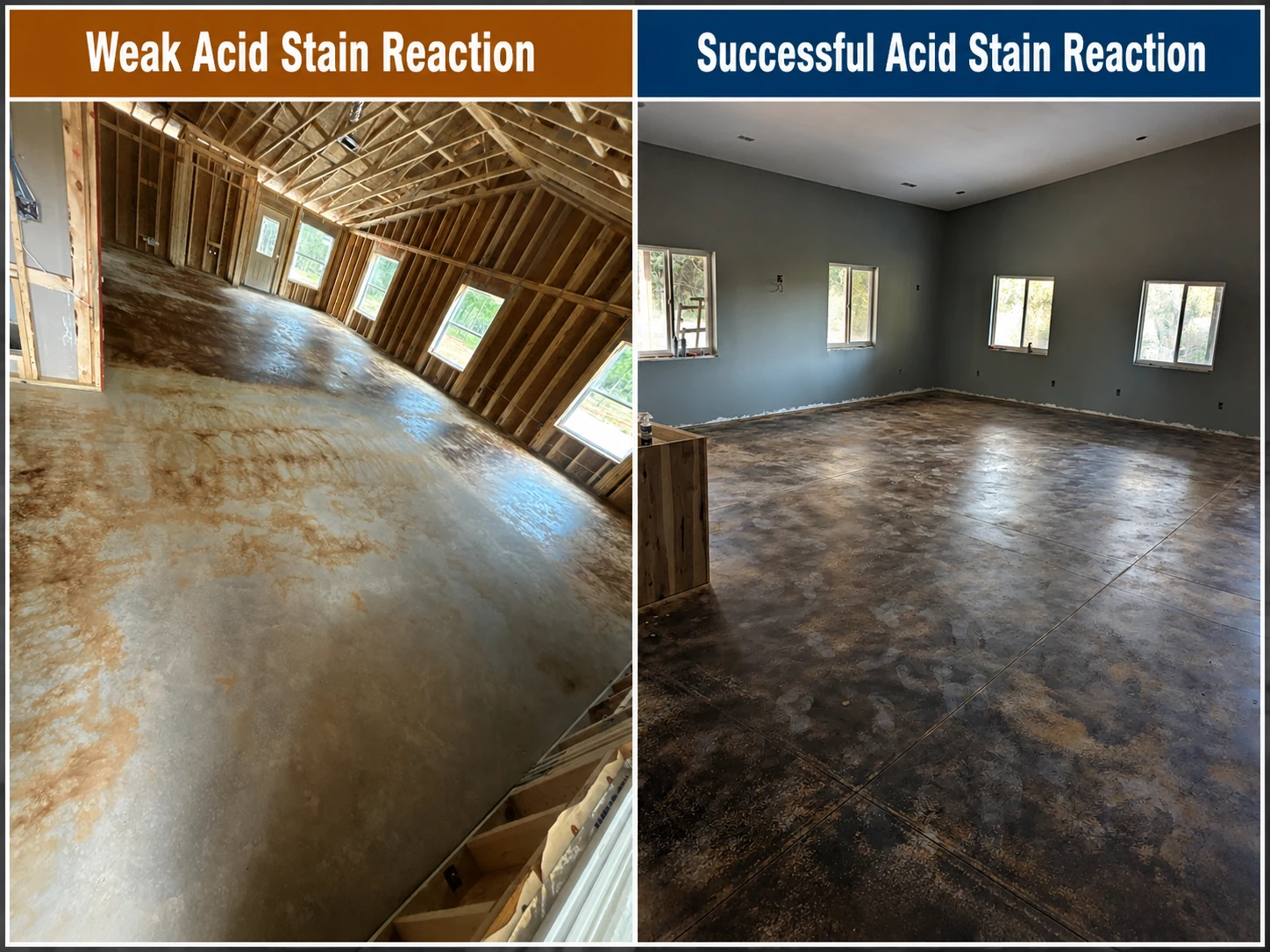
Direct Colors Tip: If your test shows weak or uneven acid stain reaction, that does not mean your project is ruined. It simply means acid stain may not be the best product for that slab. A water-based stain like ColorWave® is often a better choice when you need more predictable color on challenging or unknown concrete.
Step 1: Test the Stain Before You Commit to the Full Project
This is the step that can save the entire project. Every concrete slab reacts differently, even when you use the same stain color and the same application method. With today’s concrete mixes, testing is the only reliable way to know whether your slab will produce the acid stain color you want.
Choose a hidden area or a representative section of the slab. Apply the stain, allow it to react for the recommended activation time, neutralize and clean the area, then apply a small amount of sealer to preview the true finished color. Acid stain often looks dull or chalky before sealing, so do not judge the final color before you complete the test process.
Testing helps you answer the most important questions before you begin:
- Is this concrete reactive enough for acid stain?
- Does the color develop strongly enough after the full activation time?
- Does the color look even, weak, blotchy, or inconsistent?
- Will the finished color look right after sealing?
- Should you continue with acid stain or switch to a water-based stain like ColorWave®?
If the test area reacts well, you can move forward with more confidence. If the test looks weak or disappointing, it is better to find out before staining the entire floor, patio, or countertop.
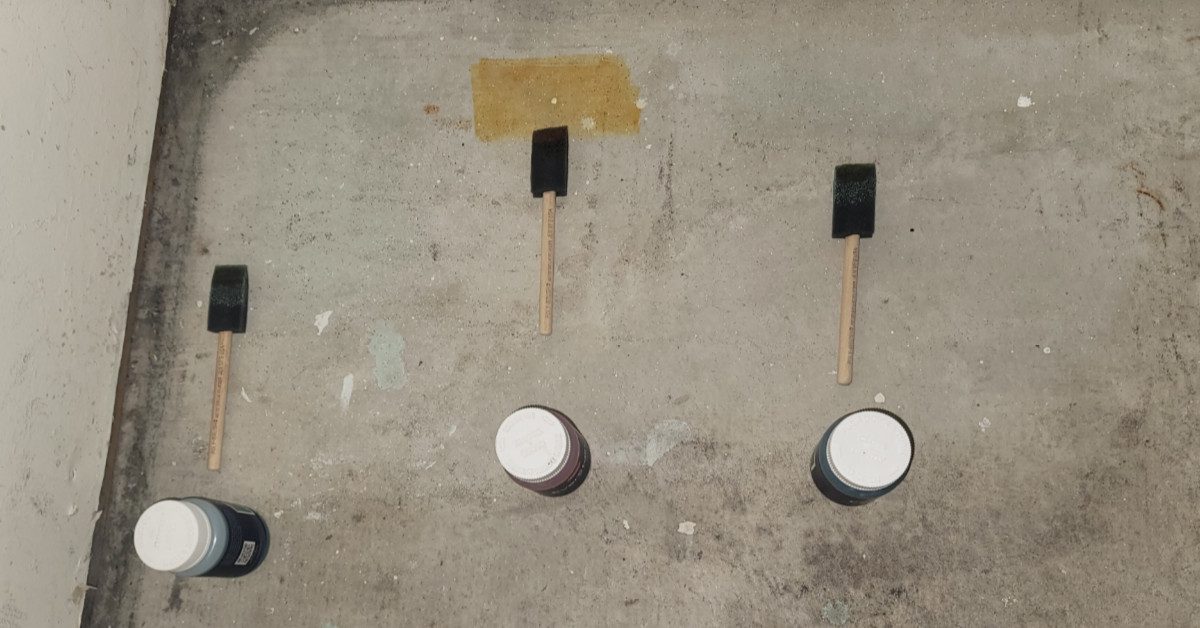
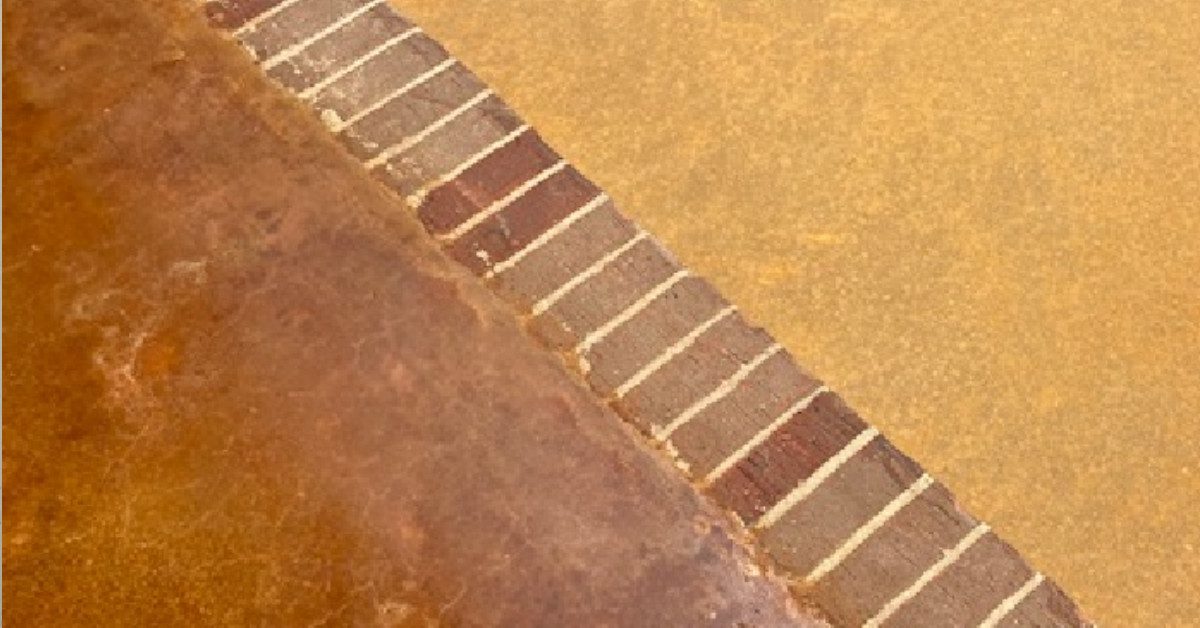
Direct Colors Tip: Acid Stain Trial Kits are designed for this exact reason. They let you test colors on your own concrete before committing to a full-size project. We strongly encourage testing because we have seen many customers become frustrated only after finishing an entire project and realizing their concrete was not reactive enough for acid stain.
Step 2: Clean and Prepare the Concrete
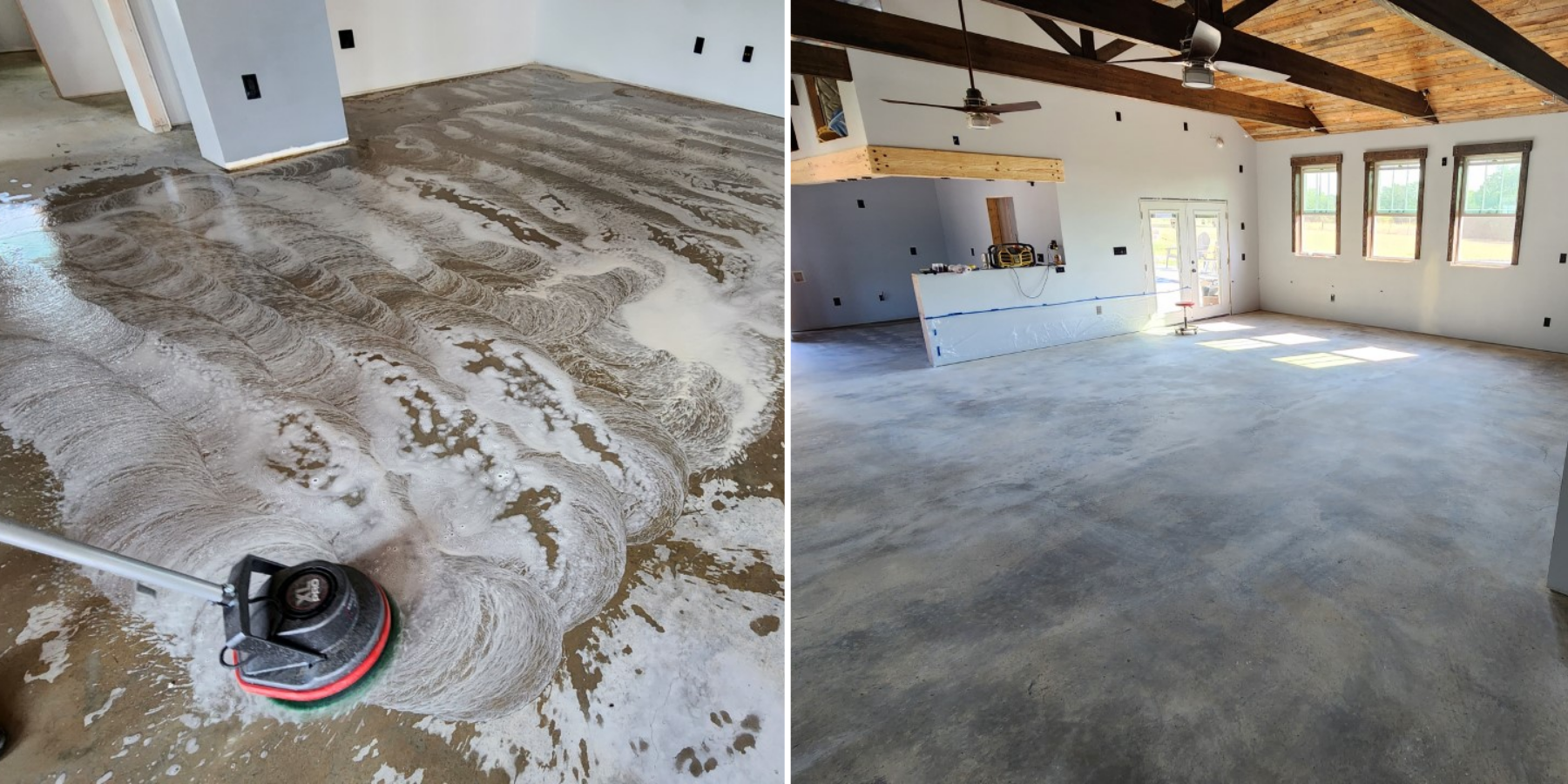
Surface prep is the most important step in the entire project. Acid stain must be able to reach and react with the minerals in the concrete. Anything sitting between the stain and the slab can cause light spots, blotchy color, or complete stain failure.
Remove all contaminants, including:
- Dirt and dust
- Paint or overspray
- Carpet glue or adhesive residue
- Oil and grease
- Old sealers or coatings
- Drywall mud, caulk, or construction residue
After cleaning, let the concrete dry completely unless you are working outdoors in hot, dry conditions. Outdoor concrete may need to be lightly dampened before staining so the acid stain does not dry too quickly and stop reacting.
Step 3: Gather Safety Gear and Supplies
Before applying acid stain, set up your workspace and protect yourself. Acid stain is a chemical product and should be handled with care.
You will need:
- Safety goggles
- Acid-resistant gloves
- Long sleeves and pants
- Closed-toe shoes or acid-resistant footwear
- Spiked shoes or cleats when walking on stained or wet surfaces
- Dust mask or respirator, especially in enclosed areas
- All-plastic pump sprayer
- Nylon scrub brush
- ProClean Neutralizer™
- Clean water for rinsing
- Wet/dry vacuum, mop, or towels for cleanup
- Concrete sealer
- Concrete floor wax for indoor floors, if desired
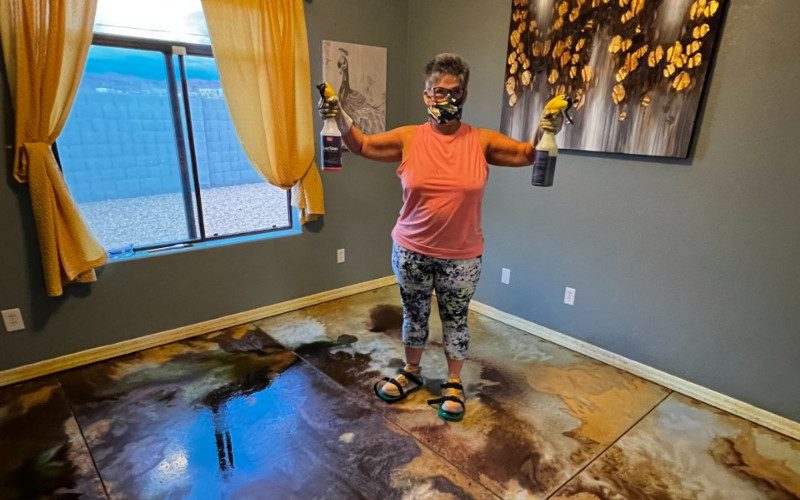
Safety reminder: Work in a well-ventilated area. Keep pets and children away from the project area until the stain, neutralizer, and sealer steps are complete.
Step 4: Apply the Acid Stain
Use an all-plastic pump sprayer to apply the acid stain evenly across the surface. Avoid metal sprayers, since acid can react with metal parts.
For a natural marbled finish, spray the stain in random, overlapping motions. Do not try to make acid stain look perfectly uniform. The variation is part of the finished look.
You can adjust the effect based on your application method:
- Soft marbled look: Spray and allow the stain to move naturally.
Darker, more worked-in color: Spray, then brush in circular motions. - Veined look: Apply a secondary stain color first, then apply the main color around it while the first color is still wet.
- Multi-color floor: Start with the lighter color as the base, then add darker accent colors.
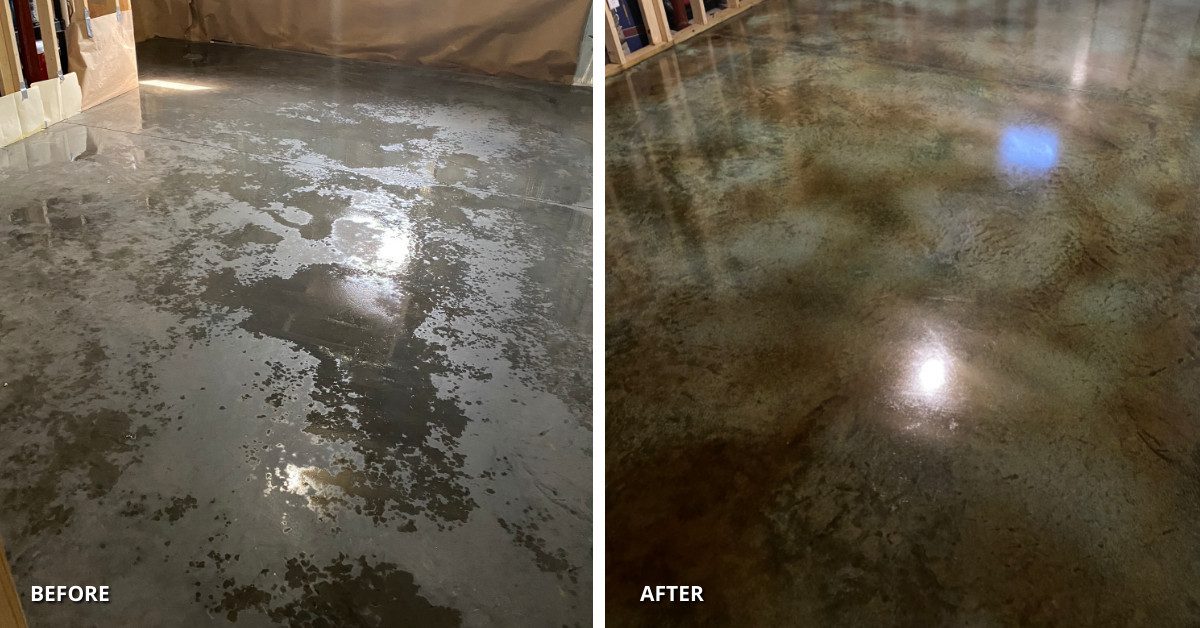
To get a veined look, apply a secondary stain color first, then add the main color around it while it’s still wet. Don’t overblend — you want those variations!
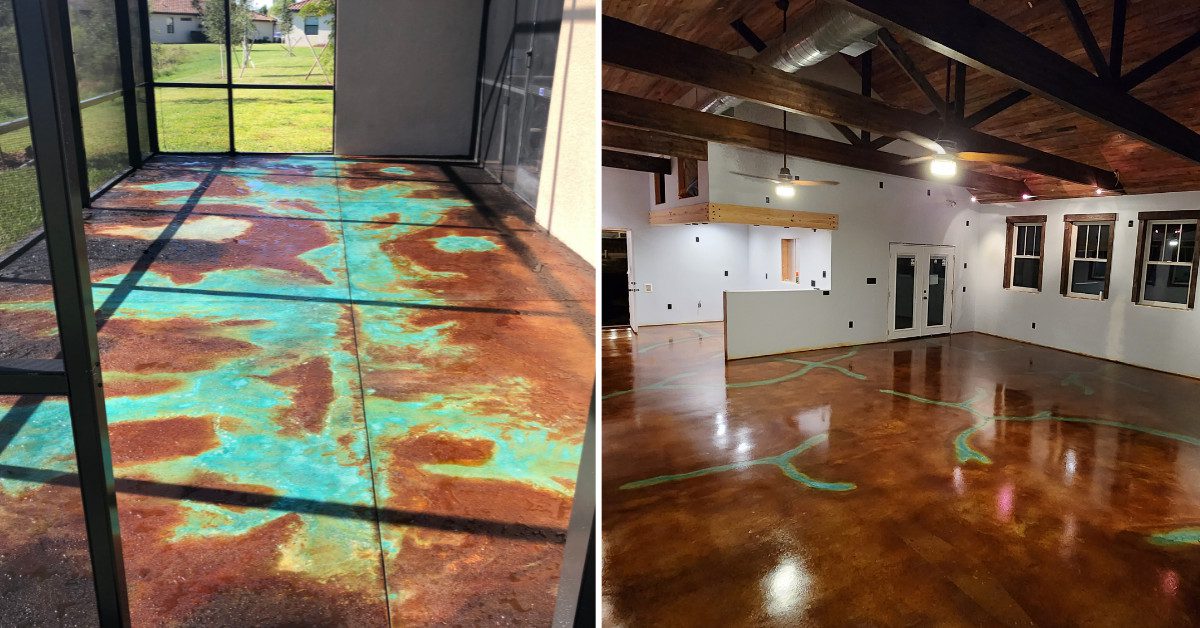
For multi-colored floors, use a light color as a base. Once dry (or while still wet, depending on the effect), apply your accent shades.
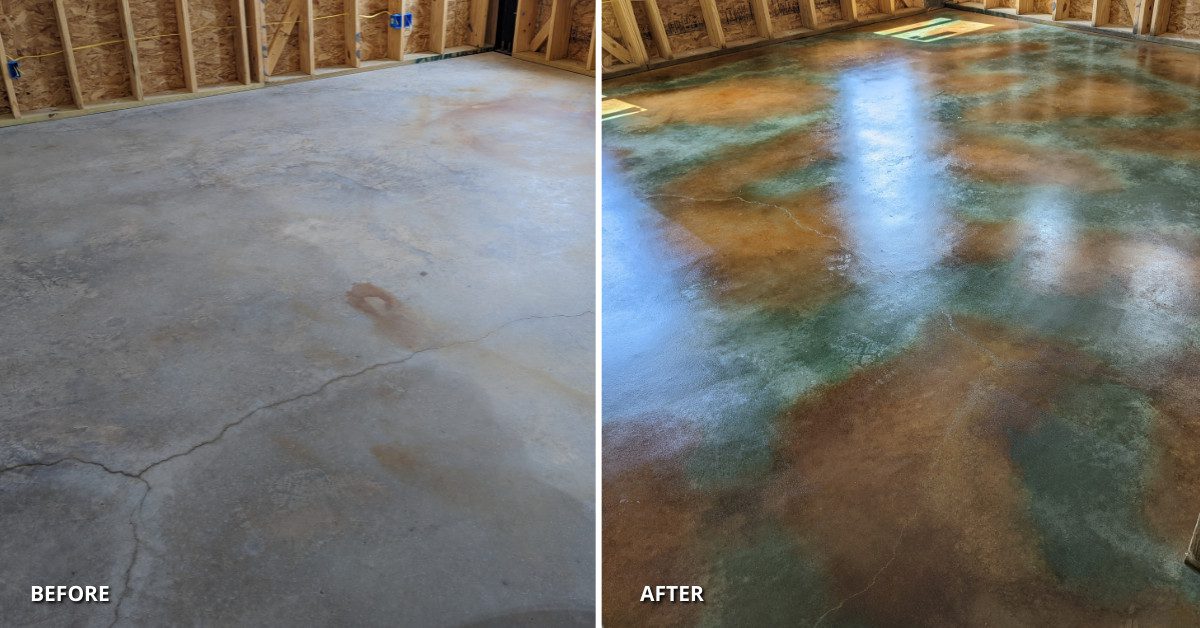
For outdoor or sloped concrete, watch for puddling or runoff. Some pooling can create beautiful variation, but too much can cause overly dark areas or uneven residue buildup.
Step 5: Let the Stain React and Check the Color
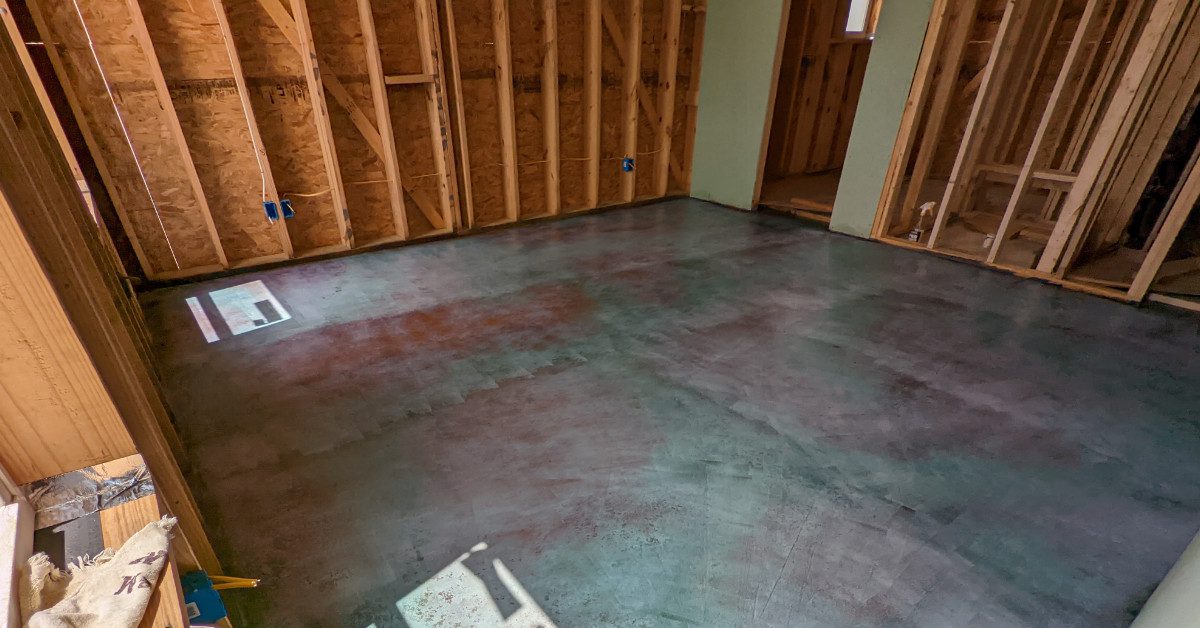
Acid stain needs time to react with the concrete. Most colors take about 4 to 8 hours to fully develop, but activation time can vary by color, surface conditions, temperature, and desired depth.
As the stain dries, you may see a chalky residue on the surface. This is normal. The residue is part of the chemical reaction and will be removed during the neutralizing and cleaning step.
To check color progress, lightly mist a small area with water. The wet color gives you a better preview of how the surface may look once sealed.
If the color looks too light, allow the stain to continue reacting. Do not neutralize before the recommended activation time, or the reaction may not fully develop.
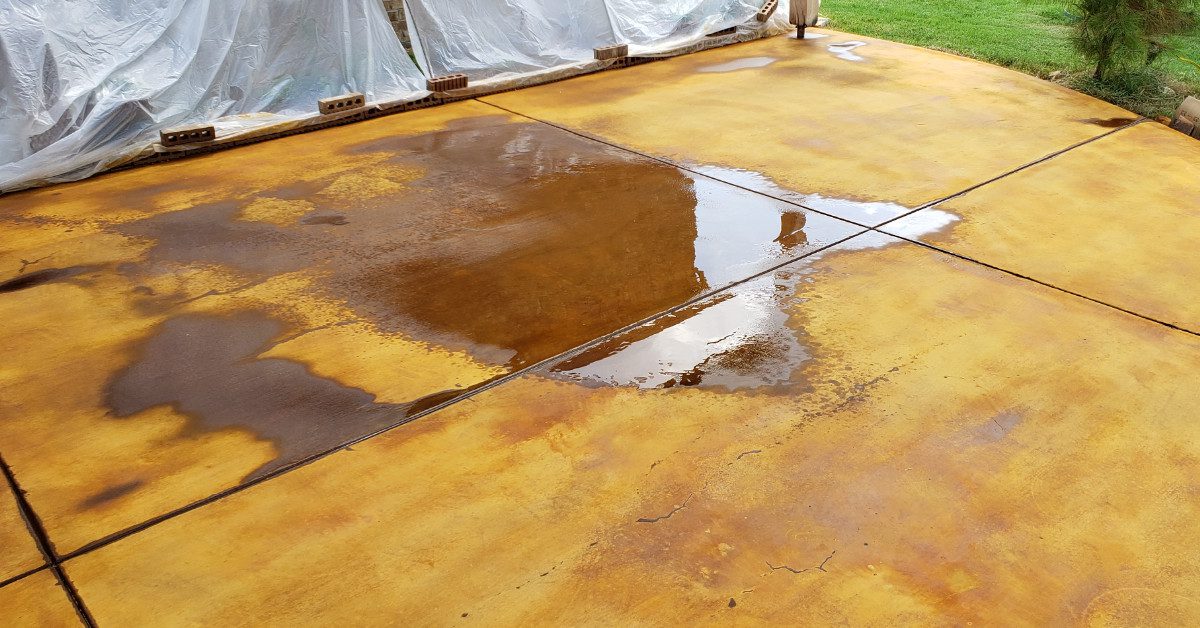
Outdoor staining tip: In hot, dry weather, lightly dampen the concrete before applying acid stain. This helps prevent the stain from drying too quickly, which can limit the chemical reaction and weaken the final color.
Step 6: Neutralize and Clean the Residue
Once the stain has reacted, neutralize the surface before sealing. This stops the acid reaction and removes the chalky residue left behind.
You can neutralize with either:
- 1–2 tablespoons of baking soda mixed into 1 gallon of water
- ProClean Neutralizer™
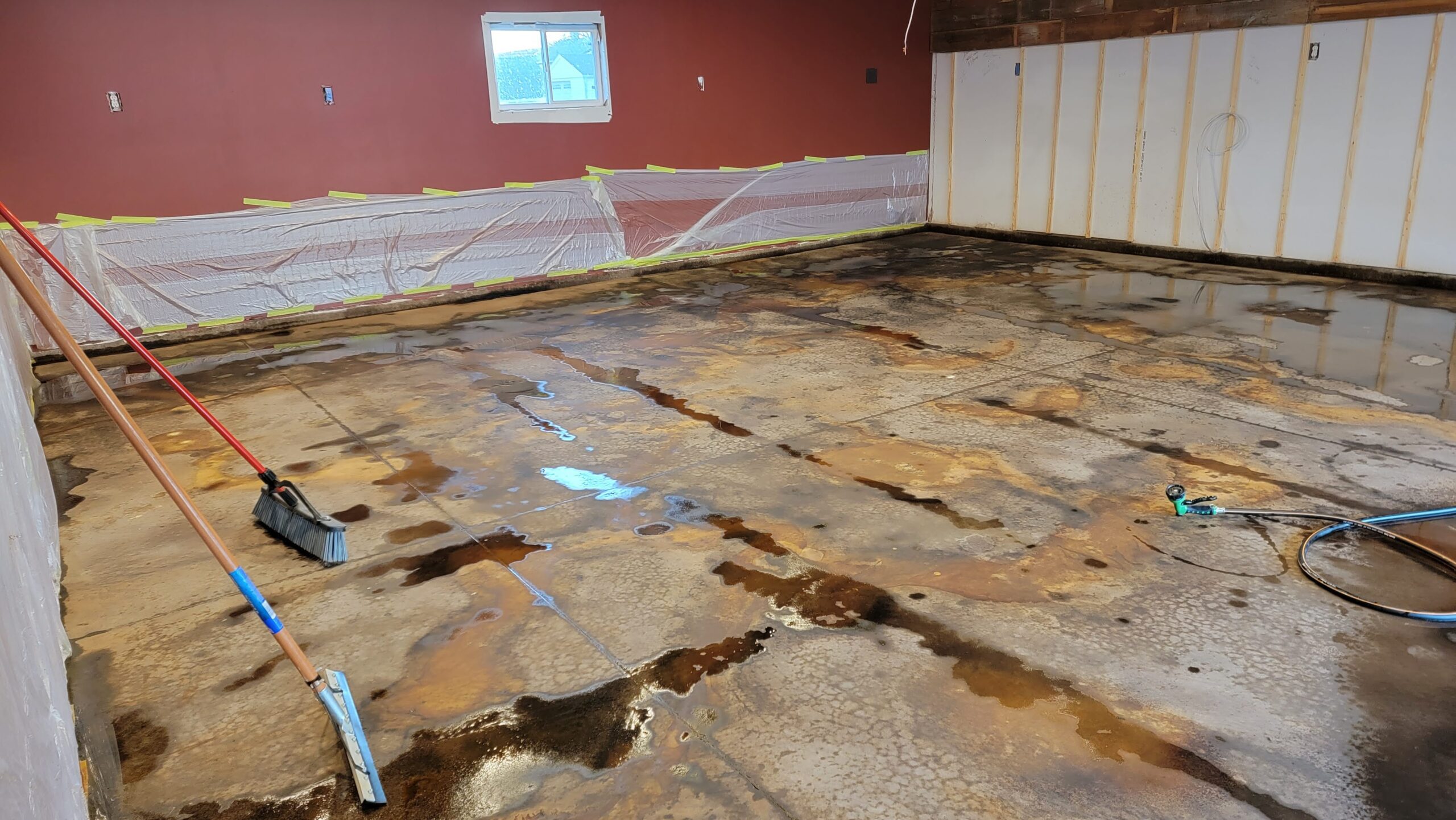
Scrub the surface with a nylon brush, then rinse thoroughly with clean water. Remove the rinse water with a wet/dry vacuum, mop, or towels.
Repeat the rinse-and-clean process until the surface is clean and no residue remains. The floor should not feel gritty, dusty, or chalky before sealing.
Direct Colors Tip: Baking soda works, but it can leave more residue behind and may take extra rinsing. ProClean Neutralizer™ makes cleanup easier and more consistent.
Step 7: Seal the Acid-Stained Concrete
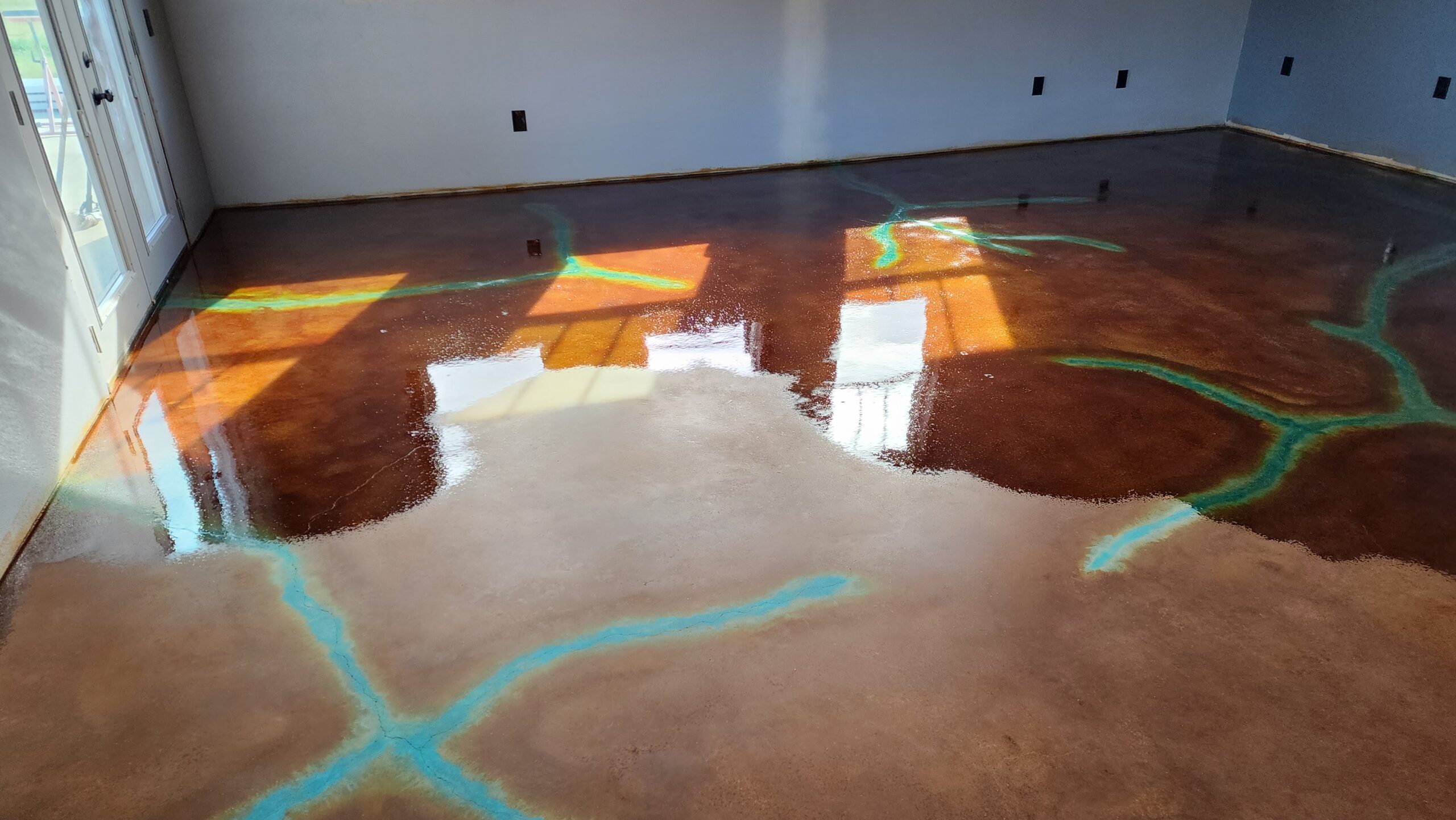
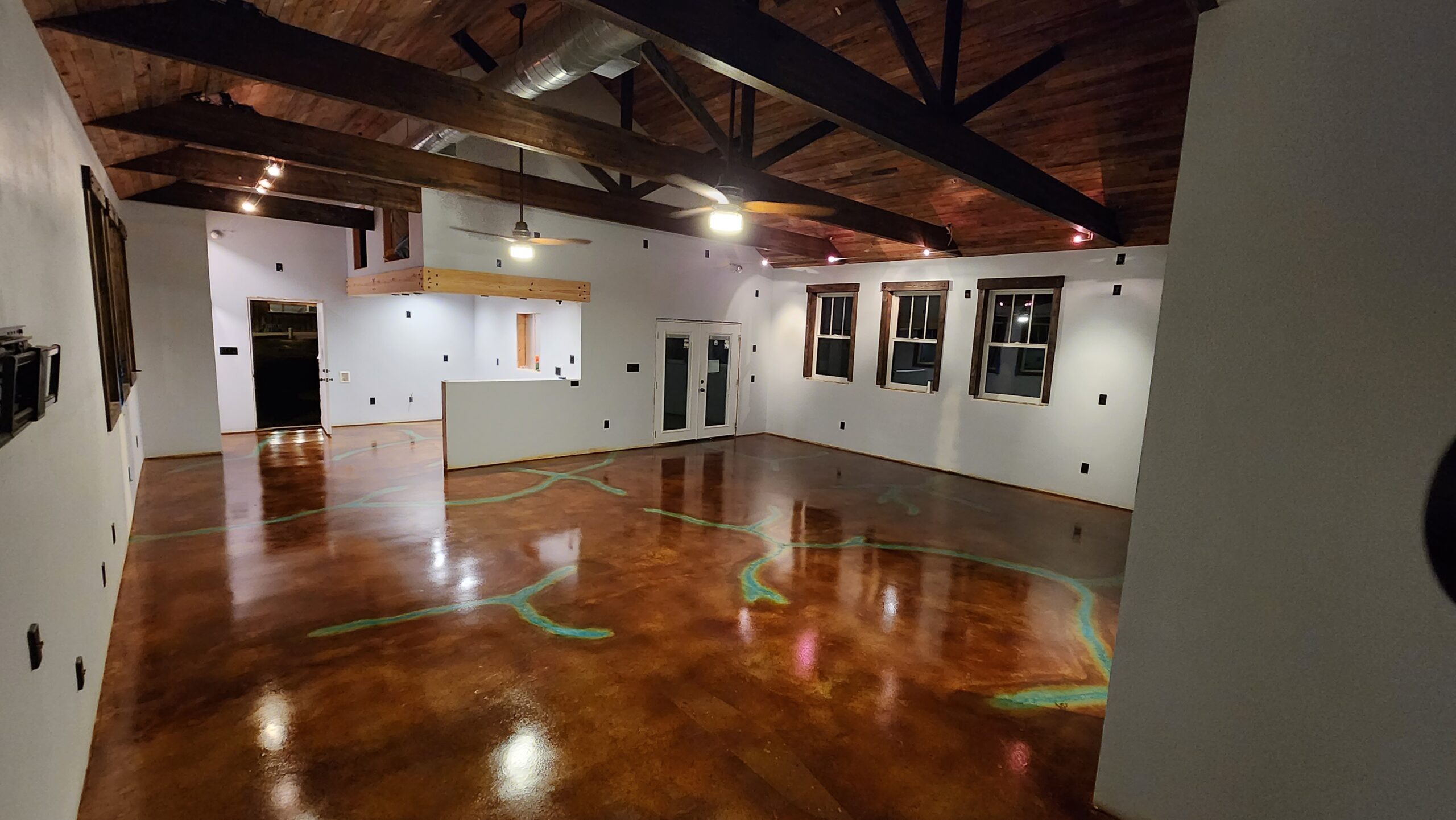
Sealer protects the stained concrete and brings out the final color. The stain may look dull before sealing, but the sealer enhances the depth, contrast, and richness of the finish.
Choose your sealer based on:
- Indoor or outdoor use
- Desired sheen level
- Foot traffic and wear expectations
- Slip resistance needs
- Ventilation and application conditions
Do not apply sealer in temperatures above 90°F. For outdoor projects, seal early in the morning or later in the day when the surface is cooler.
Important: Do not use duct tape or masking tape on a sealed floor. Tape adhesive can damage or pull up the finish.
Optional Step: Add Wax for Indoor Floor Protection
For indoor floors, especially high-traffic areas, apply 2–3 coats of concrete floor wax after the sealer has cured according to the product directions.
Concrete floor wax helps protect the sealer from daily wear and makes maintenance easier. It is much simpler to reapply wax than to repair damaged sealer.
Apply wax with a sponge mop or trim pad. Use thin coats and alternate directions with each coat. Allow each coat to dry fully before applying the next.
Cold Weather Application Tips
Temperature affects both sealer and wax application. If you are working in cooler conditions:
- Do not apply sealer or wax below 65°F
- Warm the room before application
- Turn off fans and heaters while applying sealer or wax
- Turn airflow back on after application to help with drying
- Allow extra dry time when temperatures are cooler
Common Acid Staining Mistakes to Avoid
Avoid these common issues for better results:
- Skipping the test spot
- Staining over sealer, paint, glue, or oil
- Using metal sprayers instead of all-plastic sprayers
- Neutralizing too soon
- Sealing before the residue is fully cleaned off
- Sealing before the concrete is completely dry
- Applying sealer when the slab is too hot
- Walking on wet stain without spiked shoes
- Expecting acid stain to look perfectly uniform
Acid staining is part science and part art. The chemical reaction creates natural variation, movement, and depth that cannot be duplicated with ordinary paint or coatings. But because acid stain depends on the concrete itself, the slab determines the outcome as much as the product does.
That is especially important with newer concrete. Modern mixes can be less reactive, and most homeowners and contractors do not know the exact composition of the slab they are working on. Testing first is the best way to avoid disappointment and choose the right stain system for your project.
The key to a successful project is simple: prep well, test first, allow the stain to react, clean thoroughly, and protect the finished surface with the right sealer.
When you are ready to start, Direct Colors has the acid stains, trial kits, neutralizers, sealers, waxes, and application tools you need to complete your project with confidence.
Frequently Asked Questions About Applying Acid Stain
How long should acid stain stay on concrete?
Most acid stains need 4 to 8 hours to react, but timing depends on the color, concrete condition, temperature, and desired result. Always follow the recommended activation time for your specific stain color.
Why does acid stain leave chalky residue?
Chalky residue is normal. It forms during the chemical reaction and must be neutralized, scrubbed, and rinsed away before sealing.
Can I acid stain new concrete?
Yes, but new concrete should cure for at least 30 days and should appear uniform light gray before staining. You should also test first, especially with new construction, because some modern concrete mixes may be less reactive with acid stain.
Why is some new concrete less reactive with acid stain?
Some modern concrete mixes include materials that replace part of the traditional cement content. Because acid stain depends on a chemical reaction with the concrete, changes in the mix can affect how strongly the color develops. Since most homeowners and contractors do not know the exact mix design, testing is the best way to confirm reactivity before staining the full project.
Can I acid stain sealed concrete?
No. Sealer blocks the stain from reacting with the concrete. Any sealer must be removed before applying acid stain.
Why does acid stain look dull before sealing?
Acid stain usually looks muted before sealer is applied. Sealer brings out the final color, depth, and contrast.
Should I wax acid-stained concrete?
Wax is recommended for indoor floors, especially in high-traffic areas. It protects the sealer and makes long-term maintenance easier.
Do I need to test acid stain before applying it to the full floor?
Yes. Testing is the best way to confirm whether your concrete will react properly with acid stain before staining the entire surface.
Why does some modern concrete not react well with acid stain?
Some modern concrete mixes use materials that partially replace traditional cement, which can reduce acid stain reactivity. Since most homeowners and contractors do not know the exact mix design, testing first is strongly recommended.